
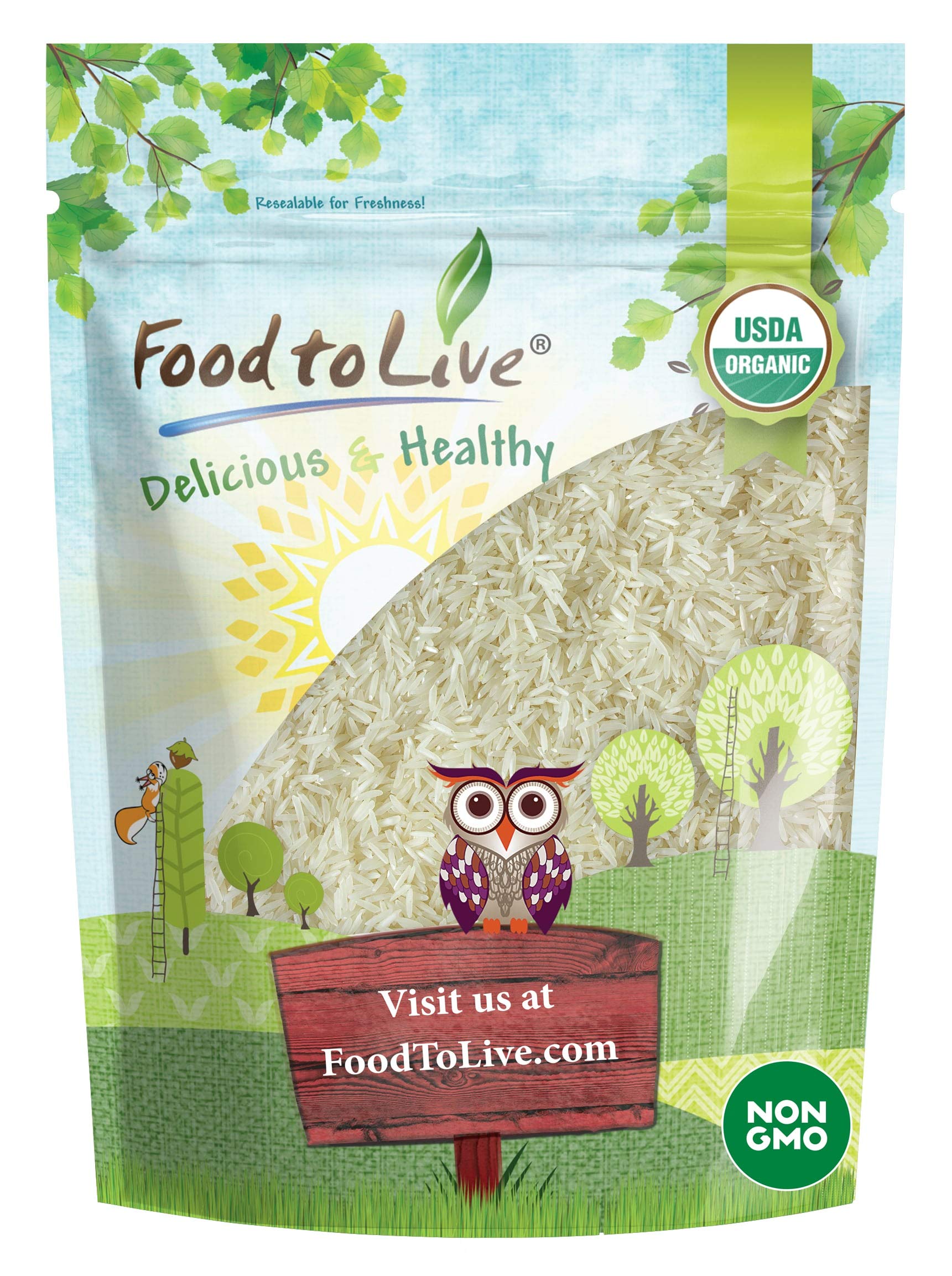
White basmati rice is one of those pantry items that people tend to be particular about, and for good reason. The long grains, the floral aroma, and the way it holds up in a pilaf or under a curry can make or break a meal. Food to Live’s Organic White Basmati Rice, sold in a 3-pound bag, is positioned as a straightforward, non-GMO option for everyday cooking. After spending some time with it in the kitchen, it’s clear this rice does its job well, though it’s not without a few caveats worth considering.
The first thing you notice is the fragrance. When you open the bag, there’s a distinct, almost nutty scent that’s characteristic of good basmati. It’s not overpowering, but it’s present enough to signal that you’re dealing with a quality grain. The grains themselves are long and slender, with a slight translucence that suggests proper aging. In terms of packaging, the 3-pound bag is resealable, which is a practical touch if you don’t go through rice quickly. That said, the bag is not vacuum-sealed, and if you live in a humid environment, you’ll want to transfer the rice to an airtight container to maintain its texture and aroma.
When cooked, the rice behaves as you’d expect from a decent basmati. It expands nicely, and the grains remain separate and fluffy, provided you rinse it well before cooking. Like most basmati, it does benefit from a soak—even 20 minutes helps—but it’s not strictly necessary. The texture is light and dry, which makes it an ideal companion to saucy dishes like dal, butter chicken, or vegetable kurma. It also holds up well in fried rice, though it’s not the first choice for sticky or sushi-style preparations. For anyone who regularly cooks Indian or Middle Eastern food, this rice fits the bill without fuss.
One of the key selling points here is the “less starch” claim. In practice, that means the cooking water stays relatively clear after rinsing, and the final product is less clumpy than standard long-grain white rice. This is a genuine plus for those who dislike gummy rice. However, it’s worth noting that the “less starch” attribute is more about the variety than any special processing. Basmati rice, by nature, has a lower amylopectin content, which results in firmer, separate grains. So while the claim is accurate, it’s not unique to this brand.
In terms of organic certification and non-GMO status, Food to Live checks the boxes. The rice is also kosher and vegan, which broadens its appeal. For those who are strict about such labels, this is a reliable choice. But here’s where a bit of nuance comes in: the rice is non-irradiated, which is a positive for some, but it also means the shelf life might be slightly shorter than irradiated alternatives. In practice, as long as you store it properly, you won’t notice a difference, but it’s something to keep in mind if you buy in bulk and tend to forget about your pantry for months.
Compared to other brands in the same category, such as Lundberg or Royal, Food to Live sits in a similar price range and offers comparable quality. What sets it apart is the explicit labeling around organic and non-GMO, which appeals to a specific consumer. However, it doesn’t have the same brand recognition as some of the bigger names, and you might find the grain slightly less uniform in length than premium imports from India or Pakistan. That’s not a dealbreaker, but it’s noticeable if you’re used to extra-long-grain basmati.
There are a few limitations to be honest about. First, the 3-pound size is convenient for testing, but if you’re feeding a large family or cooking Indian food multiple times a week, you’ll likely go through it quickly and might find the per-pound cost higher than buying a 10- or 15-pound bag from a specialty store. Second, the rice does require thorough rinsing to achieve the best texture—if you skip that step, you’ll end up with a slightly stickier result, which defeats the purpose of choosing basmati. Third, while the aroma is pleasant, it’s not as potent as some aged basmati varieties, so if you’re looking for that intense, popcorn-like fragrance, you might be slightly underwhelmed.
Who is this rice for? It’s a solid choice for home cooks who make Indian, Persian, or Middle Eastern dishes regularly and want an organic, reliably performing basmati without paying a premium for a designer label. It’s also a good option for those who are new to basmati and want to try it without committing to a huge bag. On the other hand, it’s not ideal for people who prefer a more aromatic, aged basmati—those folks might want to look for a specialty import. And if you’re primarily cooking Asian-style sticky rice or risotto, this is not the right grain.
In the end, Food to Live Organic White Basmati Rice is a dependable pantry staple. It doesn’t try to be anything it isn’t, and it delivers on the basics: long grains, pleasant fragrance, and a fluffy texture that works with a wide range of dishes. It’s not the most exciting product on the shelf, but for everyday cooking, it gets the job done. If you’re already a fan of basmati, this is a safe bet. If you’re still exploring, it’s a reasonable starting point that won’t disappoint, as long as you manage your expectations regarding aroma and grain size.