
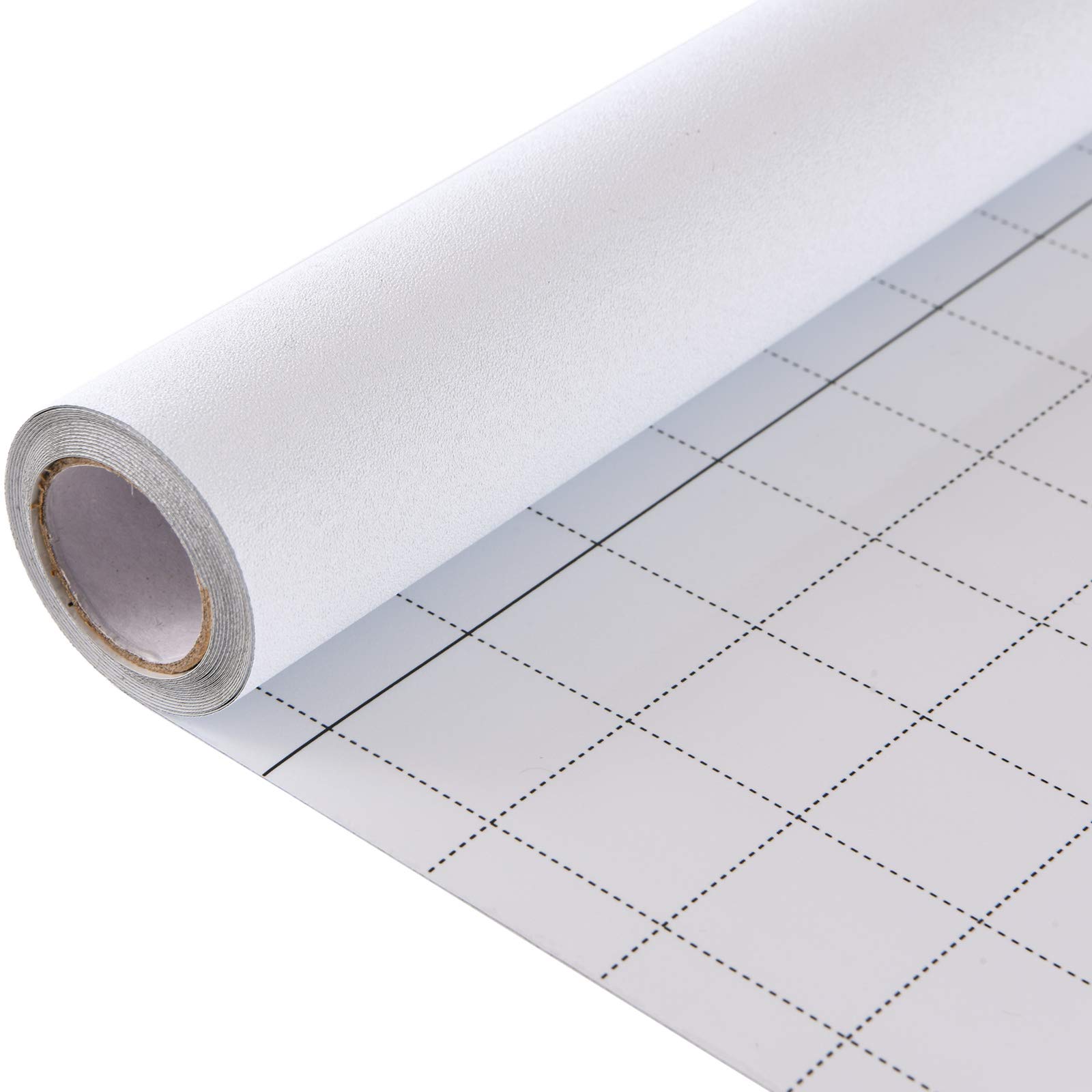
Window films that promise total blackout usually come with a catch: either they’re a pain to install because of the adhesive, or they leave a sticky residue when you finally want them gone. The VELIMAX White Blackout Window Film tries to sidestep both issues by using static cling instead of glue. At 17.7 inches by 59 inches, it’s sized for smaller window panes or door glass, and it’s marketed as a 100% light blocker. After spending time with it in a few different settings, I can say it does what it claims—but not without some quirks that are worth knowing before you buy.
The film is essentially a white, opaque vinyl sheet that you cut to size and press onto a clean glass surface. Because it relies on static, there’s no adhesive involved, which is a big plus for renters or anyone who doesn’t want to commit to a permanent window treatment. Installation is straightforward: clean the glass thoroughly, spray it with soapy water, apply the film, and squeegee out the bubbles. The static cling holds surprisingly well once it’s smoothed down. I tested it on a bathroom window and a bedroom window, and it stayed in place without peeling at the edges, even with temperature changes and occasional condensation.
In terms of light blocking, the film lives up to its name. During the day, it turns a clear window into a solid white panel—no light passes through, and you can’t see any shapes or shadows from either side. That’s genuinely useful for a ground-floor bathroom or a home office where you want to eliminate glare on a screen. It also adds a small layer of insulation, which is a nice side effect, though it’s not a replacement for thermal curtains.
However, there are trade-offs. The static cling works best on perfectly smooth, flat glass. If your window has texture, a slight curve, or an uneven frame, the film may not adhere completely, leaving air pockets or lifting at the corners. I also found that the film is not truly removable and reusable in the practical sense. While it peels off without residue, it tends to stretch and crease during removal, making it difficult to reapply elsewhere without visible wrinkles. So, while it’s non-adhesive, it’s closer to a semi-permanent solution than a temporary one.
Another limitation is that the white finish is exactly that—opaque white. It doesn’t diffuse light in a soft, frosted way like some privacy films do; it simply blocks everything. This means you lose natural daylight entirely in the room where it’s applied. For a bathroom or a media room, that’s fine. For a living space where you still want some brightness, you’d be better off with a frosted or translucent film that lets light through while obscuring the view.
Compared to traditional blackout curtains or blinds, this film is a less flexible option. Curtains can be opened and closed as needed, and they come in a range of colors and fabrics. The VELIMAX film is a fixed solution—once it’s up, you’re committed to that white panel until you peel it off. On the other hand, it’s much cheaper than a custom curtain setup, and it takes up zero physical space, which is a real advantage in tight quarters like a small apartment or a boat. It’s also easier to clean than fabric—a quick wipe with a damp cloth is all it needs.
Who is this film for? It’s ideal for renters, students, or anyone who wants a quick, low-cost way to block out light and prying eyes without drilling holes or dealing with adhesive. It’s also a good fit for temporary setups, like a nursery where you need to darken a room for naps but don’t want to invest in heavy drapes. Homeowners with standard flat glass windows will likely find it works as intended.
Who should skip it? If you’re looking for a versatile window treatment that you can adjust throughout the day, or if your windows have any kind of surface irregularity, this isn’t the best choice. Also, if you’re hoping to retain some natural light while gaining privacy, look at frosted privacy films instead—they offer a balance that this product doesn’t. And if you need to cover a large window, note that the 17.7 x 59-inch size covers only about 7 square feet, so you’ll need multiple rolls, which can add up.
In everyday use, the film performs reliably for what it is. It blocks light completely, it’s easy to install, and it doesn’t leave a mess when you take it down—as long as you’re careful. The main drawbacks are the lack of light diffusion and the fact that it’s not truly reusable. If those limitations align with your needs, it’s a practical, no-fuss solution. If not, you might be better served by a different type of window covering.