
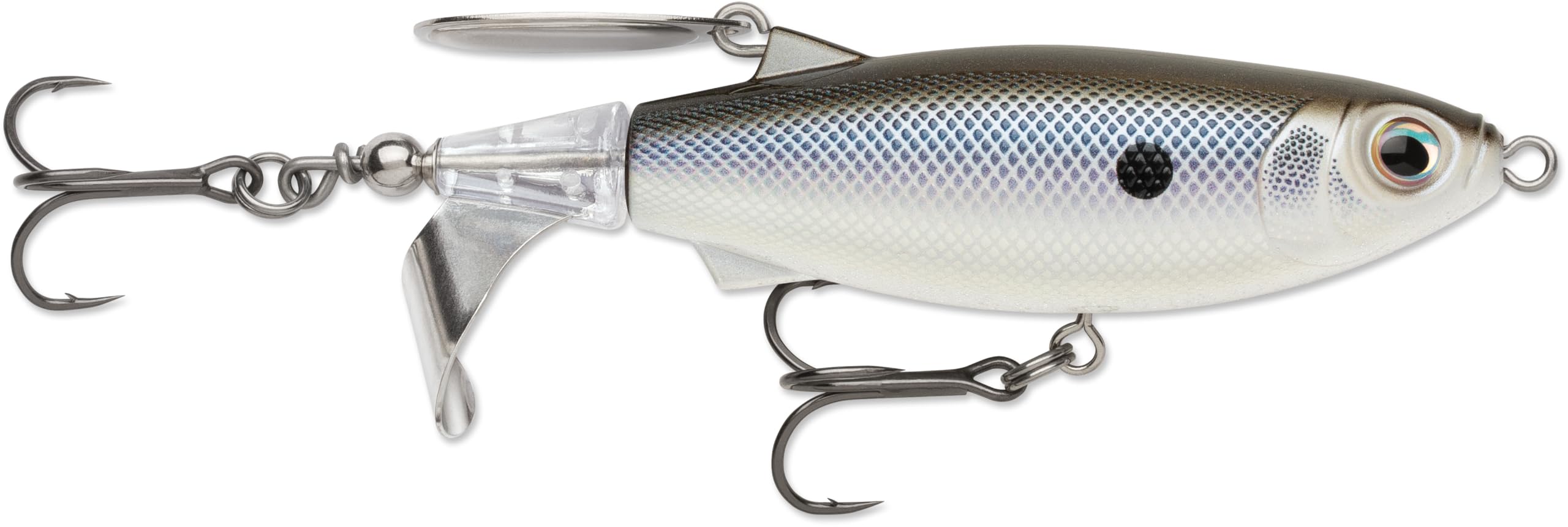
The Rapala ClapTail 110 is a topwater prop bait that measures 4-3/8 inches and weighs 5/8 ounce. The Black Back Shad pattern mimics a shad with a dark back and silver sides. Unlike traditional propeller baits that have a single prop, the ClapTail features two metal blades that clap together as the lure is retrieved, creating a distinct sound and disturbance. This review examines how the ClapTail performs in real fishing situations, its strengths, and where it falls short.
Topwater fishing is most effective during low-light periods—early morning, late evening, or under overcast skies—when bass and other predators are actively feeding near the surface. The ClapTail is designed to be retrieved steadily, with the blades spinning and clapping to imitate a struggling baitfish. It works best in open water with some ripple on the surface; calm conditions can make the lure less effective because the sound and splash may seem unnatural. Anglers typically fish it around submerged vegetation, points, and drop-offs where bass ambush prey.
The ClapTail 110 is built with Rapala’s typical attention to detail. The body is durable plastic, and the hooks are sharp out of the box—two treble hooks, size 4 and 6. The black back shad finish is realistic, with a subtle scale pattern and a bright silver belly. The blades are attached to a wire harness that runs through the body, and they spin freely on the retrieve. The clapping sound is produced when the blades meet at the end of each rotation, creating a rhythmic noise that can trigger strikes from curious fish.
In terms of hardware, the split rings are sturdy, and the line tie is positioned at the nose. The lure weighs 5/8 ounce, which is heavy enough for long casts with baitcasting or spinning gear. It sinks slowly when paused, so it can be fished as a prop bait or a wake bait. The ClapTail is not a subtle lure; it’s meant to draw attention. That makes it a good choice for covering water and locating aggressive fish.
One of the main limitations of the ClapTail 110 is its size and noise level. At 4-3/8 inches, it’s larger than many finesse topwater baits, so it may intimidate pressured or smaller bass. The clapping sound is loud and can be a drawback in clear, calm water where fish are spooky. Additionally, the blades can tangle with the hooks during casts, especially in windy conditions, requiring constant checking. The treble hooks are sticky sharp, but they can foul on the rear blade if the lure lands awkwardly. Some anglers replace the rear treble with a single hook to reduce tangles, but that changes the lure’s action.
Compared to a standard propeller bait like a Whopper Plopper or a Buzzbait, the ClapTail offers a different sound profile. The double-blade clap is more metallic and rhythmic, while a Whopper Plopper produces a continuous plop. The ClapTail is also heavier than many prop baits, which helps with casting distance but can make it sink faster on the pause. It’s not a direct replacement for a popper or a walk-the-dog lure; it fills a specific niche for when fish want a noisy, vibrating topwater presentation.
Who is this lure for? It suits anglers who fish large bodies of water for bass, pike, or muskie and want a topwater bait that can be cast far and retrieved steadily. It’s also a good option for murky water where sound matters more than visual detail. However, it’s not ideal for ultra-light tackle or for fishing in tight cover where accurate casts are needed. Beginners might find the clapping action requires a steady retrieve to work properly, and the tangles can be frustrating. Experienced topwater anglers will appreciate the unique sound and the ability to fish it fast.
In summary, the Rapala ClapTail 110 is a specialized topwater lure that delivers a distinct clapping sound and a realistic shad profile. It excels in open water and low-light conditions, but its size, noise, and tendency to tangle limit its versatility. It’s a solid addition to a topwater arsenal, but not a one-size-fits-all solution.