
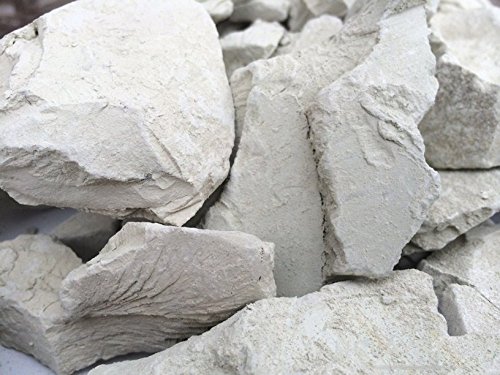
Edible clay is one of those products that sits at the intersection of traditional practice and modern curiosity. Uclays Bentonite Edible Clay Chunks, a 4-ounce package of natural bentonite clay in solid chunk form, is aimed at people who consume clay for its purported health benefits or who use it in other applications. This review takes a factual look at what the product is, how it’s used, and where it fits—or doesn’t—into a typical routine.
Bentonite clay is a naturally occurring absorbent material composed mainly of montmorillonite, a type of smectite mineral. It’s been used for centuries in various cultures for digestive support and detoxification, though scientific evidence for many of these uses is limited. Uclays sources its bentonite from natural deposits and offers it in chunk form, which distinguishes it from the more common powdered varieties. The chunks are intended to be chewed, sucked on, or dissolved in water, depending on user preference.
In real-world use, these chunks are typically consumed by people following alternative health regimens. Some chew small pieces slowly, while others dissolve a chunk in a glass of water and drink the resulting cloudy mixture. The 4-ounce package contains irregularly sized chunks, so users need to gauge their own portion sizes. This lack of uniformity can be a minor inconvenience, as there’s no standard serving size marked on the package, and the chunks vary in size from pea-sized to larger, marble-sized pieces.
Functionally, the product delivers what it promises: pure bentonite clay in a solid, natural form. The chunks are hard and gritty, with a distinct earthy taste that some find unpleasant. They don’t dissolve quickly in water; expect to stir or let them sit for a while. Chewing them requires patience, as they gradually break down into a fine grit. The clay is not flavored or processed beyond basic cleaning, so the experience is as raw as it gets. For those who prefer a tasteless supplement, this will be a challenge.
One of the main limitations of this product is the lack of clear usage guidelines. While the package may include basic directions, it doesn’t offer detailed information on how much to consume daily or how to incorporate it into a diet safely. This puts the onus on the user to research proper dosages and potential interactions. Additionally, bentonite clay can absorb not only toxins but also nutrients and medications if taken at the wrong time, so timing matters. The product doesn’t come with warnings about this, which is a notable oversight for a consumable item.
Compared to bentonite clay powder, which is more common and easier to measure, these chunks offer a different experience. Powder can be mixed into drinks or encapsulated, providing more flexibility and a less gritty texture. However, chunks are less messy and have a longer shelf life since they don’t disperse into the air. They’re also easier to take on the go if you don’t mind carrying a small piece. On the other hand, liquid bentonite suspensions are available and are easier to swallow, though they often contain preservatives. Each form has its trade-offs, and the chunk format is arguably the most traditional but also the least convenient for precise dosing.
Who is this product for? It’s suitable for individuals who are already familiar with edible clay and prefer a solid form, perhaps for its novelty or because they believe chunks are more natural. It might also appeal to those who use clay for non-dietary purposes, such as in homemade toothpaste or facial masks, though the packaging doesn’t explicitly promote these uses. However, it’s not for everyone. People who are sensitive to textures or tastes will likely struggle with the gritty, earthy nature of the chunks. Those who need precise dosing for health reasons should opt for a powder or liquid form where measurement is straightforward. And anyone taking medication or with digestive conditions should consult a healthcare provider before consuming clay, as it can interfere with absorption.
In terms of quality, the clay appears clean and free of obvious impurities, though without third-party testing information, it’s hard to verify purity. Uclays doesn’t provide a certificate of analysis on the package, which would be reassuring for a product meant to be ingested. The 4-ounce size is modest—if used daily, it might last a few weeks, depending on portion size. The packaging is simple: a resealable pouch that keeps the chunks dry, but it’s not resealable enough for long-term storage once opened, so transferring to an airtight container is advisable.
Overall, Uclays Bentonite Edible Clay Chunks are a niche product that serves a specific audience. They deliver natural bentonite clay in a traditional form, but the lack of usage guidance and the inherent inconvenience of the format are drawbacks. For the right user—someone who values the chunk form and is willing to do their own research—it’s a viable option. For others, a powdered or liquid alternative might be more practical. As with any edible clay, moderation and informed use are key.