
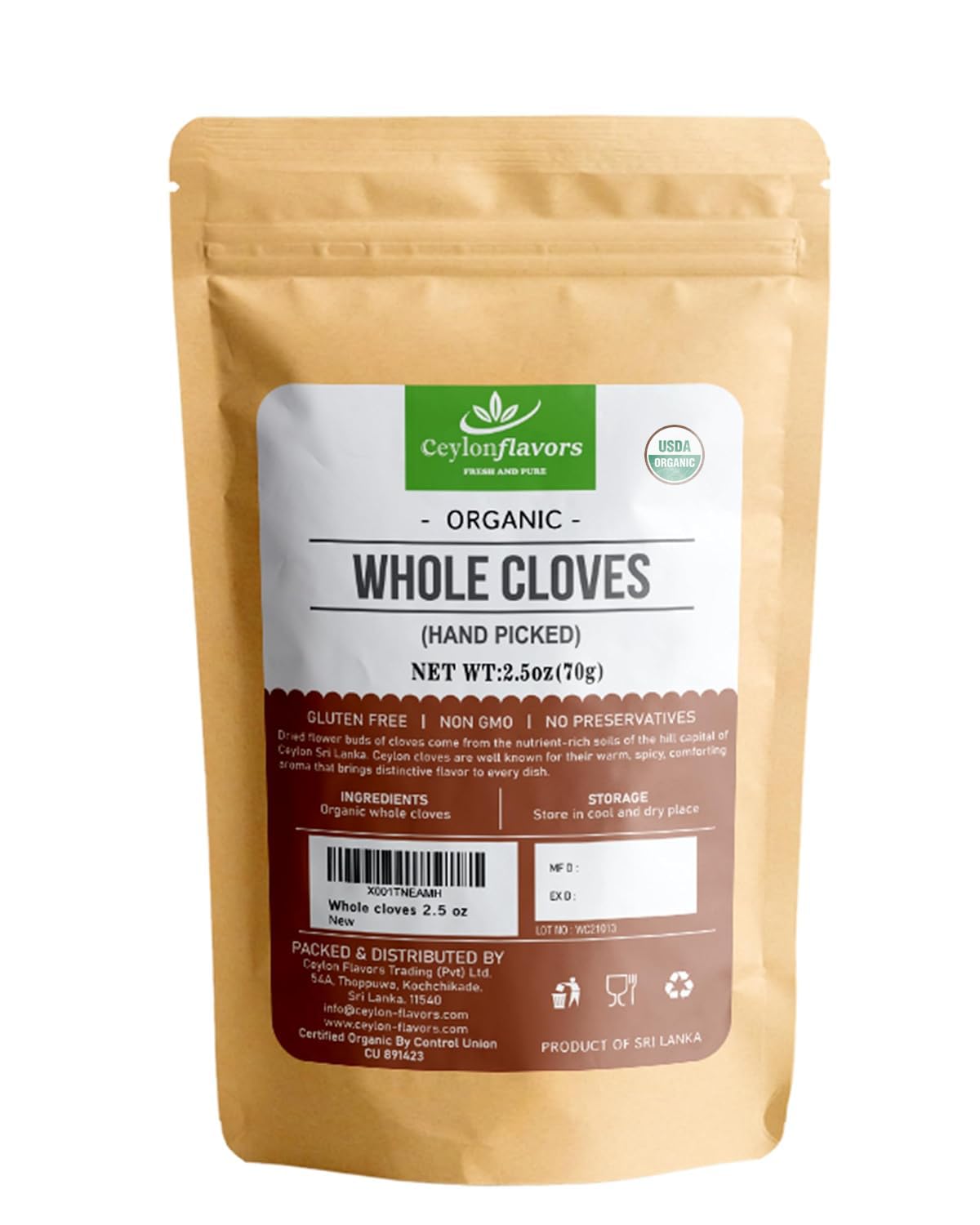
Whole cloves are one of those spices that sit in a cabinet for months between uses, so the quality question matters less than you’d think — until you actually need them. A clove that has gone dusty and scentless will quietly ruin a pot of rice, a batch of mulled cider, or a ham glaze, and you won’t know until the dish is done. Ceylon Flavors sells its organic whole cloves in a 2.5-ounce jar, which is a modest amount by spice-aisle standards but a reasonable one for a household that cooks with cloves a few times a month rather than daily.
The product is straightforward: whole, unground flower buds, labeled organic, sourced and packed under the Ceylon Flavors name. That’s the entire pitch. There are no blends, no added oils, no decorative packaging claims beyond the organic certification. For buyers who want a single-ingredient spice rather than a clove-forward seasoning mix, that simplicity is the point.
In practice, whole cloves get used in a few predictable ways. They go into braises and stews, often studded into onions or pork. They’re standard in pickling brines and spiced poaching liquid for pears and apples. South Asian and Middle Eastern cooking uses them heavily in rice dishes, biryanis, and garam masala, usually toasted whole before grinding. And then there’s the holiday cluster: mulled wine, pomanders, clove-studded oranges. A 2.5-ounce jar covers all of these for a season or two, though heavy mulled-wine households will go through it faster than someone who drops two cloves into a pot of lentils every few weeks.
What you can reasonably expect from a jar like this is intact buds with the little nail-shaped stem and rounded head still attached, a strong clove scent when the jar is opened, and enough volatile oil left in the buds to register clearly when they’re toasted or simmered. Whole cloves degrade more slowly than ground spice, which is the main argument for buying them this way, but they do degrade. A jar that has sat on a warehouse shelf for a year will smell flatter than a fresh one, and there’s no harvest date printed prominently on the packaging to tell you which you’re getting. That’s a real limitation, and it applies to most specialty spice brands, not just this one.
On the functional side, the format has clear advantages. Whole buds are easy to count and portion, which matters in recipes that call for six or eight cloves rather than a measured spoonful. They can be toasted in a dry pan before grinding, releasing more aroma than pre-ground clove ever will. And they’re simple to fish out of a pot before serving, which is more than you can say for ground spice. The trade-off is that you’ll need a grinder or mortar and pestle if a recipe wants ground clove, and the buds are stiff enough that a cheap blade grinder will struggle a little. The 2.5-ounce size also means the jar fits easily in a crowded spice drawer, though the flip-top or screw lid — depending on the batch — isn’t anything special.
Compared with supermarket whole cloves in the plastic bags or bulk bins, this sits a step up in likely freshness and a step up in price. Compared with buying whole cloves from a high-turnover spice shop or an Indian or Middle Eastern grocery, it’s roughly comparable in quality and less convenient. The organic label is the differentiator for buyers who care about that certification; for everyone else, it’s a neutral detail. Against ground clove, whole buds are less convenient but noticeably better in any application where the spice cooks for more than a few minutes.
This jar suits home cooks who use cloves regularly enough to finish 2.5 ounces within a year or so, bakers who want whole buds for studding and pickling, and anyone who prefers to grind spice themselves. It’s a poor fit for someone who needs a large quantity for canning projects, for a cook who only wants ground clove and has no grinder, or for a buyer who wants a harvest or best-by date clearly visible before purchasing. It’s also not the right pick if you’re stocking a commercial kitchen — the jar is too small to be economical at volume.
The honest summary: a competent, single-ingredient organic clove in a sensible size, with the usual caveats about spice freshness and opaque dating that apply across the category. Nothing about it is remarkable, and nothing about it is a problem, provided you use it before it goes stale.