
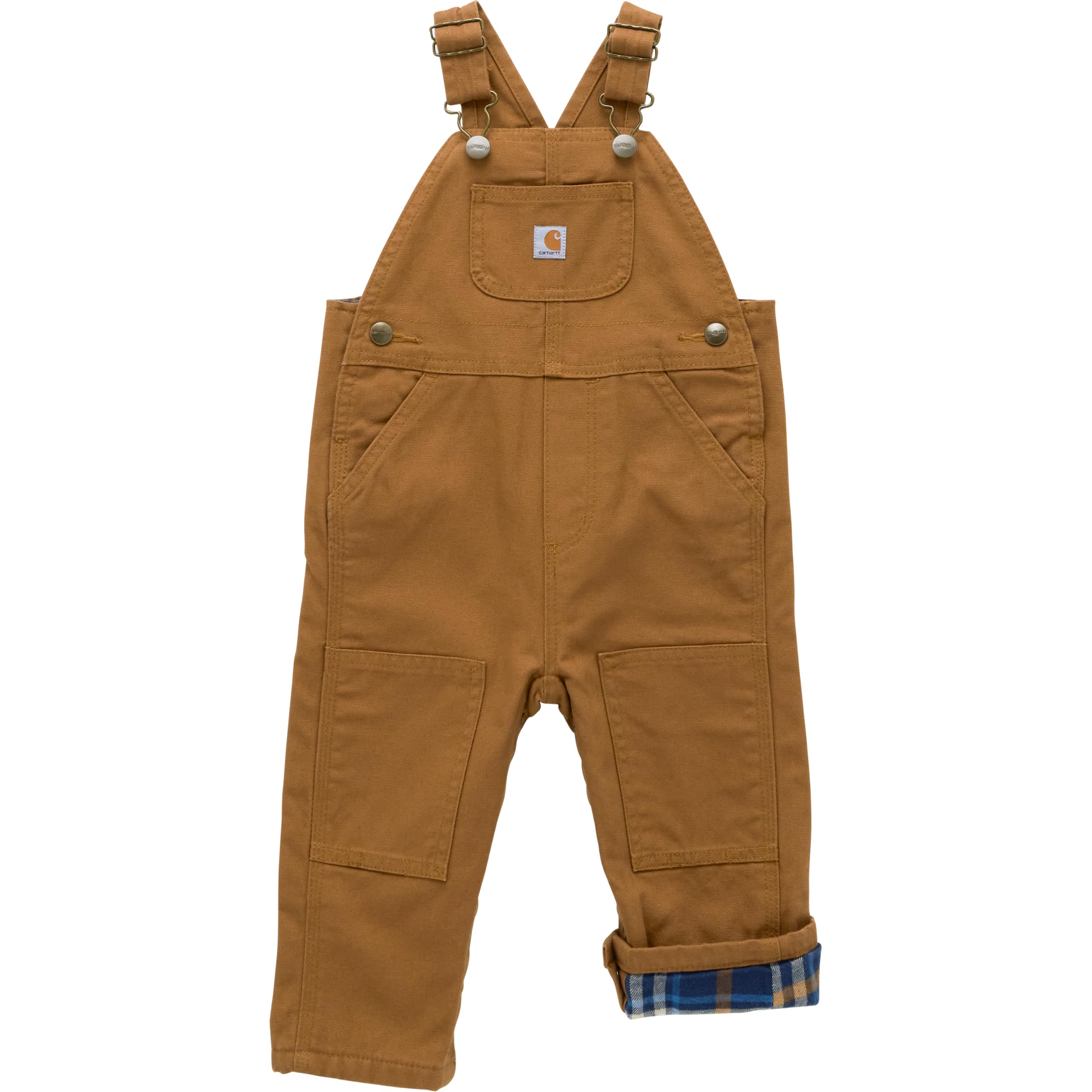
Carhartt’s baby bib overall is one of those items that gets bought for a specific reason: a parent wants the rugged, workwear look in miniature, or they want a garment that stays put on a baby who has started moving. At 12 months, the sizing lands roughly in the window when many babies are crawling confidently and pulling up, which is exactly when a one-piece with a bib front starts to make sense. It is less a fashion statement than a functional layer, and it should be judged that way.
The construction follows the adult Carhartt pattern closely. The fabric is a cotton duck canvas in the brand’s signature brown, a fairly stiff, substantial weave that softens with washing but never becomes truly pliable. There is a front bib pocket, adjustable shoulder straps with metal buckles and buttons, and a full-length leg with snap closures along the inner seam. The snaps matter more than they might seem: they let you get the overall on and off without wrestling a baby out of a neck opening, and they make diaper changes possible without removing the whole garment. The straps adjust across a reasonable range, which helps the 12-month size stretch across a growth spurt or two.
In daily use, the overall works best as an outer layer over a onesie or long-sleeve bodysuit. The canvas holds up to crawling on rough surfaces, grass, and playground pavement in a way that thinner cotton or jersey one-pieces do not. Parents who use it for outdoor time, farm visits, or simply as durable play clothes tend to report that it takes stains and abrasion well. The bib pocket is small but functional for a pacifier or a folded tissue, though it is not deep enough for much else.
The trade-offs are real and worth naming. The fabric is stiff out of the package, and the seams and hems are not especially soft against skin, so it is not a garment to put directly on a newborn or a baby with sensitive skin. It is also warm. Cotton duck does not breathe the way lighter knits do, which makes this a cool-weather or mild-day piece rather than something for summer heat. The metal hardware on the straps is sturdy but adds weight, and the buckles can be fiddly for an adult rushing through a change. Finally, the sizing is unforgiving: 12 months fits a fairly average 12-month-old, but babies at the top of the growth curve may outgrow the length before the straps run out of adjustment.
Compared with a soft jersey romper or a fleece bunting, the Carhartt overall occupies a different niche. A romper is more comfortable for sleep and indoor wear; a bunting is warmer and easier for cold-weather outings. The bib overall is the choice when durability and coverage matter more than softness, and when you want a garment that will not ride up or slip off during active crawling. It sits closer to a lightweight outdoor shell than to everyday baby basics. Families who already like Carhartt workwear for adults will recognize the feel immediately; those expecting a plush, baby-soft hand will be surprised.
Care is straightforward but not effortless. Machine washing is fine, and the canvas softens somewhat over time, but the first few washes may show some shrinkage and color transfer, so washing separately or with dark colors is sensible. Line drying or low heat helps preserve the shape and the strap hardware.
- Who it suits: parents who want a durable, stain-tolerant outer layer for a crawling or early-walking baby, especially for outdoor play, cool-weather errands, or a workwear-inspired look.
- Who should skip it: anyone looking for sleepwear, a summer-weight outfit, or something soft enough for a newborn’s skin; also families who prefer easy pull-on styles over straps and snaps.
Overall, the Carhartt baby bib overall is a well-made, purpose-specific garment rather than a universal baby staple. It does its job—covering a moving baby in tough fabric that stays in place—without pretending to be soft or seasonless. Buy it for the right use and the right season, and it will hold up; expect it to be a workhorse layer, not a comfort piece.