
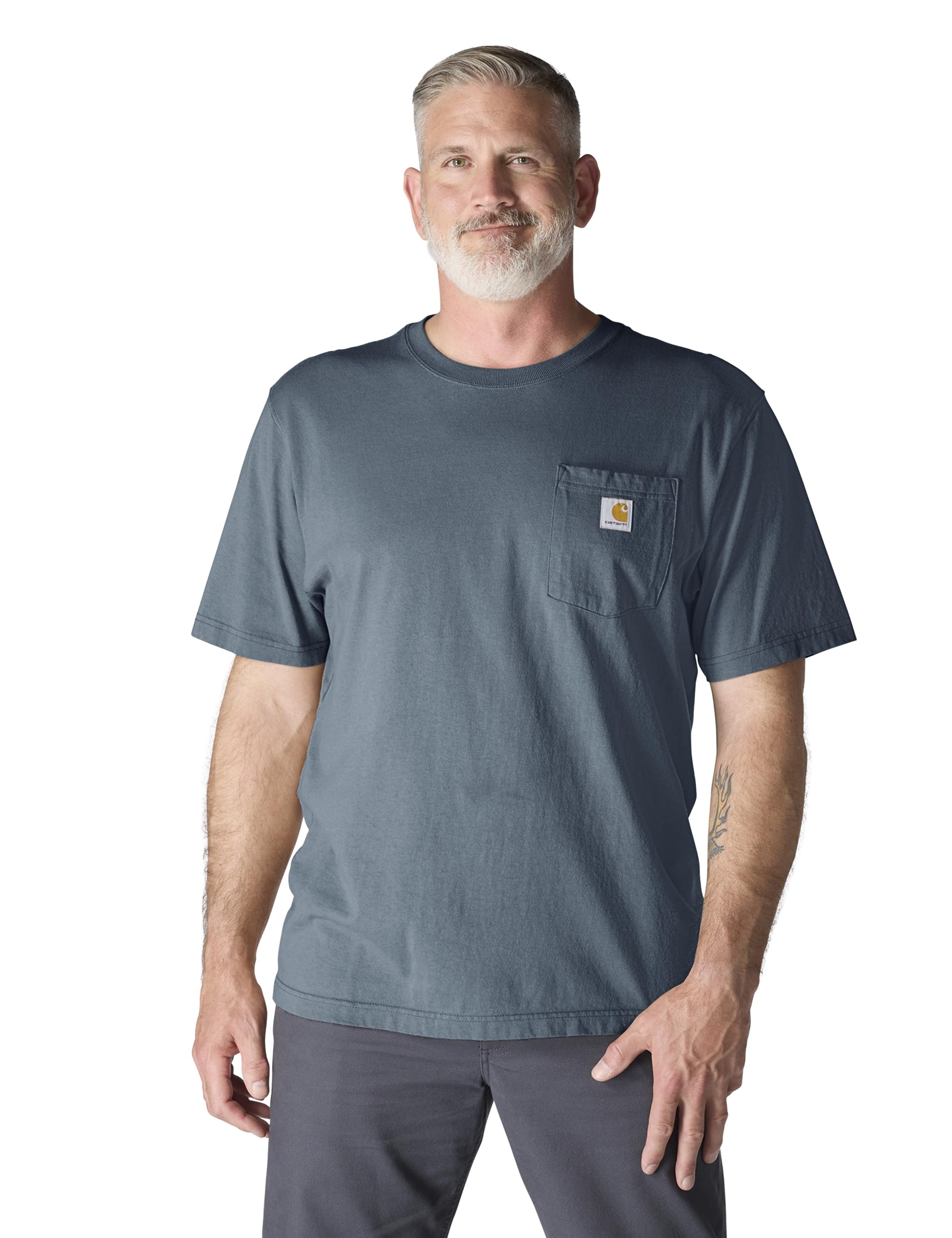
The Carhartt K87 is one of those garments that shows up in places you would not expect: job sites, sure, but also garage workshops, camping trips, and the closets of people who simply want a shirt that will not fall apart after a year. It sits in an unusual spot in the market, heavier than a standard cotton tee but not quite a base layer for cold weather. Understanding what it actually is helps set realistic expectations.
The first thing anyone notices is the fabric weight. Carhartt lists the K87 at 6.75 ounces, which puts it well above the typical 4.5- to 5-ounce cotton tee sold at most retailers. That extra material translates into a denser, stiffer hand-feel out of the bag. It softens over time with washing, but it never becomes a slinky, draped shirt. The construction follows the same logic: a ribbed crew neck that holds its shape, side-seamed panels rather than a tubular body, and a left chest pocket that is actually deep enough to hold a phone or a small notebook without sagging open.
In practice, the K87 gets used as a stand-alone shirt in mild weather and as a mid-layer under a flannel or jacket when it turns cold. The heavier cotton blocks wind better than a thin tee and resists the kind of clinging that lighter fabrics do when you sweat. For anyone doing light mechanical work, yard work, or moving boxes, the fabric holds up against abrasion in a way that cheaper shirts do not. The pocket is a genuine utility feature rather than decoration, and the side seams keep the shirt from twisting around the torso after a long day.
Where the K87 shows its limits is in hot, humid conditions. The same density that makes it durable also makes it warm, and the cotton does not wick moisture the way a synthetic or merino blend would. On a 90-degree day with high humidity, it can feel heavy and slow to dry. It is also not a slim-fitting shirt. The cut is boxy through the body with a straight hem, which works well for layering but looks somewhat loose on leaner frames. Buyers used to modern athletic fits may find they need to size down, though that risks losing shoulder room.
Shrinkage is another consideration. Carhartt cotton is known to move a bit after the first few washes, particularly if dried on high heat. Line drying or a low tumble preserves the original fit best. The color, in this case Bluestone, is a muted blue-gray that reads as workwear rather than fashion, and like most garment-dyed or piece-dyed cotton, it will fade gradually at the seams and collar over months of use. Some people like that patina; others expect a shirt to look new longer than this one will.
Compared with a premium blank tee from a brand like American Giant or a heavyweight option from a workwear competitor such as Dickies, the K87 lands in the middle on price and near the top on durability. It is less refined than a fashion-oriented heavyweight tee, with a rougher hand-feel and a more utilitarian silhouette, but it costs less and takes abuse more gracefully. Against a standard department-store cotton tee, the difference in longevity is noticeable within the first season.
This shirt suits people who want a durable, no-nonsense tee for physical work, outdoor chores, or casual wear where fit is secondary to function. It is a reasonable choice for layering in cooler months and for anyone tired of replacing thin shirts every year. It is not the right pick for someone who runs hot, wants a trim modern fit, or expects a soft, broken-in feel from day one. It also is not a performance shirt; anyone needing moisture management for intense activity should look elsewhere.
The K87 is not a revelation, and it is not trying to be. It is a well-made, heavy cotton tee with a pocket that works, a cut that accommodates movement, and a lifespan that justifies the modest premium over a basic shirt. The trade-offs, warmth and a boxy fit, are real but predictable. For the right buyer, that is a fair deal.