
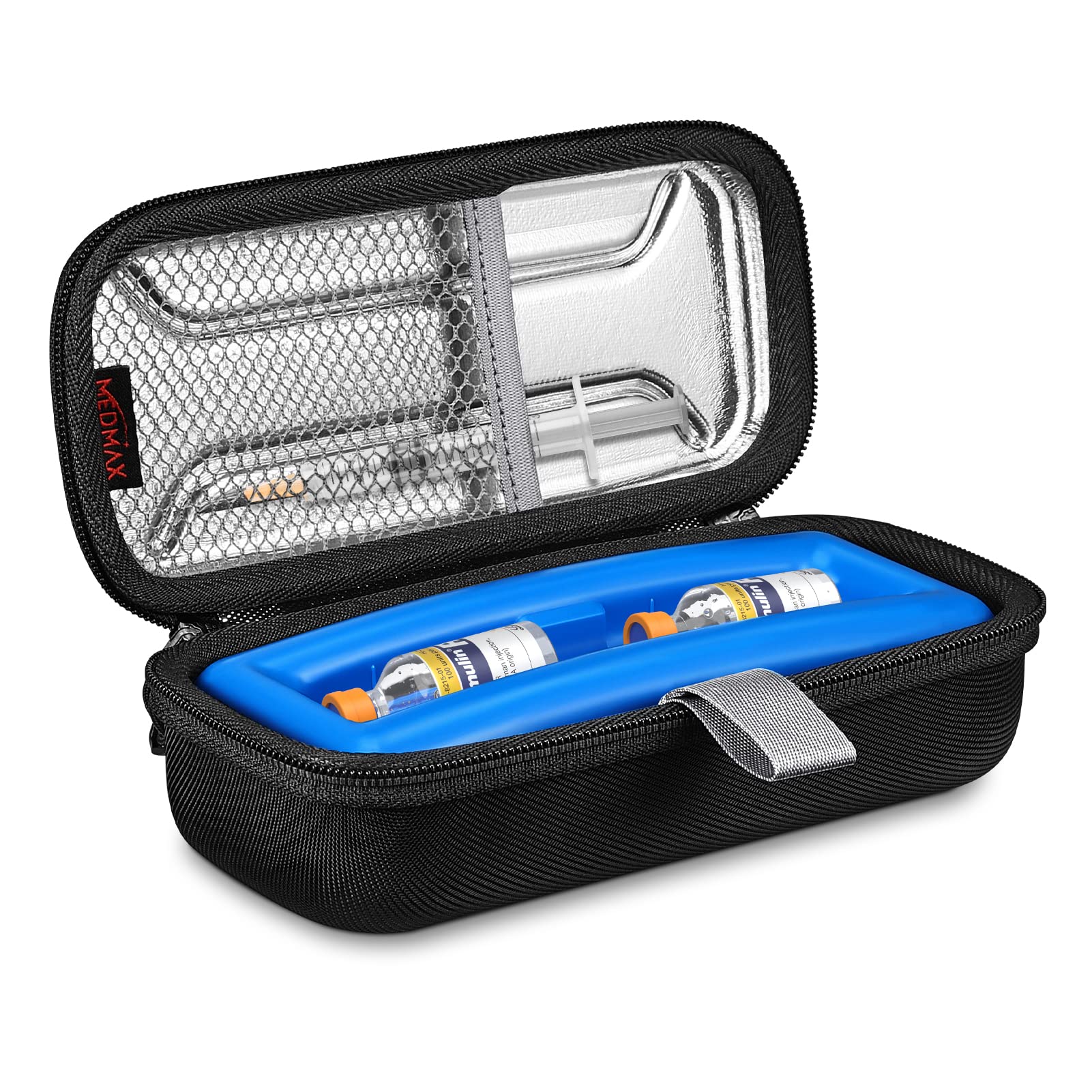
Insulin-dependent travelers face a practical problem that doesn’t get much attention until it affects them directly: keeping vials within a safe temperature range while moving through airports, hotels, and long car trips. The MEDMAX Insulin Vial Carrying Cooler Case is one of many hard-shell options aimed at that problem. It’s a compact, structured case designed to hold insulin vials (and typically pens) alongside a cooling element, and it sits in a crowded field of soft pouches, gel-pack wallets, and powered coolers. This review looks at what the case actually does, where it makes sense, and where it falls short.
What the case is and how it’s used
The MEDMAX case is a rigid, clamshell-style container with a zippered or latching closure and an interior configured for vials and small supplies. In practice, it’s the kind of case you’d drop into a backpack or carry-on and forget about until you need it. Typical use looks like this: you load a frozen or refrigerated gel pack into the designated compartment, place vials in their slots, seal the case, and rely on the insulation and the pack to hold temperature for a stretch of hours. It’s meant for day trips, flights, and short excursions rather than multi-day storage without access to a refrigerator.
The hard shell is the defining feature. Unlike fabric pouches, it resists crushing when packed under clothing or other luggage, which matters if you’re carrying glass vials. The exterior is typically a molded plastic or EVA-style shell with a fabric or rubberized finish, and the interior usually includes foam or molded dividers to keep vials from rattling. A small mesh pocket or elastic strap is common for holding a gel pack or a couple of pen needles.
Functional features worth noting
- Rigid shell: Provides crush protection that soft cases don’t, which is the main reason someone would choose this over a fabric wallet.
- Dedicated vial slots: Molded or foam dividers hold standard 10 mL vials upright, reducing the chance of breakage or leakage.
- Cooling compartment: Sized for a gel pack, usually included. The pack is the active element; the case itself only insulates.
- Compact footprint: Small enough to fit in a daypack or glovebox, though it won’t hold much beyond medication and a few accessories.
- Zipper or latch closure: Seals the interior to slow temperature exchange, though the seal quality varies by design.
Realistic performance expectations
It’s important to be clear about what a passive cooler case can and can’t do. The MEDMAX case does not refrigerate anything. Its job is to slow warming, and how long it holds a safe range depends on ambient temperature, how often the case is opened, and the quality and starting temperature of the gel pack. In mild conditions with a properly frozen pack, a case like this might hold a reasonable range for several hours. In a hot car or during a long layover with frequent opening, that window shrinks considerably. Anyone expecting all-day protection in summer heat without a spare pack or a powered cooler will be disappointed.
There’s also the question of temperature monitoring. Most cases in this category, including this one, don’t include a thermometer or indicator. You’re trusting the pack and your own timing. That’s a meaningful limitation for anyone managing insulin carefully, since both freezing and overheating can degrade it. A separate small thermometer is a sensible add-on.
Where it fits compared with alternatives
The closest alternative category is the soft insulated medication pouch, often sold as a wallet or small bag with a gel pack. Those are lighter and more flexible in how they pack, but they offer little crush protection and their insulation is usually thinner. On the other end are powered coolers—battery or thermoelectric units that actively regulate temperature. Those are heavier, more expensive, and often need charging, but they’re the better choice for long trips or hot climates. The MEDMAX case sits in the middle: more protective than a pouch, far simpler and cheaper than a powered cooler, but dependent on gel packs and user discipline.
Another comparison point is a simple hard pencil case or small dry box paired with a gel pack. That can work for some people at lower cost, though it lacks vial-specific slots and may not insulate as well. The MEDMAX case’s advantage is that it’s purpose-built, which reduces fiddling.
Who it suits and who it doesn’t
This case makes sense for people who need to carry a small number of insulin vials or pens for a few hours—commuters, day travelers, parents managing a child’s medication on outings, or someone keeping a backup supply in a bag. It’s also reasonable for short flights where the case stays in a carry-on and isn’t opened repeatedly.
It’s less suitable for long-haul travel, extended time in hot environments, or anyone who needs verified temperature control. For those situations, a powered cooler or a case with a built-in thermometer is the more appropriate tool. It’s also not a substitute for proper storage at home or in a hotel room with a refrigerator.
Bottom line
The MEDMAX Insulin Vial Carrying Cooler Case is a straightforward, protective carrier that does a modest job well: it keeps vials organized and shielded from crushing while a gel pack slows temperature change. It’s not a cooling device in any active sense, and its performance is only as good as the pack and the conditions. Buyers who understand that will find it a useful, low-fuss accessory. Those expecting guaranteed temperature control should look elsewhere.