
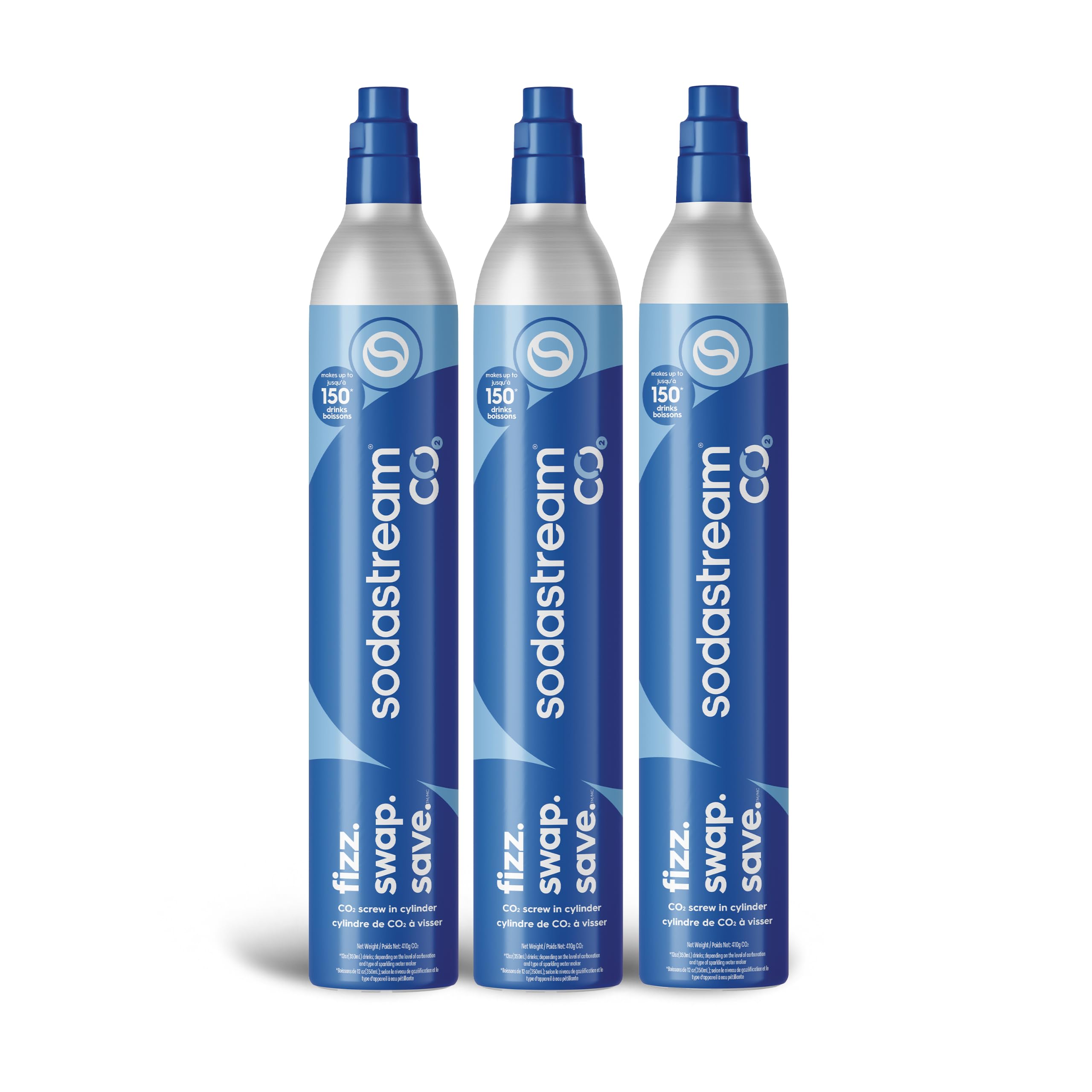
Buying CO2 cylinders for a sparkling water maker is one of those chores that is easy to forget until the machine hisses its last gasp mid-pour. SodaStream’s three-cylinder bundle is aimed squarely at that problem: instead of one canister, you get three blue screw-in cylinders in a single purchase, which effectively pushes the next exchange trip a few months down the road for a typical household. It is a simple product with little to review beyond fit, capacity, and cost, but those details matter more than they might seem.
The cylinders use the screw-in (blue) connection, which is the older of SodaStream’s two current formats. That distinction is the most important thing to check before buying. The blue screw-in cylinders fit machines like the Fizzi, OneTouch, Jet, Spirit, Penguin, and a range of third-party makers including DrinkMate and Aarke, as well as the Ninja Thirsti. They do not fit SodaStream’s newer quick-connect machines, which use a different white cylinder with a push-in fitting. If you own a recent Terra, Art, or E-Terra, this bundle is not for you, and no adapter will change that. The compatibility list is broad but not universal, and it is worth confirming your model before ordering three of anything.
In practice, each cylinder is a standard 60-liter fill under SodaStream’s own rating, though real-world output varies. Carbonation level, water temperature, and how long you hold the button all affect yield. Households that carbonate cold water lightly might stretch a cylinder close to the rated figure; those who like aggressive fizz and often carbonate room-temperature water will see noticeably fewer liters. A reasonable expectation for a two-person household drinking a liter or two of sparkling water a day is roughly three to five weeks per cylinder, so the three-pack covers somewhere in the range of two to four months. That is the core value proposition: fewer reorders, fewer moments of running dry.
The cylinders themselves are refillable, not disposable. SodaStream operates a cylinder exchange program in most markets, where empty cylinders are swapped for full ones at a reduced price, and the bundle does not change that arrangement. Some retailers also accept returns of empties, and in certain regions third-party refill services exist, though warranty and safety considerations apply. The practical takeaway is that the upfront cost of three cylinders is partly a deposit-like expense; you are holding inventory that gets exchanged rather than thrown away. That is worth understanding before comparing the sticker price to a single-cylinder purchase.
Compared with the alternative of buying cylinders one at a time, the bundle mainly saves trips and shipping rather than offering a dramatic per-unit discount. Compared with a soda siphon or a large-format bottled sparkling water habit, the economics depend heavily on how much you drink. A siphon using small cream chargers is cheaper to start but costly per liter and limited in capacity; bottled water is convenient but generates plastic waste and recurring cost. The SodaStream setup sits in the middle: moderate upfront cost, lower ongoing cost per liter, and a refill logistics burden that the three-pack reduces but does not eliminate.
There are real trade-offs. Three full cylinders are heavier and bulkier to store than one, and they take up cupboard or shelf space. The exchange model means you still have to physically transport empties to a participating retailer, and availability varies by location; in some areas the nearest exchange point is inconvenient enough that the convenience argument weakens. The blue screw-in format is also gradually being superseded by the quick-connect system on newer machines, so anyone planning to upgrade their maker in the next year or two may find these cylinders become obsolete for their next device. That is a genuine consideration, not a minor footnote.
This bundle suits people who already own a compatible screw-in machine and drink sparkling water regularly enough that running out is a recurring annoyance. It also works for small households or offices that want a buffer of spare cylinders on hand. It is less suitable for occasional users who carbonate a few times a month, since cylinders can sit for long periods and the upfront outlay is harder to justify; for them, a single cylinder is the more sensible purchase. It is also not suitable for owners of quick-connect machines, and anyone unsure of their model should check the fitting before buying. Overall, it is a utilitarian stock-up rather than an upgrade, and its value rests almost entirely on whether your machine takes the blue screw-in format and how quickly you go through gas.