
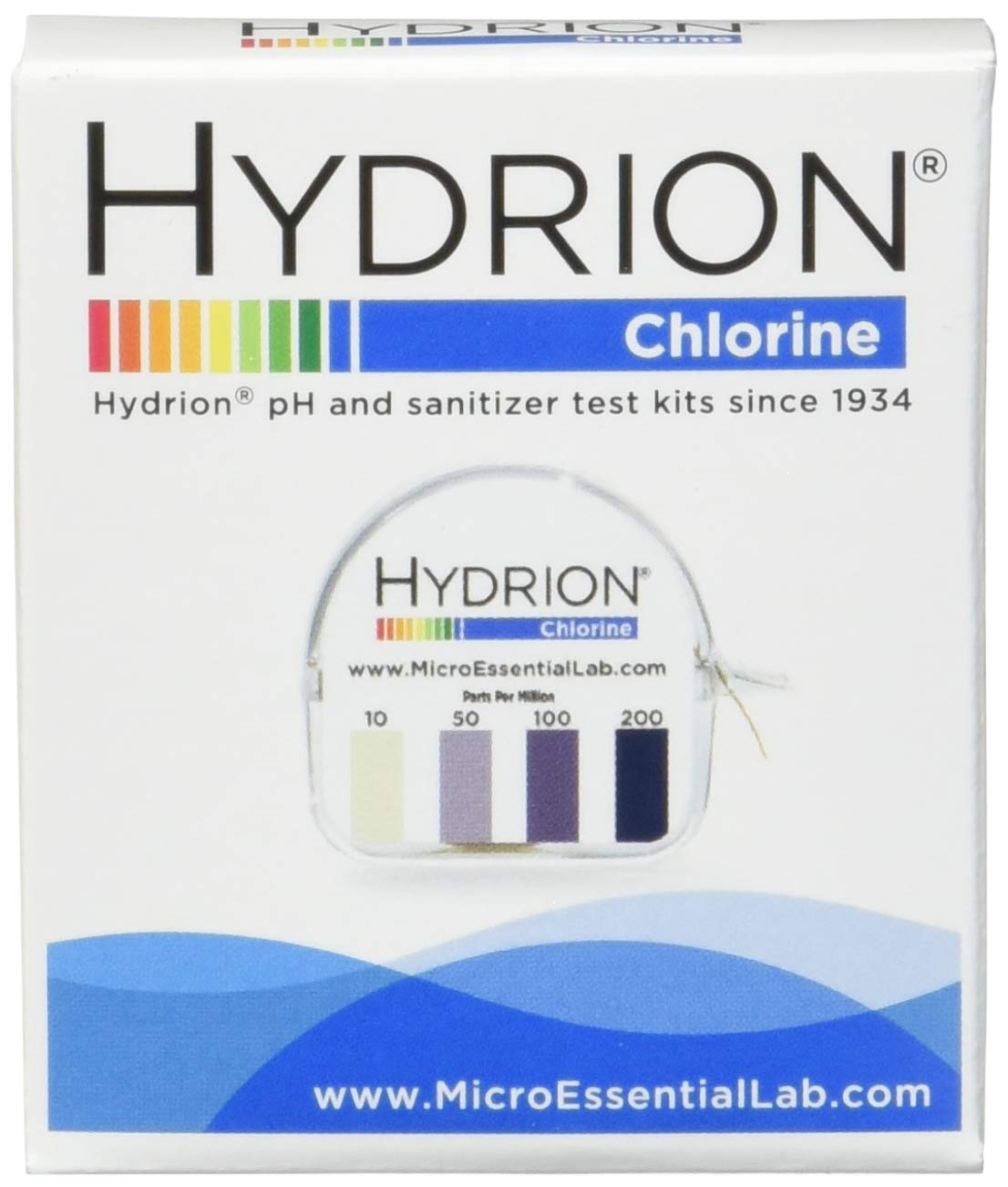
For restaurant managers and food service operators, verifying sanitizer concentration is a routine but critical task. The Micro Essential Lab CM240 Chlorine Test Strips offer a quick way to check chlorine levels in the 10–200 ppm range, which covers typical sanitizing solutions. This box contains 10 individually packaged strips, making it convenient for multiple test points or for keeping a pack at different stations.
In real-world use, these strips are dipped into a sample of the sanitizer solution, and the color change is compared to a reference chart. The process takes seconds, and the strips are designed to be easy to read. The range of 10–200 ppm is suitable for most food service sanitizing applications, where recommended concentrations often fall between 50 and 100 ppm for chlorine-based sanitizers. The strips are also useful for checking dish machine final rinse sanitizer levels, though the higher end of the range may be needed for some applications.
Key functional features include the colorimetric indicator that changes color based on chlorine concentration, and the individual foil packets that protect the strips from light and moisture. The packaging helps maintain shelf life, but it also means each test requires opening a new packet, which can be slightly cumbersome during busy periods. The strips have a defined reaction time, typically around 30 seconds, and the color should be read immediately after.
One limitation is that the color chart can be difficult to interpret in low-light conditions or for users with color vision deficiencies. The difference between adjacent color blocks (e.g., 50 ppm vs. 100 ppm) may not be obvious, leading to potential misinterpretation. Additionally, the strips are designed for chlorine only; they are not suitable for quaternary ammonium or iodine sanitizers, which require different test strips. Users should also be aware that the strips have a limited shelf life, and outdated strips may give inaccurate readings.
Compared to digital chlorine meters, these strips are far less expensive and require no calibration or batteries. However, digital meters offer higher precision and are less subjective. For many smaller operations, the cost and simplicity of strips outweigh the need for exact ppm readings. Compared to other test strip brands, Micro Essential Lab strips are generally reliable, but some users report that the color development can vary slightly between batches, so it’s wise to store them properly and use them before the expiration date.
Who is this for? These strips are ideal for restaurant staff, food service workers, and health inspectors who need a quick, on-the-spot check of chlorine sanitizer levels. They are also useful for small businesses that want to monitor sanitizer strength without investing in a meter. They are not suitable for high-precision laboratory work or for sanitizers other than chlorine. Also, if you need to test very low concentrations (below 10 ppm), these strips won’t provide the resolution needed.
In summary, the Micro Essential Lab CM240 Chlorine Test Strips are a practical, no-frills tool for routine sanitizer verification. They are not without flaws—color interpretation can be subjective, and the individual packaging adds a bit of waste—but for the price, they offer a convenient way to ensure sanitizing solutions are within acceptable ranges. As with any test strip, proper storage and adherence to the reading instructions are essential for accurate results.