
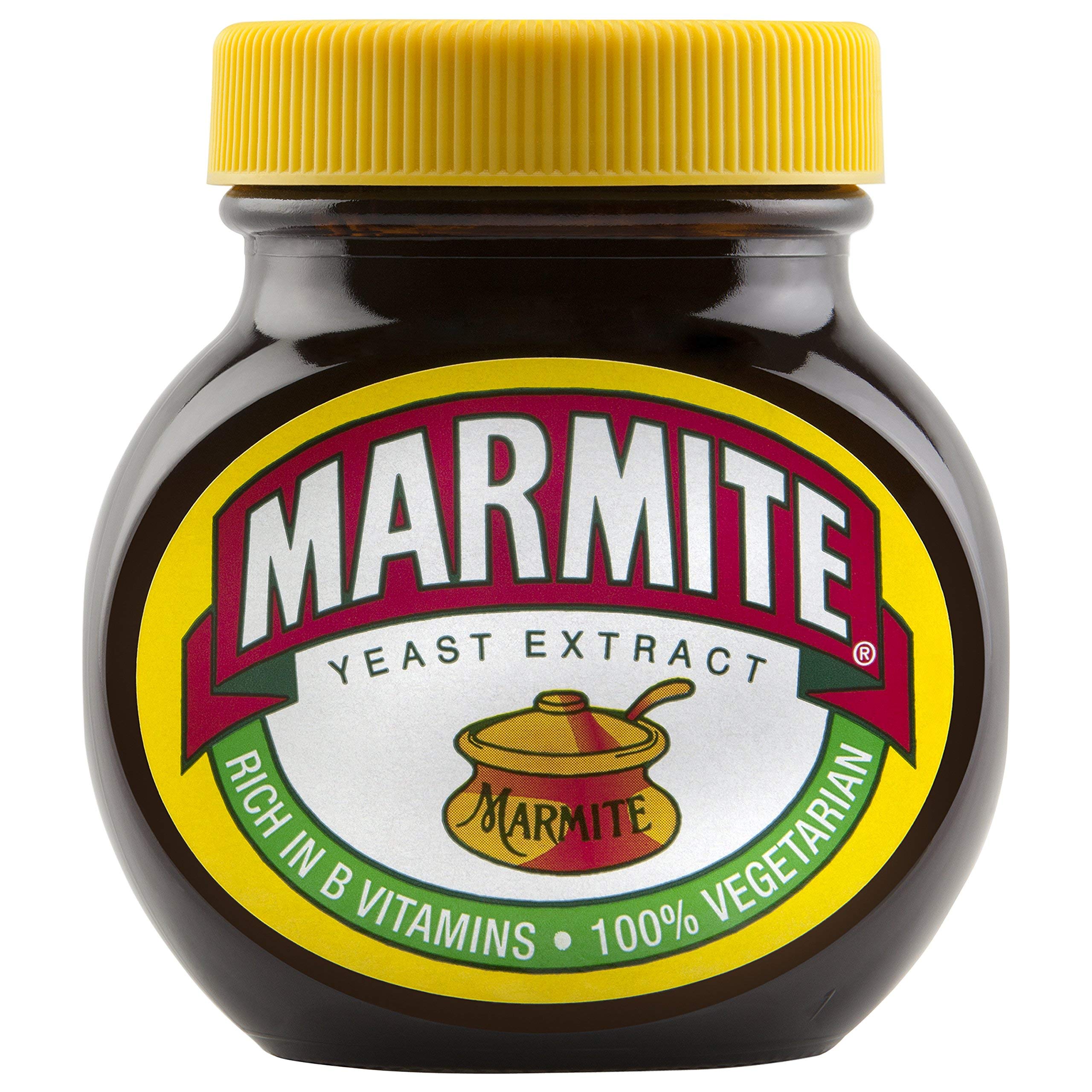
Marmite is one of those products that tends to provoke strong reactions. The 250g single pack is the standard jar size found in most UK supermarkets, and it’s the format most people will encounter first. This review looks at what the product actually is, how it’s used, and where it fits—or doesn’t—into a normal kitchen routine.
At its core, Marmite is a yeast extract spread, a by-product of brewing. It’s dark, thick, and intensely salty with a savoury, almost umami flavour that people either love or hate. The 250g jar is glass, with a red lid and the familiar yellow and black label. It’s shelf-stable before opening and keeps for weeks in the fridge afterwards. The ingredient list is short: yeast extract, salt, vegetable extract, spice extracts, and vitamins (niacin, B12, riboflavin, folic acid, thiamin). It’s suitable for vegetarians and vegans, and it’s gluten-free. The nutrition profile is notable for its salt content—about 10g per 100g—so a typical 4g serving delivers around 0.4g salt, which is roughly 7% of an adult’s daily reference intake. It’s also a source of B vitamins, which is a genuine functional point, though not a reason to eat it by the spoonful.
In practice, Marmite is used sparingly. The most common application is on hot toast, often with butter, where a thin scraping adds a deep savoury note. It’s also stirred into hot water for a drink (a tradition in some families), used as a stock enhancer in stews and gravies, or melted into cheese on toast. The 250g jar is a practical size for a single household—it lasts months if stored properly. The texture is sticky and dense, so a little goes a long way; over-application is a common mistake for newcomers and results in an overwhelmingly salty, bitter taste.
Functionally, the product does what it claims: it’s a concentrated flavouring agent with a long shelf life and added vitamins. The packaging is straightforward—a glass jar with a screw-top lid that seals well. It’s recyclable, though the label and lid need separate disposal. The jar is not squeezeable, so getting the last bits out requires a knife or spatula. That’s a minor annoyance but worth noting.
The main limitation is obvious: the flavour is polarising. If you didn’t grow up with it, the initial taste can be jarring—salty, yeasty, and slightly bitter. It’s not a spread to be used generously like jam or peanut butter. Also, the high salt content means it’s not suitable for anyone on a strict low-sodium diet, and it’s not a significant source of protein or fibre. Compared to other savoury spreads like peanut butter or cream cheese, Marmite offers a very different nutritional profile—lower in fat and calories but much higher in salt. It’s also not a direct substitute for those products in terms of texture or usage; it’s more of a condiment than a primary spread.
Who is it for? People who enjoy savoury, umami-rich flavours and are looking for a low-calorie way to add depth to toast, soups, or sauces. It’s also a convenient source of B vitamins for vegetarians and vegans, though supplements would be a more controlled way to get those nutrients. It’s not for anyone who dislikes strong, salty flavours, or for those who need to watch their sodium intake. It’s also not a good fit for people expecting a mild, spreadable paste—Marmite is assertive and requires a learning curve.
In summary, the Marmite 250g single pack is a functional, long-lasting pantry item with a distinctive taste that has earned a loyal following. It’s not a universal crowd-pleaser, and its high salt content is a real consideration. But for those who like it, it’s a versatile ingredient that delivers consistent results. The jar size is sensible for occasional use, and the product’s shelf life makes it a low-waste option. Just don’t expect to love it on the first try—and use it sparingly.