
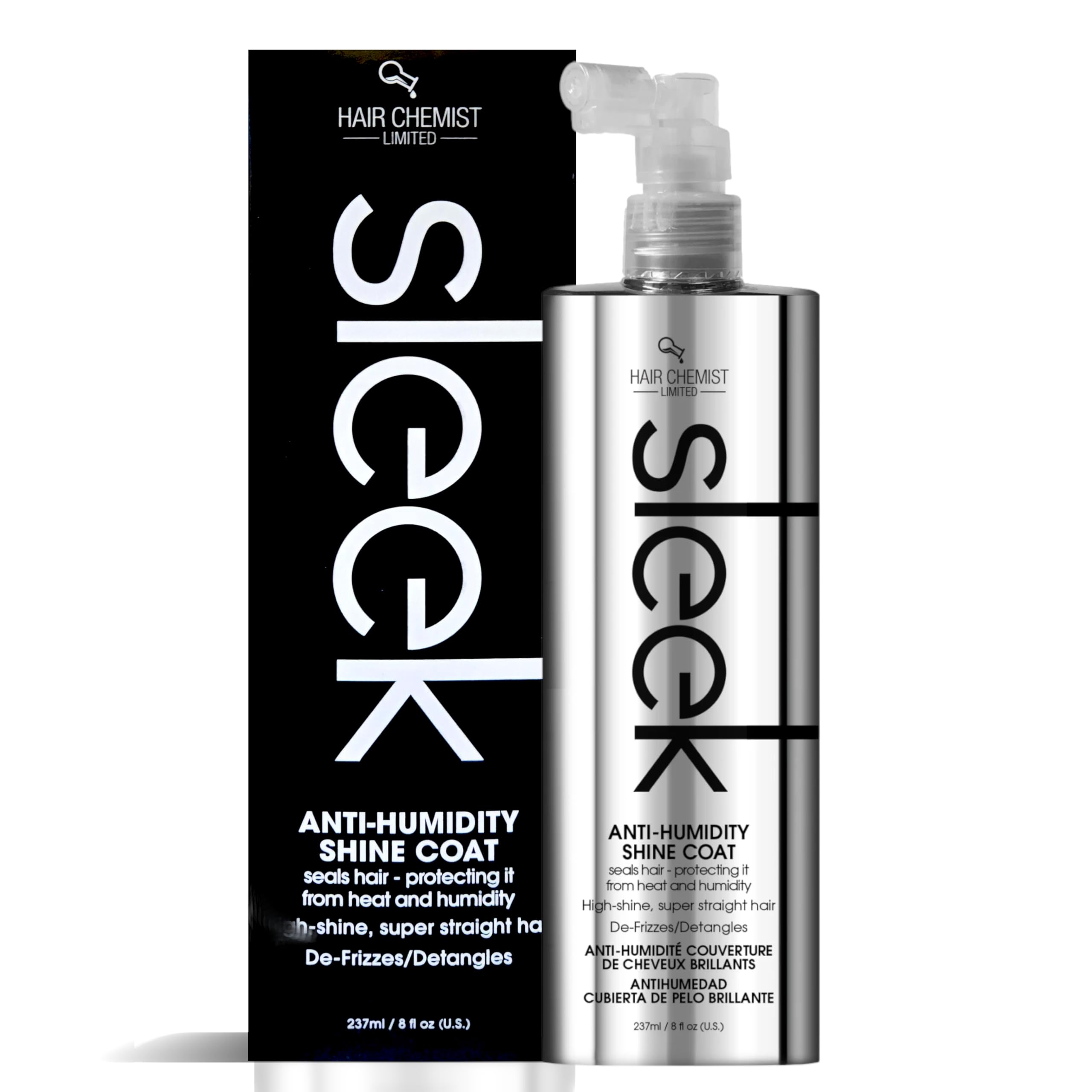
Hair Chemist’s Sleek Anti-Humidity Shine Coat is a finishing product rather than a styling tool. It is meant to be misted over hair after styling is complete, adding a light sheen while attempting to seal out moisture that causes frizz. The 8 oz aerosol-style can puts it in the same general category as drugstore shine sprays and anti-humidity finishing mists, a crowded field where claims often outrun results.
In practice, the product is used as the last step in a routine. After blow-drying, flat-ironing, or setting hair, a light pass of the mist over the outer layers is intended to smooth flyaways and add gloss. It is not a heat protectant in the traditional sense, and it is not designed to be worked through wet hair before styling. That distinction matters, because using it at the wrong stage tends to produce a weighed-down, slightly tacky finish rather than the sleek look the name suggests.
Functionally, the product relies on a combination of film-forming ingredients and light silicones that sit on the surface of the hair. This is standard for shine coats: the coating reflects light, which reads as gloss, and creates a barrier that slows moisture absorption from humid air. The anti-humidity effect is real but temporary. In moderate humidity, a light application can help hold a style together for a few hours. In heavy summer humidity or during rain, the barrier is not enough on its own, and frizz will still develop, particularly on porous or color-treated hair.
The shine aspect is the more reliable part of the equation. A brief mist adds visible gloss to dull hair without the wet, greasy look some pomades and serums leave behind. On straight or wavy hair, that effect is fairly clean. On very fine hair, though, the coating can be too much. A heavy hand leads to stringiness and a texture that feels coated rather than soft, and the product does not brush out as easily as a lightweight serum would.
One of the more noticeable trade-offs is buildup. Because the product is a surface coating, regular use without clarifying shampoo can leave hair looking duller over time, which undercuts the shine it is supposed to provide. Users who wash infrequently or rely on dry shampoo may find the residue accumulates faster than expected. This is not unusual for finishing sprays, but it is worth knowing before committing to daily use.
Application also takes some calibration. Holding the can too close or spraying too long in one spot leaves visible droplets that dry into a stiff patch. A short, sweeping pass at arm’s length works better than a concentrated spray, and a little goes further than the packaging might imply. The scent is noticeable at first but fades within an hour or so, which most users will find acceptable.
Compared with a traditional anti-frizz serum, the Shine Coat is lighter and easier to distribute evenly, but it offers less control and less lasting hold. A serum worked through damp hair provides more humidity resistance and can be layered more predictably, though it risks weighing hair down. The spray format here is faster and more convenient for touch-ups, which is where it makes the most sense: refreshing a style midday or adding polish before an event rather than building a style from scratch.
Aerosol finishing sprays also differ from leave-in conditioning mists, which hydrate rather than seal. Anyone expecting this product to repair or moisturize dry ends will be disappointed; its job is cosmetic and temporary. It is a surface treatment, and it should be treated as one.
The product is best suited to people with medium to thick hair, straight-to-wavy textures, or anyone who already has a solid styling routine and wants a quick gloss and light humidity buffer at the end. It is less suitable for fine or thin hair, for very curly textures where a coating can disrupt definition, or for anyone hoping to skip heat styling entirely. Those with sensitive scalps may also want to patch-test, since the fragrance and film-formers sit close to the roots when sprayed broadly.
Overall, the Sleek Anti-Humidity Shine Coat does what a finishing mist should do, within limits. It adds shine, tames surface frizz briefly, and is easy to use once the application is dialed in. It will not replace a serious anti-humidity regimen, and it demands occasional clarifying to avoid buildup. For a low-commitment polish step in a humid climate, that is a reasonable trade-off; for anyone expecting salon-level frizz control, expectations should be adjusted accordingly.