
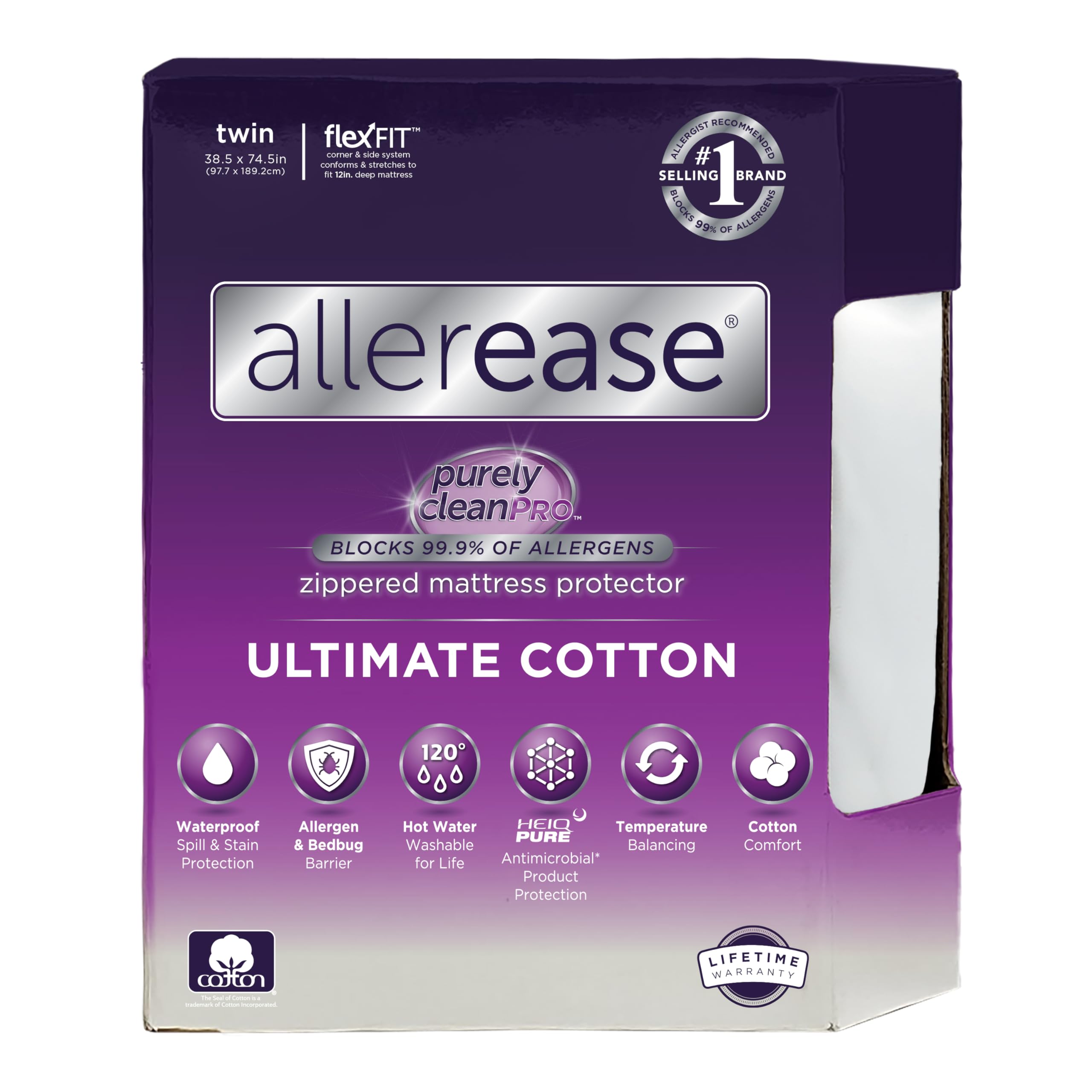
Mattress protectors tend to fall into two broad camps: the thin, stretchy fitted sheets meant mainly to guard against spills, and the fully zippered encasements that wrap the entire mattress like a case. The AllerEase Ultimate sits firmly in the second category. It is a six-sided zippered cover aimed at people who want to block dust mites and other allergens from settling into the mattress rather than simply protecting the surface from stains. That distinction matters, because the two jobs are not the same and the products that do one well often do the other less well.
In practice, this cover is installed by slipping the mattress inside it and zipping it shut along one edge. Because it encloses all six sides, it is a more involved installation than dropping a fitted protector over the top, and it is the kind of thing most people do once and then leave alone. Removal for washing is similarly less convenient than a fitted sheet, since the whole mattress has to come off the bed frame to get the cover on and off. That is a real trade-off worth knowing before buying, and it is the main reason full encasements tend to be chosen deliberately rather than casually.
The functional case for the design is straightforward. A zippered encasement creates a barrier around the mattress, which is the approach typically recommended for households dealing with dust mite sensitivity, since mites live inside the mattress rather than on top of it. A surface-only protector does little to interrupt that; a full encasement at least separates the sleeper from the mattress contents. The AllerEase cover uses a smooth, tightly woven fabric surface with a water-resistant backing, and the zipper runs the full length of one side with a fabric flap intended to cover the closure. The fabric is quiet enough in normal use, though any encasement will produce a bit more rustle than bare bedding, and the fit is cut for standard mattress depths rather than deep pillow-tops.
Performance expectations should be set realistically. This is a protective layer, not a cooling or comfort upgrade. The water-resistant backing means it will slow liquid reaching the mattress, but it is not a waterproof mattress bag and should not be relied on for heavy or prolonged spills. The fabric surface is smooth and unobtrusive under a fitted sheet, but it does add a slight layer between the sleeper and the mattress, and some people notice a marginally warmer feel compared with sleeping directly on the mattress surface. Those with very deep mattresses or unusually shaped beds should measure carefully, because a zippered cover that is too tight is difficult to install and one that is too loose wrinkles under the sheets.
Where this product sits relative to alternatives is worth spelling out. A basic fitted terry or waterproof protector is cheaper, easier to wash, and easier to live with day to day, but it only covers the top surface and does nothing to seal the mattress itself. A full zippered encasement like this one is the better fit for allergy-focused use, but it asks more in installation effort and laundering inconvenience. For someone whose main concern is protecting against occasional spills or keeping the mattress clean, the simpler fitted option is usually the more practical choice. For someone specifically trying to reduce allergen exposure in the bed, the encasement approach is the one that makes sense, and this cover is a reasonable mid-priced example of it.
The Twin size is a sensible pick for a child’s bed, a guest room, or a single sleeper, and the white color keeps it visually neutral under bedding. Machine washing is possible, though the zippered construction and backing mean it is not as carefree as a thin cotton protector, and drying needs to be done with some care to avoid stressing the zipper and seams. The zipper itself is the component most likely to see wear over time, as with any encasement, so treating the closure gently when installing and removing the cover will extend its life.
As for who it suits: this is a good match for allergy-conscious sleepers, parents setting up a child’s bed, and anyone who wants the mattress itself sealed rather than just topped. It is less suitable for people who want a quick-to-launder everyday protector, those with very thick or irregular mattresses, and anyone expecting a meaningful comfort or temperature improvement from a protector. It is a functional, unglamorous piece of bedding that does a specific job, and it is best judged on whether that job matches what you actually need.