
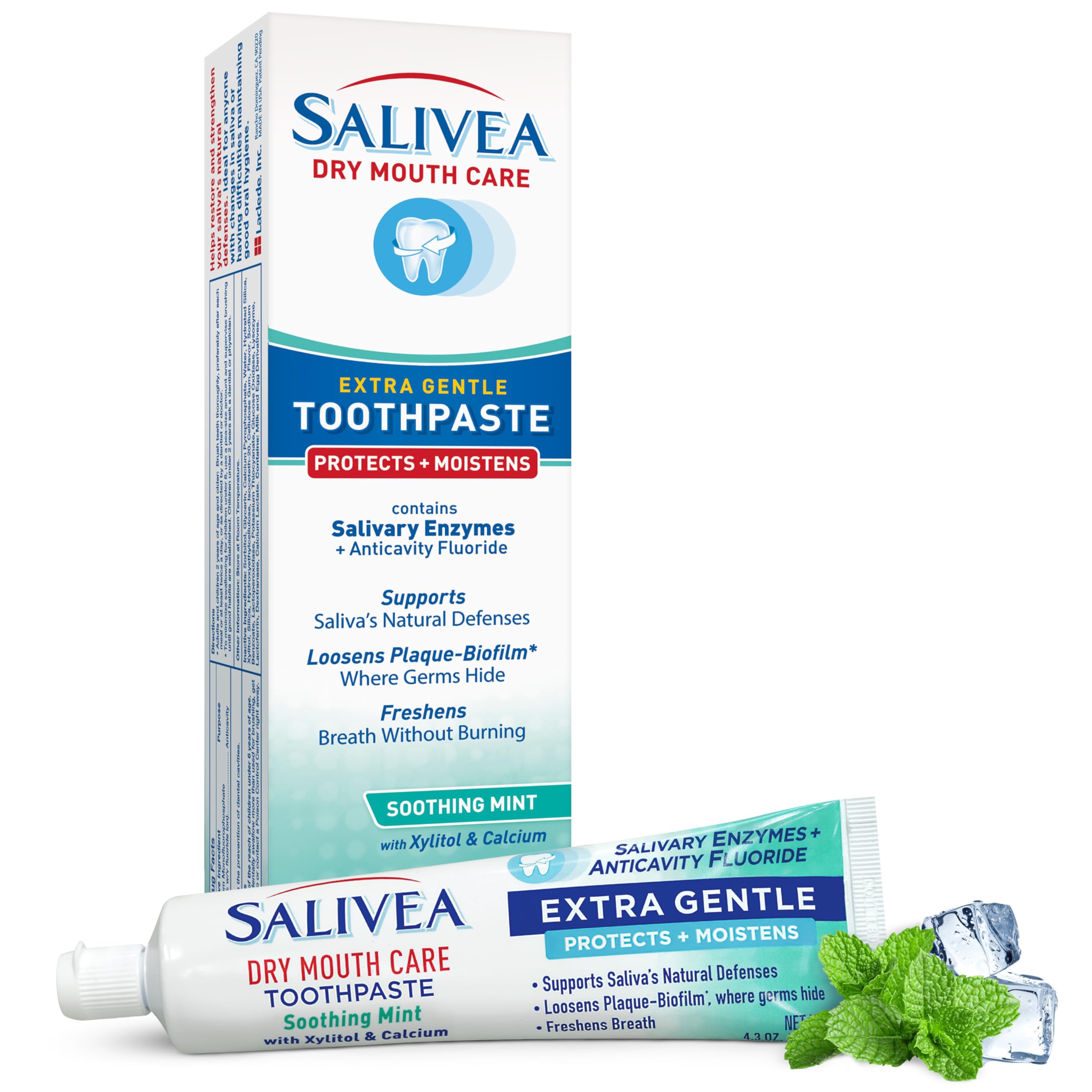
Dry mouth is one of those problems that sounds minor until you deal with it daily. Saliva does a lot of quiet work—buffering acids, washing away food particles, and keeping tissue comfortable—and when it thins out, ordinary toothpaste can start to feel like part of the problem rather than the solution. SALIVEA’s Dry Mouth Toothpaste is aimed squarely at that gap, a 4.3 oz anticavity fluoride paste in a mint flavor, sold as a single tube. It sits in a small but growing category of oral care products formulated with dry mouth in mind rather than simply marketed to it.
The core proposition is straightforward. The paste contains fluoride for cavity protection, which matters more than usual for people with reduced saliva flow, since lower saliva means less natural remineralization and a higher caries risk. It is positioned as gentle enough for everyday brushing, with a mint flavor that is meant to freshen breath without the aggressive burn associated with many mainstream pastes. The 4.3 oz size is roughly in line with standard toothpaste tubes, though slightly smaller than the common 5–6 oz formats, which is worth noting for anyone tracking cost per use.
In practice, this is a toothpaste you use exactly like any other: a pea-sized amount on a soft-bristled brush, twice daily, followed by spitting rather than rinsing if you want to keep the fluoride working. The difference shows up in the aftertaste and feel. Users in this category typically report that conventional mint pastes—especially those with strong sodium lauryl sulfate foaming agents—can sting or leave dry tissue feeling raw. SALIVEA’s formula is generally described as lower-foaming and less sharp on the tongue, which is the main reason someone would choose it over a drugstore standard. The mint is present but restrained; it does not linger aggressively, which some will appreciate and others may find underwhelming if they expect a strong fresh-mouth sensation.
Where the product earns its place is in routine compatibility. Dry mouth is often a side effect of medications—antihistamines, antidepressants, blood pressure drugs—or of conditions like Sjögren’s, and those users brush on autopilot. A paste that does not irritate makes it easier to keep brushing consistently, which is the real clinical win. The fluoride content supports that habit rather than replacing it. It is also worth being clear about what this toothpaste does not do: it is not a saliva substitute, it does not stimulate production, and it will not replace dedicated moisturizing gels, sprays, or lozenges for severe cases. Think of it as one layer in a regimen, not a standalone fix.
- Fluoride anticavity protection — relevant for dry mouth users at elevated cavity risk
- Low-irritation mint flavor — designed to avoid the burn of stronger pastes
- Reduced foaming — often gentler on dry tissue, though it can feel unfamiliar at first
- 4.3 oz single tube — standard-ish size, slightly smaller than many mass-market tubes
The most obvious trade-off is price and availability. Specialty dry mouth pastes typically cost more per ounce than mainstream anticavity toothpastes, and they are less likely to be stocked in every drugstore aisle, so buying usually means ordering online or hunting through pharmacy shelves. The milder flavor is also a double-edged quality: if you are used to a bracing, lingering mint, this will feel flat. And because it foams less, some users initially interpret the lack of lather as a lack of cleaning, even though foam is largely a cosmetic function of surfactants rather than a measure of efficacy.
Compared with a standard fluoride toothpaste such as a typical sensitivity or anticavity paste from a major brand, SALIVEA trades intensity for comfort. A conventional paste may cost less and deliver a stronger fresh sensation, but it can also contain detergents and flavorings that aggravate dry tissue. Compared with dedicated saliva substitutes—gels, sprays, and lozenges—this is a preventive and comfort-oriented product, not a moisturizer. The two categories serve different moments: toothpaste for brushing, substitutes for between-brush dryness. Someone with mild dryness may find the paste sufficient on its own; someone with moderate to severe dry mouth will likely need both.
This toothpaste is best suited to adults dealing with medication-related or chronic dry mouth who want a fluoride paste that does not sting, and to anyone whose mouth feels raw after brushing with regular products. It is also a reasonable choice for older adults with reduced saliva flow who still want cavity protection. It is not the right pick for people who want a strong, long-lasting mint blast, for those looking for a saliva replacement, or for anyone unwilling to pay a specialty premium over a standard tube. Children and users with specific fluoride sensitivities should follow their dentist’s guidance rather than assume this formula is appropriate.
The realistic expectation is modest but meaningful: a gentler brushing experience with reliable fluoride coverage, not a cure for dryness. For the right user, that is enough to justify the switch.