
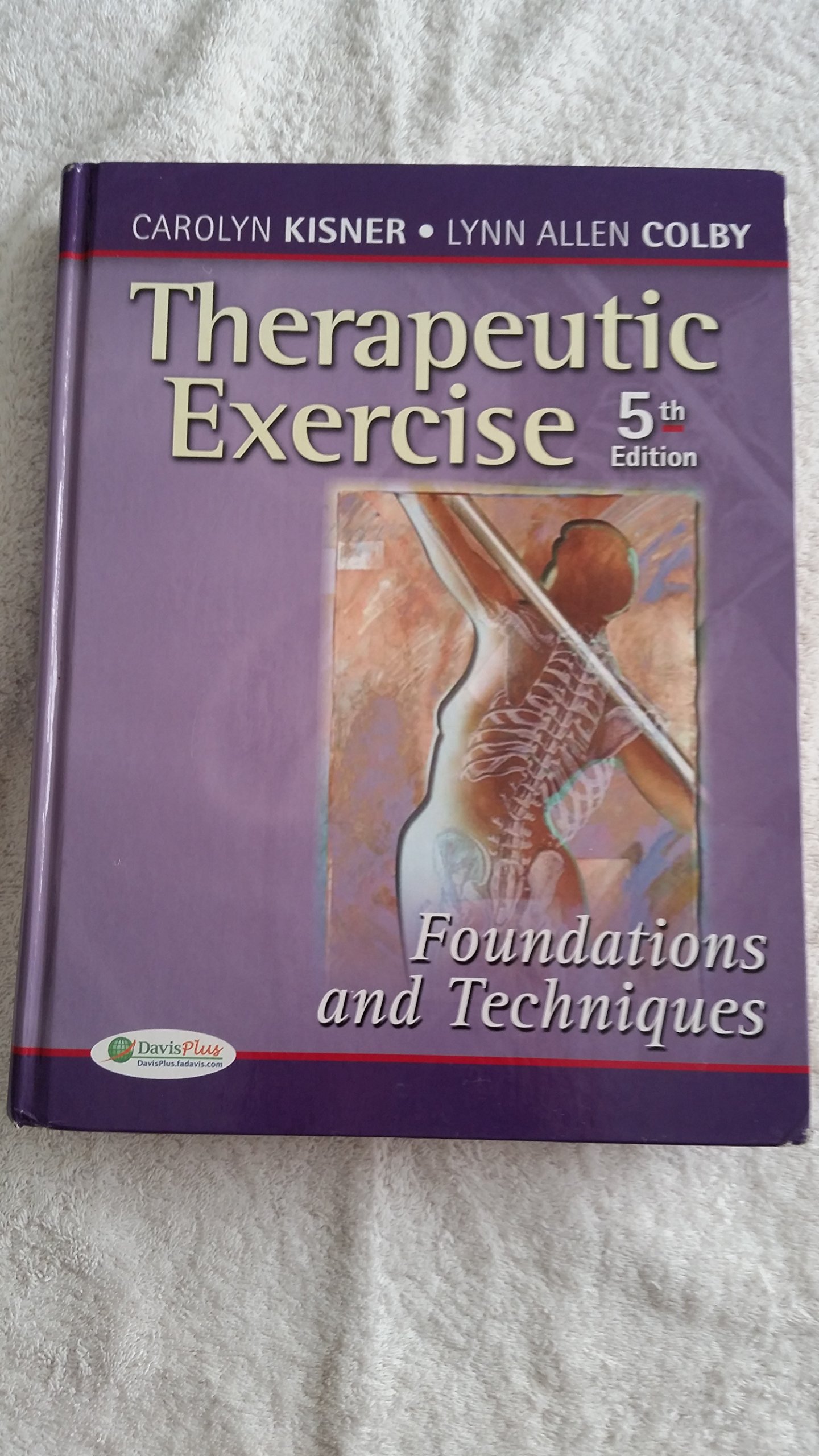
Kisner and Colby’s Therapeutic Exercise: Foundations and Techniques has been a fixture in physical therapy education for years, and the fifth edition is the version many practicing clinicians still have on their shelves. It is a textbook first and foremost, written for students in entry-level DPT programs and for instructors who need a structured framework for teaching exercise prescription. Understanding that audience matters, because the book’s strengths and its shortcomings both flow from its role as a classroom text rather than a quick-reference manual.
In practice, the book is used in two main ways. Students work through it chapter by chapter alongside a course on therapeutic exercise, typically in the first or second year of a professional program. Clinicians tend to use it differently: as a reference when they want to revisit the rationale behind a particular intervention, check the evidence base for an approach, or look up a condition they haven’t treated recently. It is not the kind of book most people read cover to cover after graduation, and it isn’t designed to be. The organization reflects a teaching sequence more than a clinical decision-making flow.
The structure moves from foundational material to specific regions and conditions. Early chapters cover terminology, patient management concepts, and the principles behind range of motion, stretching, and resistance training. Later sections address the spine, upper extremities, lower extremities, and then special populations and conditions. Each chapter generally follows a pattern: anatomy and biomechanics review, then interventions, then condition-specific applications. That consistency is helpful for students who need to know what to expect, though it can feel repetitive when reading large sections at once.
Several functional features are worth noting. The book includes extensive illustrations and photographs demonstrating exercise techniques and manual handling, which matters for a subject where positioning and alignment are hard to convey in prose alone. Chapters incorporate case studies and review questions, and there are references to current research throughout. The fifth edition added and updated content in areas like balance and vestibular rehabilitation, which reflects where the field was moving at the time of publication. The writing is generally clear and appropriately technical for its audience, though it assumes a solid foundation in anatomy and kinesiology.
One significant limitation is the book’s density. It runs well over 900 pages, and the level of detail that makes it useful as a course text also makes it cumbersome for quick consultation in a busy clinic. Finding a specific exercise for a specific patient often means navigating a lengthy chapter rather than flipping to a concise protocol. The index is serviceable but not exceptional. There is also the matter of currency: the fifth edition was published in 2007, so sections on evidence and specific techniques do not reflect more recent research. Readers looking for the latest clinical guidelines will need to supplement it with current literature or a newer edition.
Compared with condition-specific clinical reference books or evidence-based practice guides, this text is broader but less immediately actionable. A clinician wanting a quick protocol for, say, post-operative ACL rehabilitation might find a dedicated reference or a clinical practice guideline more efficient. What Kisner and Colby offer instead is the underlying reasoning: why certain exercises are selected, how to progress them, and what precautions apply. That makes it more of a teaching tool than a bedside manual. It also compares naturally with other foundational PT texts that emphasize exercise prescription; the differences tend to come down to organization and depth rather than dramatic gaps in content.
Performance expectations should be realistic. This is a reference that rewards deliberate use. Students who engage with the case studies and review questions will get more out of it than those who skim. Clinicians will find it most useful when they have a specific question and are willing to read a section rather than search for a single answer. It is not a book that will make anyone an expert on its own, and it doesn’t claim to be.
Who is it suitable for? Entry-level DPT students, instructors who need a structured teaching text, and clinicians who want a comprehensive foundation reference on their shelf. It is also reasonable for physical therapist assistants in programs that use it, though the depth may exceed what some curricula require. Who is it not suitable for? Practitioners seeking a concise, up-to-date clinical protocol manual, readers without a background in anatomy and kinesiology, and anyone who needs current evidence summaries rather than foundational principles. Personal trainers and fitness professionals may find some content useful but will encounter a level of clinical detail and terminology that isn’t aimed at them.
Overall, the fifth edition remains a solid, well-organized textbook that does what a foundational text should: it teaches principles and gives students a framework for clinical reasoning. Its age and density are real drawbacks for anyone using it as a working reference, and a newer edition or supplementary sources are advisable for current practice. But as a teaching resource and a long-term shelf reference, it holds up reasonably well.