
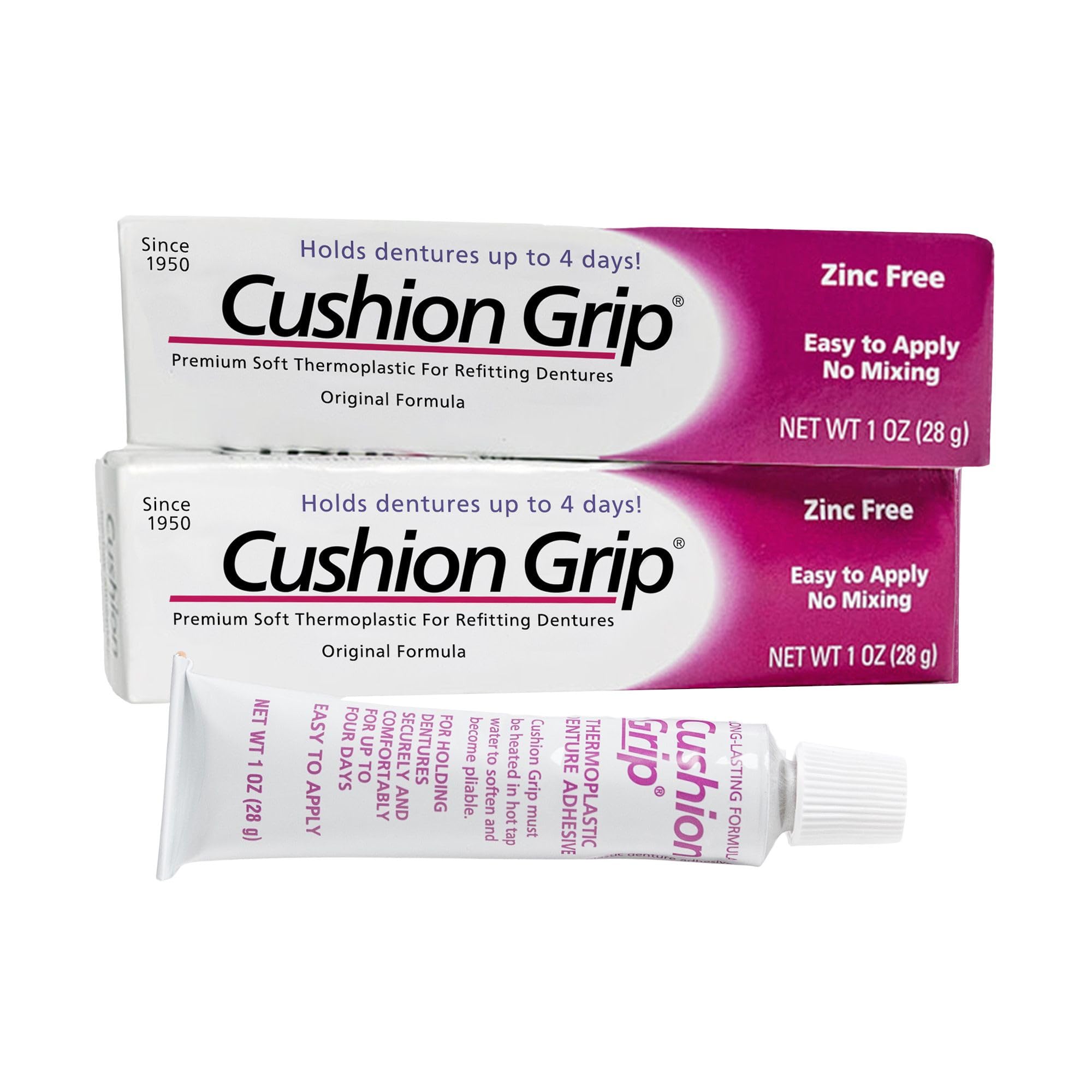
Cushion Grip occupies an unusual spot in the denture adhesive market. Most products in this category are pastes, powders, or strips that are applied fresh each day and dissolve or wash away over hours. Cushion Grip is a thermoplastic compound that softens in hot water, is pressed onto the denture base, and then cools into a flexible cushion that stays in place for several days at a time. It is sold as a refitting and tightening aid rather than a one-off adhesive, and that distinction matters for how it performs in practice.
The application process is the first thing anyone will notice, because it is more involved than squeezing a tube. A small amount of the material is dropped into hot water until it turns clear and pliable, then molded onto the denture. The denture goes into the mouth while the material is still warm so it can conform to the gum ridge, and the wearer bites down to establish the correct bite before it sets. Once cooled, it forms a soft, slightly rubbery layer between the denture and the tissue. The manufacturer’s instructions are specific about water temperature and timing, and following them closely is the difference between a snug fit and a mess. Expect the first attempt or two to be a learning curve.
What the product does well is address the problem of a denture that has gradually loosened. Over time, bone and tissue change shape, and a denture that once fit well begins to rock or slip. Pastes can compensate for minor gaps, but they are temporary and need reapplication before most meals or social occasions. Cushion Grip stays in place for multiple days, which reduces the daily ritual of cleaning off old adhesive and reapplying. For people who find paste application tedious or who need a bit more thickness to fill a gap, the moldable nature of the thermoplastic is a genuine functional difference rather than a marketing angle.
The cushioning effect is also worth noting. Because the material remains slightly soft after setting, it can reduce the hard contact between the denture base and the gums. Users who experience sore spots from a rigid fit sometimes report less discomfort, though this is variable and depends heavily on how well the denture itself fits. It is not a substitute for a professionally relined or remade denture, and it will not correct a fundamentally ill-fitting appliance.
There are real trade-offs. The multi-day lifespan means the material stays in the mouth through meals, drinks, and cleaning, and hygiene becomes more involved. Food can accumulate at the edges, and the compound needs to be removed, cleaned, and occasionally re-softened and re-molded. Removal is not difficult once you know the technique, but it takes more effort than peeling out a strip. Some users find the texture noticeable at first, and a few report that the material can feel bulky if too much is used. The instructions call for a small amount, and over-application is a common beginner mistake that affects comfort and retention.
Compared with conventional denture pastes, Cushion Grip is less convenient day to day but more durable across a week. Pastes are cheap, widely available, and quick to apply, but they offer lower holding strength and dissolve faster, especially with hot liquids. Adhesive strips sit somewhere in between. Cushion Grip is closer to a temporary soft reline than to a traditional adhesive, which is the most useful way to think about it. It is not a replacement for professional care, and it is not intended for use on dentures with certain types of soft liners or on implants without checking with a dentist.
Who is it for? People with a denture that is slightly loose and who want longer-lasting retention without a daily paste routine are the most likely to find it useful. It also suits those who need a bit of cushioning over tender areas, provided the underlying fit is reasonable. Who should look elsewhere? Anyone with a denture that is significantly ill-fitting, anyone who prefers the simplicity of a quick paste application, and anyone unwilling to spend time on the molding and cleaning process. People with sensitive gums or known reactions to the ingredients should consult a dental professional first.
Realistic expectations matter here. Cushion Grip can improve retention and comfort for a moderately loose denture, and it can extend the useful life of an appliance between professional visits. It will not make a poor-fitting denture feel new, and it requires more maintenance than the packaging photos suggest. Treated as a practical, somewhat fussy tool for a specific problem, it performs as described. Treated as a set-and-forget fix, it will likely disappoint.