
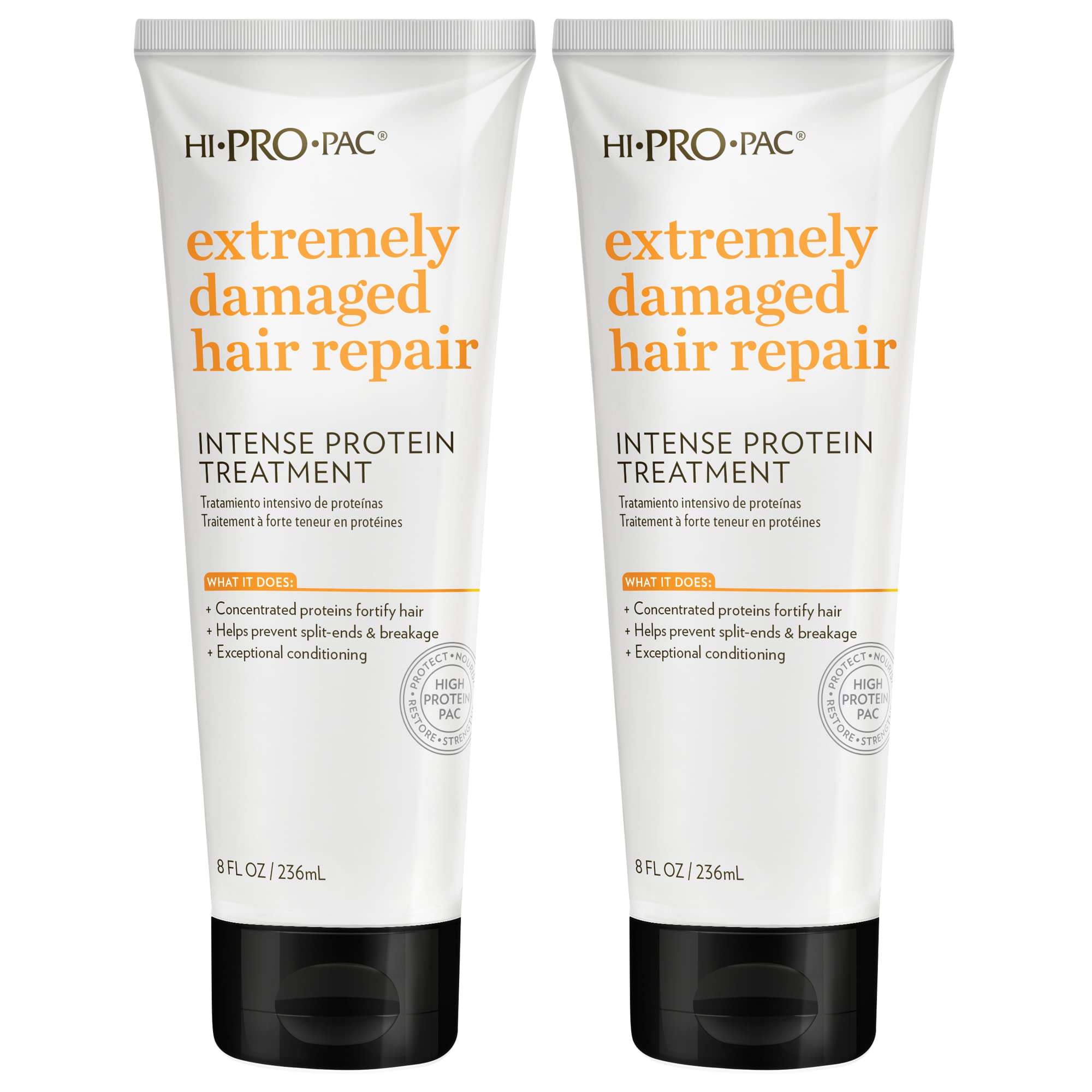
Protein treatments occupy an awkward spot in hair care. They can genuinely help hair that has been pushed too far by bleach, heat, or repeated coloring, but they are also easy to overuse, and the results depend heavily on hair type. The Hi-Pro-Pac Hair Mask, sold as a two-pack of 8 fl oz tubs, sits firmly in the intensive end of that category. It is marketed for extremely damaged hair, and the format — two full-size containers rather than a single jar — suggests the manufacturer expects repeat use rather than a one-off experiment.
In practice, a mask like this is used after shampooing, applied to damp hair, left on for a set period, and rinsed. Most protein masks of this type recommend somewhere between five and twenty minutes, and some users extend that with a cap and mild heat. The two-pack matters here because protein treatments are typically a weekly or biweekly step, not a daily conditioner. Having a spare tub means you are not rationing the product, which is a small but real convenience for anyone committed to a repair routine.
The core functional claim is protein-based fortification. Damaged hair loses protein structure, and hydrolyzed proteins in a mask can temporarily fill gaps in the cuticle, which tends to make hair feel stronger and less prone to snapping during combing. That effect is real but temporary — it coats and reinforces rather than permanently rebuilding the strand. The product also promises deep conditioning and help against split ends and breakage. Split ends, once formed, cannot be repaired by any mask; what a treatment can do is slow further splitting and reduce the friction and brittleness that cause breakage in the first place. Buyers should read those claims with that limitation in mind.
Where this mask is likely to suit people is in the aftermath of serious chemical or heat damage: over-bleached lengths, hair that snaps when wet, or a texture that has turned mushy and stretchy. In those cases a protein-forward mask is the appropriate tool, and a two-pack gives enough product to judge results over several weeks rather than a single wash. It is also a reasonable option for fine hair that has been lightened, since fine hair often shows protein treatment results quickly.
There are trade-offs worth flagging. Protein masks are not universally beneficial. Hair that is dry but structurally intact — often the case with coarse, curly, or natural-textured hair — can become stiff, rough, or straw-like with too much protein, a well-known phenomenon sometimes called protein overload. The fix is to alternate with a moisture-focused mask rather than using a protein treatment every wash. Anyone unsure which their hair needs should start with one application and assess how the hair feels after drying, not while wet. Another limitation is the rinse-out format itself: these masks require time in the shower or bath, which is less convenient than a leave-in spray or serum for people with short routines.
Compared with a standard moisturizing deep conditioner, this product is doing a different job. A moisture mask — think shea butter or fatty-alcohol-heavy formulas — softens and adds elasticity, while a protein mask like this one adds temporary strength and structure. Many people with damaged hair benefit from both, used on alternating weeks. Compared with salon bonding treatments, which work at a chemical level inside the cortex, a protein mask is a surface-level and maintenance-oriented approach. It is cheaper and easier to do at home, but it will not deliver the same structural result, and expectations should be set accordingly.
As for who should skip it: anyone with healthy, undamaged hair will likely see little benefit and may find the formula heavy or stiffening. People who have recently had a keratin smoothing treatment should check with their stylist before layering another protein product on top. And anyone expecting split ends to disappear should look elsewhere — trimming is the only real solution there.
Realistic expectations, then: used weekly on genuinely damaged hair and paired with a moisture conditioner, a protein mask of this kind can make combing easier and reduce breakage over a few weeks. It will not restore hair to its pre-damage state, and the two-pack format is best read as a supply for a sustained routine rather than a sign of dramatic results. For the right hair type and the right frequency, it is a sensible, unglamorous maintenance product.