
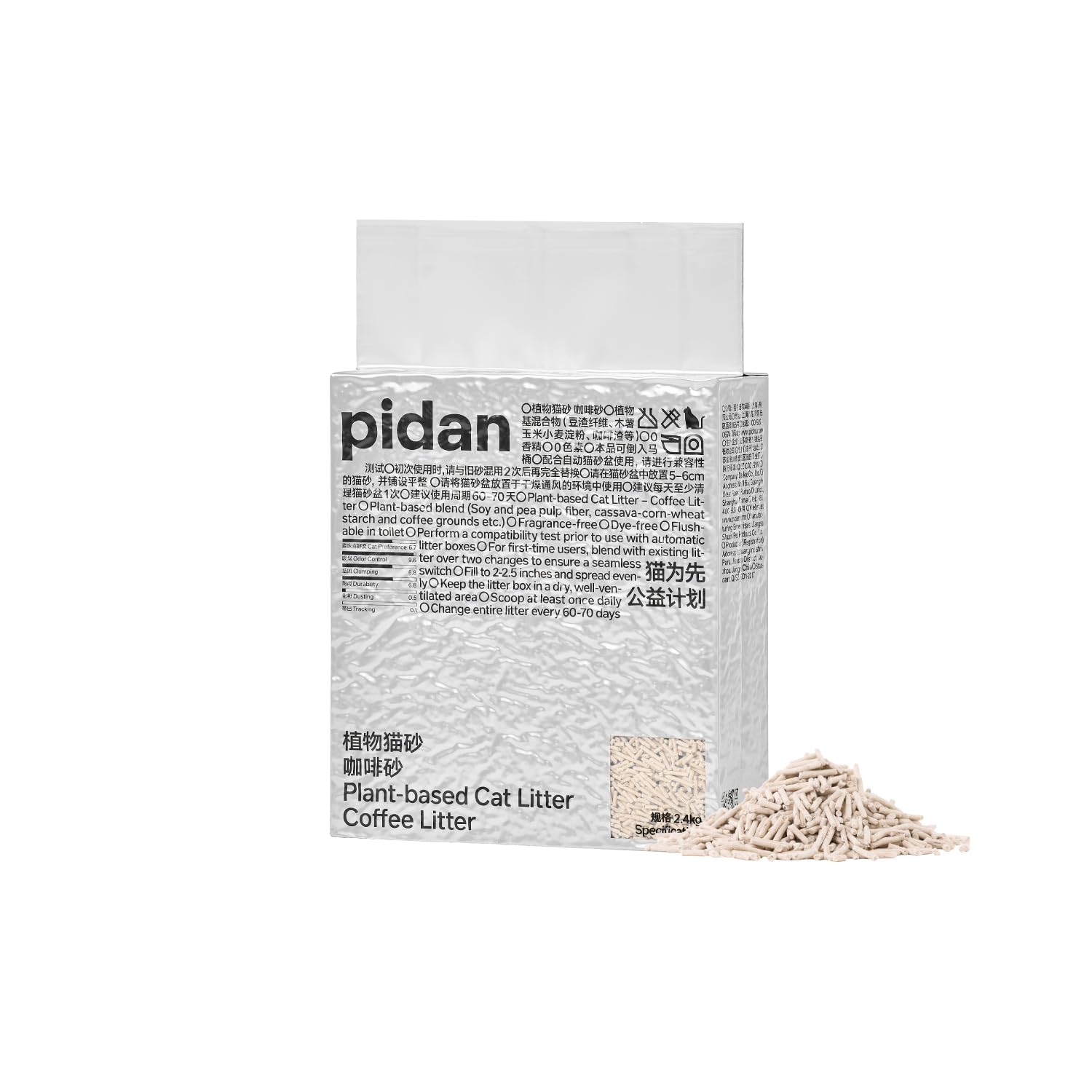
Tofu cat litter has moved from novelty to mainstream over the past few years, and pidan’s take on the format adds a twist: recycled coffee grounds blended into the tofu-based pellets. The product is sold in a four-pack, which is the format most cat owners will encounter when buying in bulk. This review looks at how the litter behaves in everyday use, where it holds up, and where it falls short of the claims on the bag.
The core appeal here is convenience. The litter is designed to clump firmly enough to scoop cleanly, and the pellets are marketed as flushable, meaning used clumps can go straight into the toilet rather than into a bin. For apartment dwellers without easy access to outdoor waste disposal, or for anyone tired of hauling heavy bags of clay litter, that combination is genuinely attractive. The four-pack format also reduces the frequency of reordering, which matters if you have multiple cats or a large litter box.
In practice, the litter is used much like any other clumping product. You fill the box to a depth of roughly two to three inches, scoop solids daily, and top up as needed. The pellets are lighter than clay, so the box is easier to move and the bag is easier to carry. The coffee grounds are intended to help with odor control, and the tofu base provides the clumping structure. The litter is generally low-dust compared to clay, though no tofu litter is completely dust-free, and you may notice some fine particles when pouring a fresh bag.
Clumping performance is the make-or-break factor for any litter, and this is where expectations should be calibrated. The clumps form reasonably well for urine, but they are not as rock-hard as those from a high-quality bentonite clay. If your cat urinates in one spot repeatedly, or if you have a cat that digs deep, the clumps can break apart during scooping, leaving small fragments behind. This is a common trade-off with plant-based litters, and pidan’s version is no exception. The clumps are serviceable for daily maintenance but may require a slightly more careful scooping technique than clay users are used to.
Flushability is a feature that deserves a caveat. While the litter is marketed as flushable, plumbing systems vary widely, and older pipes or low-flow toilets can struggle with even small amounts of solid material. Flushing one or two small clumps at a time is the safer approach, and it is not recommended for homes with septic systems or known plumbing issues. The convenience is real, but it comes with a responsibility to use it sparingly. This is not a product to flush in bulk.
Odor control is another area where the coffee grounds are meant to help. The litter has a mild, earthy scent out of the bag that is far less noticeable than the perfume-heavy clay litters on the market. For a single cat in a well-ventilated space, odor control is adequate with daily scooping. In a multi-cat household or a small apartment, the litter may need more frequent full changes than a clay alternative. The coffee grounds do not eliminate odor so much as temper it, and the effect diminishes as the litter becomes saturated.
Tracking is a mixed bag. The pellets are larger than fine clay granules, so they are less likely to be tracked deep into carpet, but they can still scatter around the box, especially if your cat is an enthusiastic digger. A litter mat helps, as it does with any litter, but the lightweight pellets can bounce further than heavier clay particles. On hard floors, they are easy to sweep up, which is a small point in their favor.
Compared to traditional clumping clay, this litter is lighter, less dusty, and more convenient to dispose of, but it clumps less firmly and may require more frequent full-box changes. Compared to pine or paper pellet litters, it clumps better and is more cat-friendly in texture, though it costs more per pound. It sits in a middle ground: more convenient than non-clumping alternatives, less robust than premium clay.
Who is this for? It suits cat owners in apartments or homes with easy toilet access who want a lighter, lower-dust litter and are willing to scoop carefully and flush in moderation. It is also a reasonable choice for those transitioning away from clay who want a plant-based option without going to a fully non-clumping pellet. Who is it not for? Households with septic systems, plumbing concerns, or multiple cats may find the clumping and odor control insufficient. Owners of cats that are picky about litter texture should introduce it gradually, as the pellet shape is different from fine clay. And anyone expecting clay-level clump strength will be disappointed.
Overall, pidan’s coffee-ground tofu litter is a practical option with clear trade-offs. It delivers on lightness and flushability, but clumping and odor control are middling rather than exceptional. It is best viewed as a convenience-forward litter for the right household, not a universal upgrade.