
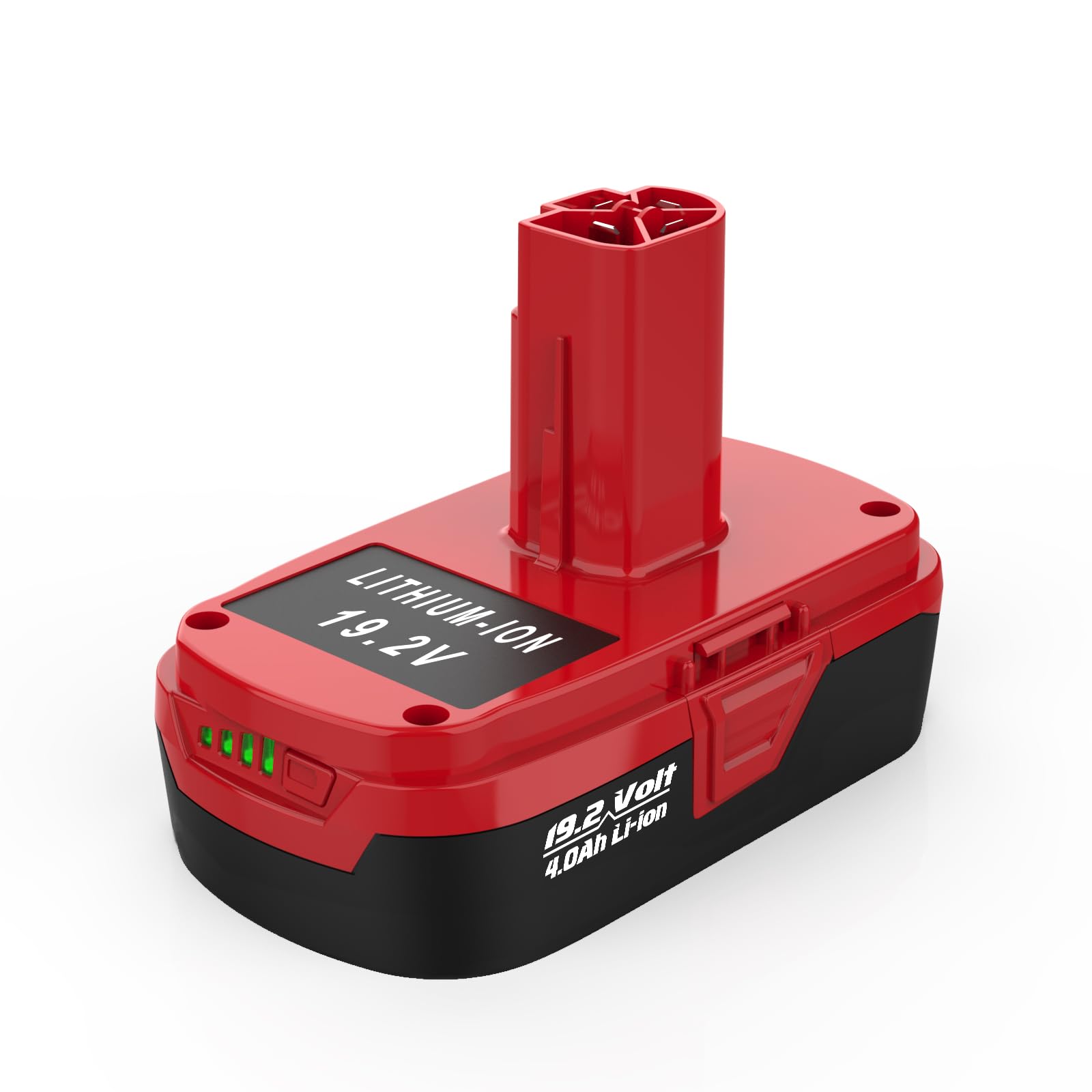
The market for replacement batteries for older Craftsman 19.2V tools has become something of a gray area. Craftsman itself has moved on to newer battery platforms, and the original NiCad packs that shipped with many of these tools are now well past their useful life. That leaves owners of older C3 drills, trimmers, and saws looking at third-party options like this AYTXTG 4.0Ah pack. It is a lithium replacement that claims compatibility with the C3 19.2V system, and the pitch is straightforward: more capacity than the original packs, at a lower price than buying into a new tool platform.
The practical appeal here is obvious to anyone with a garage full of aging Craftsman tools. A 4.0Ah lithium pack roughly doubles the runtime you would have gotten from the original 1.5 to 2.0Ah NiCad batteries, and it does so without the memory effect that plagued those older cells. For a drill used around the house or a string trimmer on a suburban lot, that capacity is genuinely useful. The pack also holds its charge better during storage, which matters for tools that sit on a shelf for weeks between projects.
Compatibility is the central question with any third-party battery, and it deserves scrutiny. The pack is designed to fit the C3 slide-on interface used across the 19.2V line, and reports from users suggest it seats properly in most drills, impact drivers, and outdoor power equipment from that era. That said, fit is not universal. Some older tools with tighter battery wells have reportedly required a firmer push to seat, and a few users have noted the release tabs feel less refined than OEM hardware. It is worth checking the specific tool model before committing, particularly for older or less common C3 tools.
On performance, expectations should be calibrated. A 4.0Ah lithium pack will deliver noticeably longer runtime than a tired NiCad, but it will not transform a 15-year-old drill into a modern brushless tool. Torque and speed are governed by the tool, not the battery, and the older motors in these tools are simply less efficient. In cold weather, lithium packs lose some capacity, and this one is no exception. Users in northern climates should expect reduced runtime in winter conditions, which is normal for the chemistry but worth knowing.
Charging is another area where buyers need to pay attention. The pack is intended for use with Craftsman 19.2V lithium-compatible chargers, and using an older NiCad-only charger is not advisable. Some users have found that certain original Craftsman chargers will not recognize the third-party pack, which can be frustrating. It is worth confirming charger compatibility before purchase, since a battery that will not charge on your existing charger defeats the purpose of a budget replacement.
Compared with the alternative of migrating to a modern battery platform, the math is different for every user. A new drill and battery combo from a current platform costs more upfront but brings brushless motors, better ergonomics, and a warranty. The AYTXTG pack makes sense for someone with several working C3 tools who wants to keep them running cheaply. It makes less sense for someone with a single tired drill, where the money might be better put toward a new tool. Similarly, compared with OEM replacement batteries where available, third-party packs are cheaper but come with less certainty about long-term cell quality and warranty support.
Build quality is acceptable for the price but not exceptional. The plastic housing feels serviceable rather than premium, and the cell balance and longevity are unknown quantities over several years. Budget lithium packs vary widely in how well their cells hold up after a few hundred cycles, and there is no track record here to lean on. Buyers should treat this as a pragmatic, cost-conscious purchase rather than a long-term investment.
Who it is for: owners of multiple Craftsman 19.2V C3 tools who want to extend runtime and keep an existing kit alive without buying into a new platform. It suits occasional DIY users, homeowners with a few aging tools, and anyone who values low cost over premium build.
Who it is not for: professionals who rely on tools daily and need predictable, warrantied power; users with only one C3 tool; and anyone whose charger is not confirmed compatible with lithium packs. Those users are better served by a current-generation tool platform.
Overall, this is a reasonable budget option with clear trade-offs. It solves a real problem for a specific group of tool owners, provided they go in with realistic expectations about fit, charging, and long-term durability.