
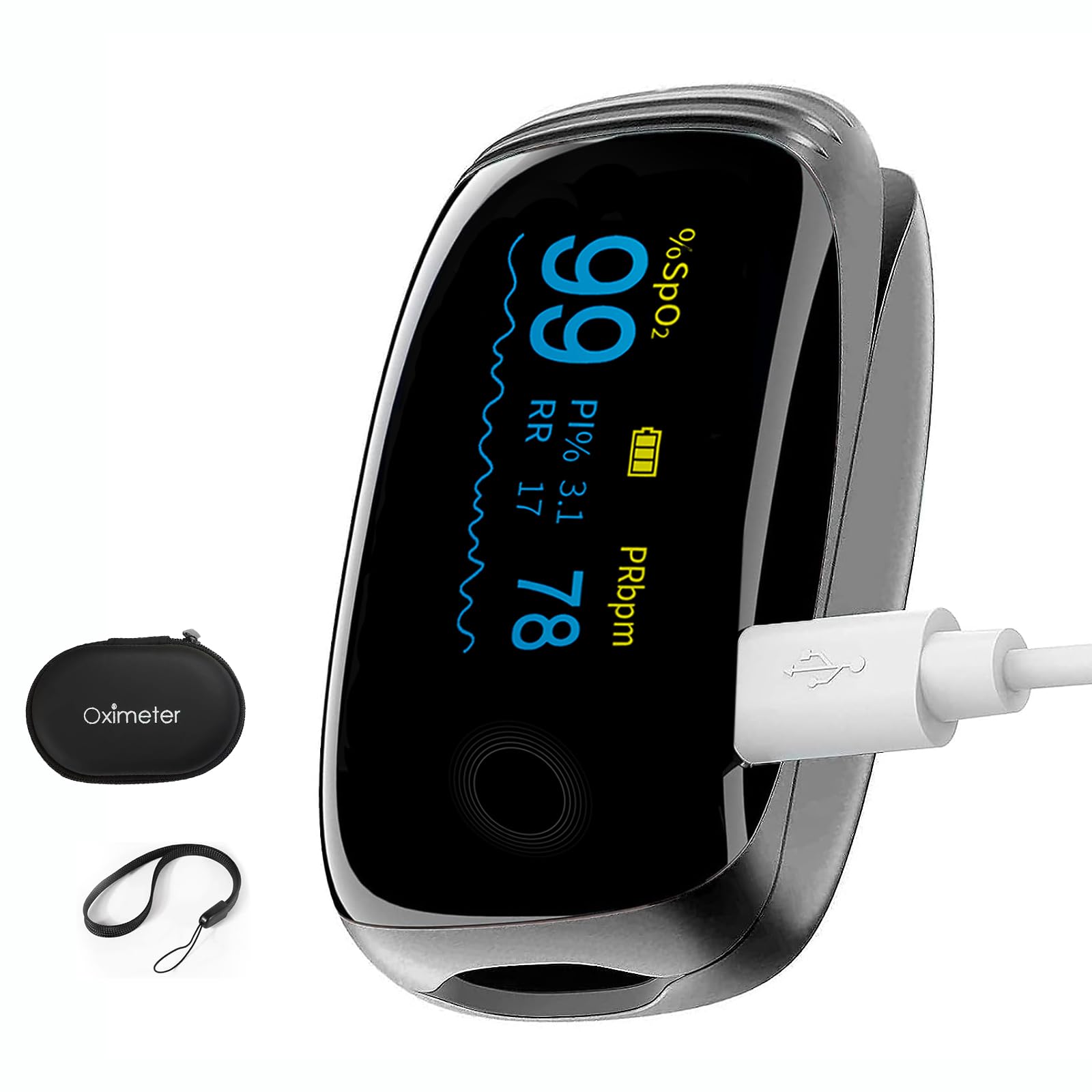
Fingertip pulse oximeters have become common household devices, and the rechargeable model in black reviewed here sits in the crowded middle of that market. It measures blood oxygen saturation (SpO2) and pulse rate, and its main point of distinction is the built-in rechargeable battery rather than the disposable AAA cells used by most budget units. That single change shapes much of the experience, for better and for worse.
In practice, these devices are used in short, intermittent sessions. Someone with a respiratory condition checks their readings during a flare-up; a hiker checks saturation at altitude; a caregiver monitors an older relative a few times a day. The routine is usually: insert a finger, wait a few seconds for the reading to stabilize, note the numbers, and put the device away. This oximeter fits that pattern. It is a spot-check tool, not a continuous monitor, and it should be judged on how reliably it handles those brief sessions.
The core function is straightforward. Two wavelengths of light pass through the fingertip, and the device calculates oxygen saturation from how much light is absorbed by oxygenated versus deoxygenated blood. The pulse rate is derived from the same signal. This unit is marketed as offering fast, precise readings, and in normal conditions most fingertip oximeters of this type settle within roughly 8 to 15 seconds. Expect readings to fluctuate by a point or two between consecutive measurements, which is normal for consumer-grade devices and not a sign of malfunction.
What sets this model apart is the charging setup. A rechargeable oximeter eliminates the need to keep spare batteries on hand, which matters for people who use one regularly or keep it in a bag for outdoor trips. A full charge typically covers many short sessions, though exact runtime depends on display brightness and how long each session lasts. The trade-off is that a rechargeable device can be out of service when you need it if you forget to charge it, whereas a battery-powered unit can be revived instantly with fresh cells. For a device that might sit unused for weeks, that is a real consideration.
Accuracy is the central question, and the honest answer is that consumer fingertip oximeters are screening tools, not clinical instruments. They generally perform acceptably when conditions are good: warm hands, still finger, no nail polish, and no bright ambient light interfering with the sensor. Cold fingers, poor circulation, dark nail polish, and motion can all skew results. This unit is no exception. Users should also know that readings below the typical healthy range warrant professional evaluation rather than repeated self-testing, and that the device is not a substitute for medical advice.
Compared with a smartwatch or fitness tracker that offers SpO2 tracking, a dedicated fingertip oximeter tends to give a more consistent spot reading because the finger is a better site for the sensor than the wrist. Smartwatches are more convenient for passive, all-day trends, but they are less suited to a deliberate single measurement. Compared with a basic battery-powered oximeter, this model trades the simplicity of disposable batteries for the convenience of recharging. Neither approach is clearly superior; it depends on how often the device is used and how it is stored.
The black housing is unremarkable but practical, and the OLED-style display shows SpO2, pulse rate, and usually a pulse bar or waveform. Most units in this class include an auto-off feature to preserve battery, and a lanyard or carry pouch is common. Build quality across this category is generally plasticky, and this device is unlikely to feel premium. That is acceptable for the price bracket, but buyers should not expect ruggedized construction for serious outdoor use.
Who is this for? It suits people who want a simple spot-check device at home, caregivers monitoring a family member, and casual outdoor users who want a reading at altitude or during exercise. It is also reasonable for anyone who dislikes managing disposable batteries. Who is it not for? It is not appropriate for clinical decision-making, continuous monitoring, or use on infants and small children without professional guidance. People who need frequent, dependable readings in remote settings may prefer a unit with replaceable batteries and a known battery life, and anyone with a diagnosed condition should treat this as a supplementary tool only.
Overall, this is a functional, mid-range fingertip oximeter whose rechargeable design is its main selling point. It handles routine spot checks competently, provided users understand the limits of consumer oximetry and the practical trade-offs of a built-in battery. It is a reasonable purchase for casual home and outdoor use, but not a device to rely on for anything beyond general awareness.