
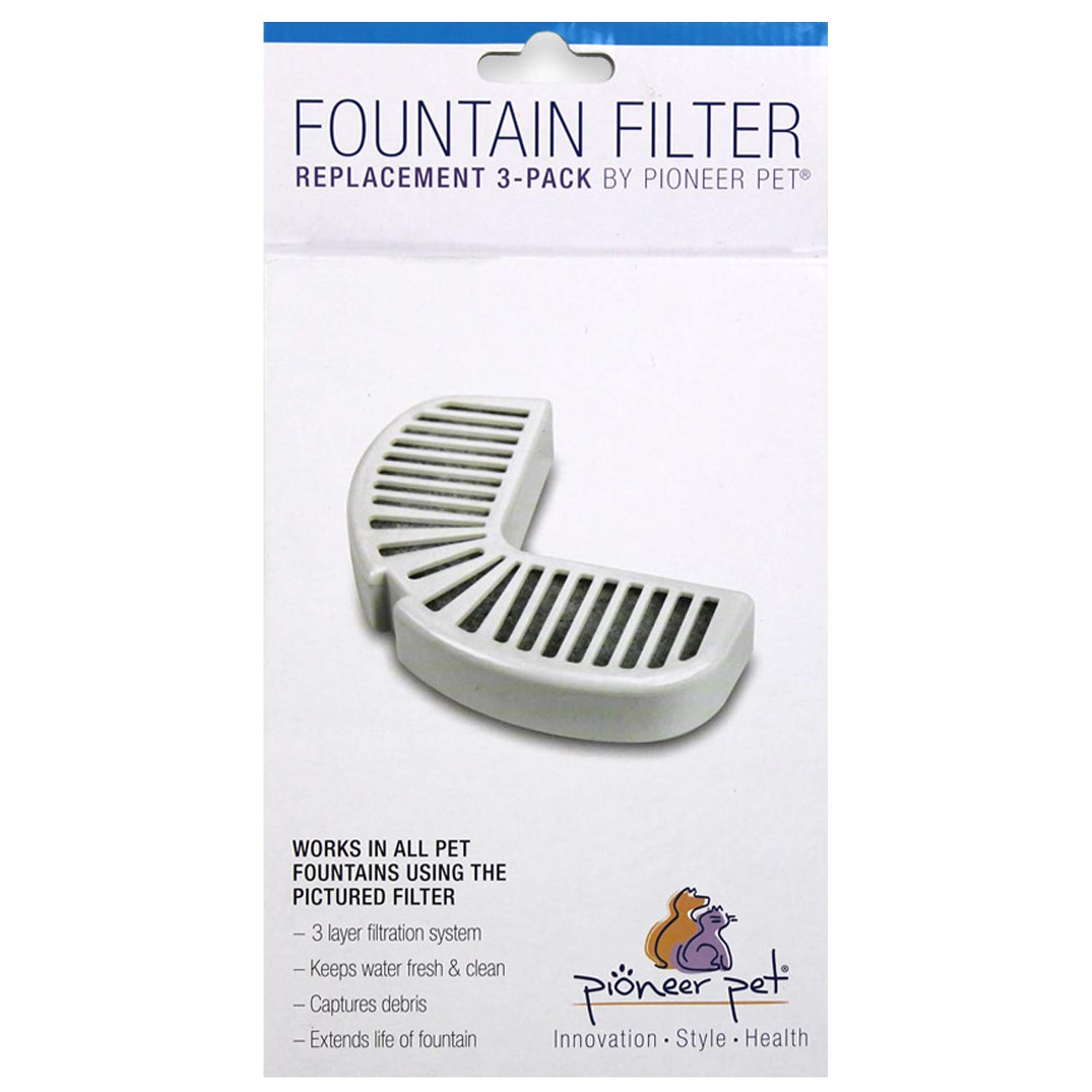
Replacement filters are one of those purchases nobody enjoys making. They sit somewhere between upkeep and annoyance, and the decision usually comes down to whether the part fits correctly and whether the price feels fair. The Pioneer Pet Raindrop replacement filters, sold in a three-pack, are aimed at owners of the company’s ceramic and stainless steel fountains, and they’re worth evaluating less as a product and more as a consumable that has to justify its recurring cost.
These are carbon-based filter cartridges, and the job they do is straightforward. Water circulating through a pet fountain picks up hair, dust, and food particles, and the carbon layer is there to reduce odors and some of the taste that makes cats and dogs turn up their noses. The filter also traps loose debris before it recirculates. In practice, that means the cartridge is doing quiet, unglamorous work: keeping the pump from clogging and keeping the water palatable enough that an animal actually drinks from it. Anyone who has watched a cat ignore a fountain for days knows how much that matters.
The three-pack format is the sensible part of this listing. Filters need replacing roughly every two to four weeks depending on how many animals drink from the fountain and how thoroughly the unit is cleaned, so a single filter is rarely a useful purchase. Three filters cover about one to three months of normal use, which lines up with how often most households think about restocking. The white cartridge design is consistent with the Raindrop line and slots into the fountain’s filter housing without tools.
What the filters do not do is solve every water-quality problem. Carbon filtration is not the same as a fine mechanical filter, and it will not remove dissolved minerals, so hard water still leaves scale on the fountain and pump over time. Owners in areas with mineral-heavy water will still need to descale the unit regularly, and the filter is not a substitute for that. It’s also worth being realistic about lifespan: a filter left in place past its useful window can start to harbor the very debris it was trapping, and the cartridge will look discolored well before it stops fitting. The visible change is a decent cue, but it’s not a precise one.
Compared with generic or third-party filter pads, the Pioneer Pet cartridges have the advantage of being sized for the specific fountain housing. Aftermarket alternatives are often cheaper per unit, but they vary in thickness and carbon fill, and a loose fit means water bypasses the filter rather than passing through it. That said, the OEM filters are not inexpensive for what is essentially a small carbon pad, and owners of multiple fountains will notice the recurring cost. Generic options are a reasonable experiment for someone willing to check fit carefully, though the savings are modest once shipping is factored in.
- Fit: Designed for Pioneer Pet ceramic and stainless steel fountains in the Raindrop line; drops into the housing without modification.
- Filtration: Carbon layer reduces odors and traps hair and loose debris before it reaches the pump.
- Quantity: Three filters per pack, roughly one to three months of supply for a single fountain.
- Maintenance: Requires replacement every few weeks; does not eliminate the need to clean and descale the fountain.
In real-world use, the filter is usually the first thing an owner notices when the fountain starts to smell or the water flow weakens. A fresh cartridge and a rinse of the pump housing tends to restore both. That’s the practical rhythm these filters support, and it’s a reasonable one. The main frustration is that the filters are a recurring expense tied to a specific fountain design, so there is no way around buying them if the fountain is going to keep working as intended.
This pack suits owners of Pioneer Pet Raindrop fountains who want a straightforward, correctly sized replacement and don’t mind the ongoing cost. It is less suited to people hoping to extend filter life well beyond the recommended interval, or to anyone with very hard water expecting the filter to handle mineral buildup. It’s also not the right purchase for owners of other fountain brands, since fit is the whole point. For the intended fountain, it’s a functional consumable that does its job without much fuss, provided expectations about lifespan and cost are set realistically.