
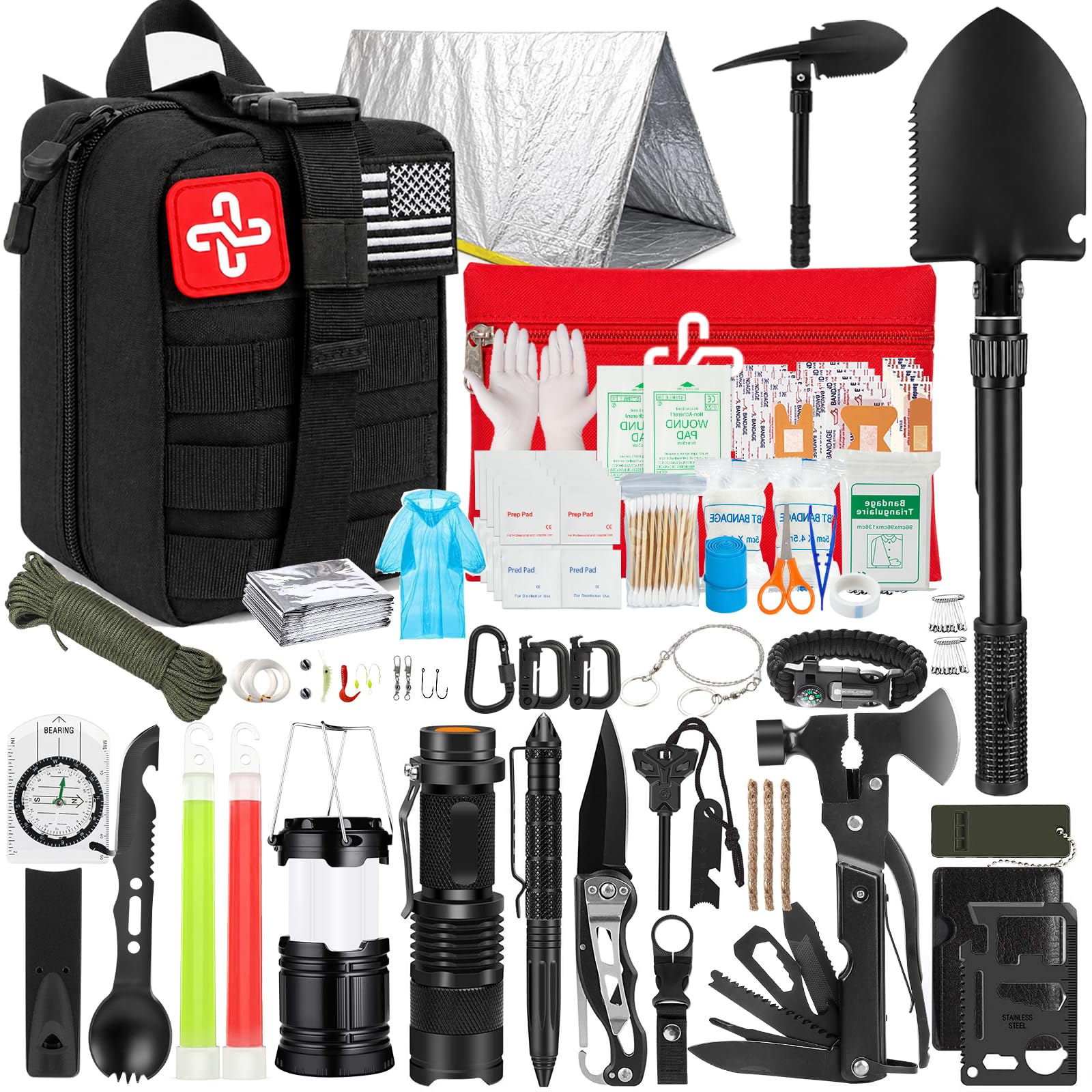
Survival kits that pack 250 pieces into a single bag tend to raise a reasonable question: how much of that is genuinely useful, and how much is filler? This kit, aimed at hikers, hunters, and anyone preparing for earthquakes or other emergencies, tries to cover a lot of ground. It includes a molle-compatible bag, an emergency tent, and a broad assortment of tools and first aid supplies. The appeal is obvious—one purchase, many contingencies covered. But the reality of such kits is usually a mix of solid essentials and items you might replace or never use. Here’s a closer look at what this kit actually offers.
The kit’s centerpiece is the molle system compatible bag, which lets you attach it to a backpack or belt for hands-free carrying. That’s a thoughtful touch for hikers or hunters who want quick access without digging through a main pack. The emergency tent is another highlight: a compact, lightweight shelter that can be set up quickly in a pinch. It’s not a four-season tent, but for emergency warmth or sudden rain, it serves its purpose. The first aid supplies cover basic cuts, scrapes, and minor injuries, though the quantities are modest—fine for a small group but not for extended care.
Beyond that, the 250 pieces include a variety of survival tools: a knife, flashlight, fire starter, whistle, compass, wire saw, and more. The knife is functional but not high-end; it’ll handle light tasks but won’t replace a dedicated bushcraft blade. The flashlight is small and likely runs on button cells, so you’ll want spare batteries. The fire starter is a basic ferro rod, which works but takes practice. These are the kinds of items that get the job done in a pinch but may not survive heavy, repeated use. That’s a trade-off worth noting: the kit is designed for emergencies and occasional outdoor use, not for daily abuse.
One limitation is the sheer number of small items. Many are duplicates or low-priority—like multiple sewing kits or cheap ponchos—which can clutter the bag and make it harder to find what you need quickly. The bag itself, while sturdy enough, isn’t waterproof, so you’ll want to pack items in zip bags if you’re heading into wet conditions. Also, the first aid supplies are basic; if you have specific medical needs or are traveling far from help, you’ll need to supplement.
Compared to building your own kit from scratch, this set saves time and research. A custom kit lets you choose higher-quality tools and tailor contents to your specific activities, but it requires knowledge and often costs more. This kit is a convenient starting point, especially for those new to preparedness. It’s similar to other all-in-one survival kits on the market, which often share the same strengths and weaknesses: broad coverage but variable quality. If you’re serious about wilderness survival, you might outgrow it quickly; for car emergencies or home backup, it’s adequate.
Who is this for? It suits casual campers, day hikers, and people who want a basic emergency kit for the car or home. It’s also a reasonable gift for someone just getting into outdoor activities—the molle bag and tent add perceived value. However, it’s not for serious survivalists or professionals who need reliable, high-end gear. The knife and fire starter, for example, wouldn’t hold up to frequent, heavy use. Also, if you’re packing for a long expedition, the weight and bulk of 250 pieces might be unnecessary; a focused kit would be lighter and more efficient.
In use, the kit performs as expected for its class. The tent pitches quickly with included stakes, though it’s best for one person and minimal gear. The molle attachments are secure, and the bag has enough pockets to organize contents, but don’t expect premium stitching. The first aid items are basic but sufficient for minor injuries. The tools are functional but not durable enough for repeated heavy use. Realistic expectations are key: this is a backup kit, not a primary gear set.
Overall, the 250-piece survival kit offers a lot of stuff for the price, but the quality is inconsistent. It’s a decent entry point for preparedness or a handy item to keep in the trunk, but it’s not a substitute for carefully chosen, higher-quality gear. If you’re looking for a gift for someone who likes outdoor activities or wants to start an emergency kit, it’s a reasonable choice—just set expectations that some items may be upgraded over time.