
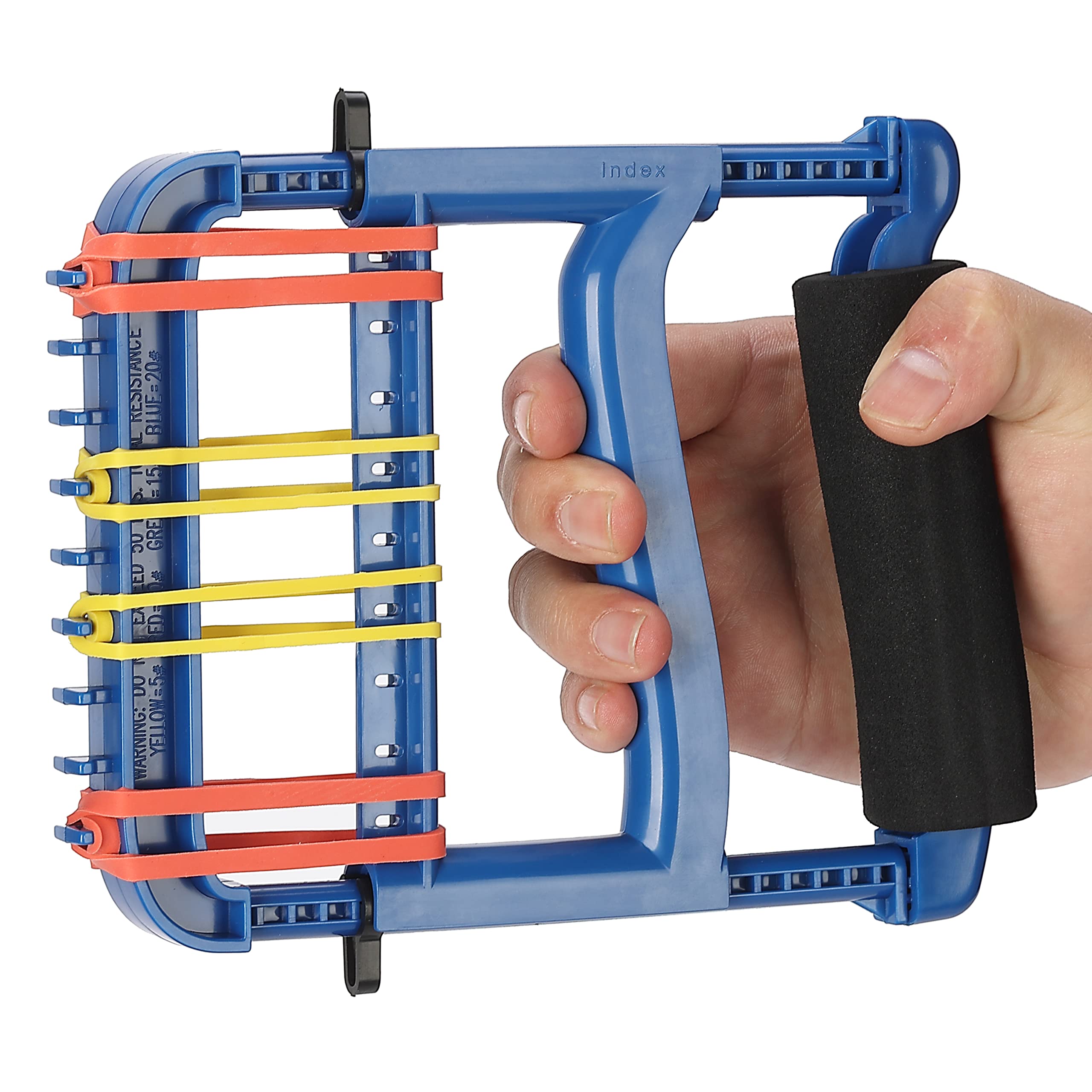
The YPCBYNBS Hand Exerciser is one of many low-cost grip strengtheners sold under unfamiliar brand names, and it lands in a crowded field where the differences between products often come down to small details: spring tension, handle comfort, and how well the resistance holds up over months of use. This particular model is aimed at physical therapy and light strength work, sold in blue, and it is best understood as an entry-level tool rather than a serious training device.
The design is straightforward. It is a spring-loaded gripper, the kind you squeeze between your fingers and palm, with two handles joined by a coiled metal spring. The handles are covered in what appears to be a rubberized or foam sleeve, which matters more than it sounds. Bare plastic handles become slick once your hands warm up, and a light coating helps keep the grip from sliding during repetitive squeezing. The blue color is cosmetic but useful if you keep several tools in a therapy kit and want to distinguish resistance levels at a glance.
Where this type of product actually gets used is worth spelling out, because the marketing category (“strength training”) can be misleading. Most buyers of a gripper at this price point are not powerlifters. They are people recovering from a wrist or forearm injury, office workers dealing with stiffness from typing, older adults trying to maintain hand function, or musicians and climbers looking for a low-commitment warm-up tool. In those contexts, a gripper like this is used in short sets, often 10 to 20 squeezes at a time, several times a day, rather than in heavy progressive training blocks.
On that front, the YPCBYNBS does what a basic spring gripper is supposed to do. The resistance is fixed, meaning there is no dial or interchangeable spring to adjust tension. That is a real limitation. Fixed resistance means the tool either suits you on day one or it does not, and as your grip improves, you will outgrow it. Products with adjustable tension, or sets that include multiple grippers of different strengths, cost more but offer a longer useful life. If you are in the early stages of rehab and your therapist has specified a light resistance level, a single fixed gripper can be a reasonable, inexpensive match, but you should confirm the tension is appropriate before buying, since listings for this class of product often state resistance vaguely or not at all.
Build quality is the other area to temper expectations. At this price tier, the spring is usually the weak point. Springs on budget grippers can loosen slightly with heavy use, and the handle coating may wear or peel where the fingers press hardest. None of that makes the product unusable, but it does mean this is a consumable rather than a buy-it-for-life item. Treating it as a cheap, replaceable therapy aid rather than a piece of durable fitness equipment is the realistic framing.
- What it is: a single fixed-resistance spring gripper with coated handles, sold in blue
- Typical use: short sets for hand therapy, stiffness relief, and light forearm work
- Adjustability: none; resistance cannot be changed
- Durability: adequate for light use, but the spring and handle coating are the likely wear points
- Portability: small and light enough to keep in a desk drawer or bag
Compared with adjustable hand exercisers, which use a screw mechanism or swappable springs to cover a range of resistance, this gripper is simpler and cheaper but far less flexible. Compared with therapy putty, another common rehab tool, the gripper offers more consistent resistance and is easier to measure progress with, but putty allows more varied finger movements and is gentler on joints that are still healing. Many physical therapists use both, and there is no reason this gripper cannot sit alongside putty in a home kit.
Who should consider it: someone who needs a low-cost, no-frills gripper for occasional squeezing, light warm-ups, or a therapy routine where a single resistance level is sufficient. It is also a sensible pick if you want a spare gripper for a desk or travel bag and do not want to spend much.
Who should look elsewhere: anyone doing serious grip training, climbers or lifters who need progressive resistance, people with joint pain or undiagnosed hand issues (check with a clinician first, since squeezing against fixed resistance can aggravate some conditions), and buyers who expect a tool to last years of daily use. For those groups, an adjustable gripper or a multi-resistance set is the more practical choice.
Overall, the YPCBYNBS Hand Exerciser is a modest, functional item that fits a narrow but real need. It is not a training tool that will grow with you, and the fixed resistance and budget construction are genuine drawbacks. But as an inexpensive therapy aid for light, intermittent use, it does the job without pretending to be more than it is.