
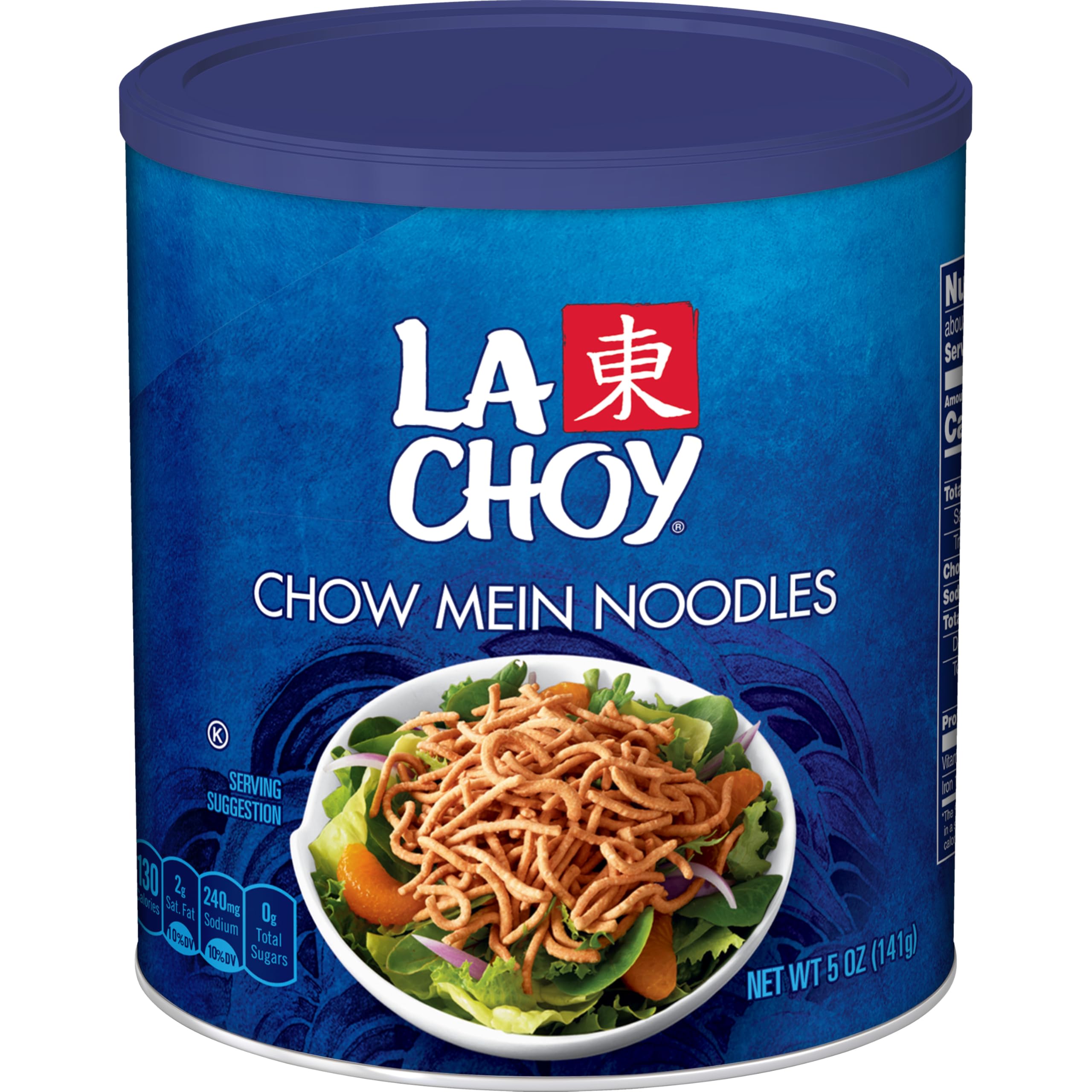
La Choy Chow Mein Noodles occupy a specific niche in the American pantry: the crisp, fried noodle bundle that shows up alongside canned chow mein or as a topping for salads and stir-fries. The 5-ounce package is small, shelf-stable, and inexpensive, which explains why it lingers in cupboards for months between uses. This is not a product anyone plans a meal around, but it fills a role that few other items do.
In practice, these noodles are used in two main ways. The first is as a textural garnish: scattered over a bowl of chow mein, a plate of stir-fried vegetables, or a sesame chicken dish right before serving. The second is as an ingredient in cold salads, particularly the mayonnaise-based slaw-style salads common at potlucks and picnics, where the noodles add crunch and absorb dressing over time. They are also sometimes eaten straight from the can as a snack, though that is more of an acquired habit than a recommended use.
Functionally, the noodles are par-fried wheat noodles, which is what gives them their brittle snap. The 5-ounce can is roughly the size of a standard soup can, and the noodles inside are broken into short, irregular lengths rather than long strands. That matters for how they behave: they scatter easily, they do not twirl like fresh noodles, and they soften quickly once they meet moisture. A salad dressed an hour before serving will have noticeably chewier noodles than one assembled at the last minute. The can is not resealable, so once opened, the noodles begin absorbing humidity from the air and lose their crispness within a day or two unless transferred to an airtight container.
The flavor is mild and mostly neutral, with a faint fried note and a light saltiness. That neutrality is arguably the point: the noodles are there for crunch, not for seasoning. Anyone expecting a distinct chow mein flavor will be disappointed, because the seasoning in chow mein comes from the sauce and vegetables, not the noodles. The texture is the product’s main contribution, and it is a good one when the timing is right.
There are real trade-offs. The most obvious is that these are fried noodles, so they carry a fair amount of oil and calories for what is essentially a garnish. A small handful adds meaningful fat without adding much nutrition. The ingredient list is short but includes wheat and typically some form of oil and salt, so anyone avoiding gluten or watching sodium should check the label. The can format also means the noodles arrive somewhat crushed; some breakage is normal, and a portion of each can ends up as short fragments rather than usable pieces. Finally, the crispness window is short. These are not noodles that hold up in a packed lunch or a make-ahead dish unless added at the very end.
Compared with alternative crunchy toppings, La Choy’s noodles sit somewhere between fried wonton strips and crushed crackers. Wonton strips are wider and hold up slightly better in salads; crispy rice cereals are lighter and less oily but lack the wheat flavor. Fresh chow mein noodles, sold refrigerated or frozen, offer a completely different experience, chewy and savory rather than crisp, and are not a substitute for this product. Within the canned fried noodle category, La Choy is one of the few widely available options, which is part of why it persists on shelves despite its limitations.
This product suits people who make American-style chow mein at home, assemble potluck salads, or want a shelf-stable crunchy topping for Asian-leaning dishes. It is also handy for households that cook stir-fries regularly and want a fast textural finish without frying anything. It is less suitable for anyone seeking authentic chow mein noodles, for people limiting fried foods or sodium, and for those who want a topping that survives being dressed in advance. Expect a small can of brittle, mild noodles that do one job well and degrade quickly once opened. Treated as a pantry condiment rather than a staple, it earns its place; treated as a main ingredient, it will disappoint.