
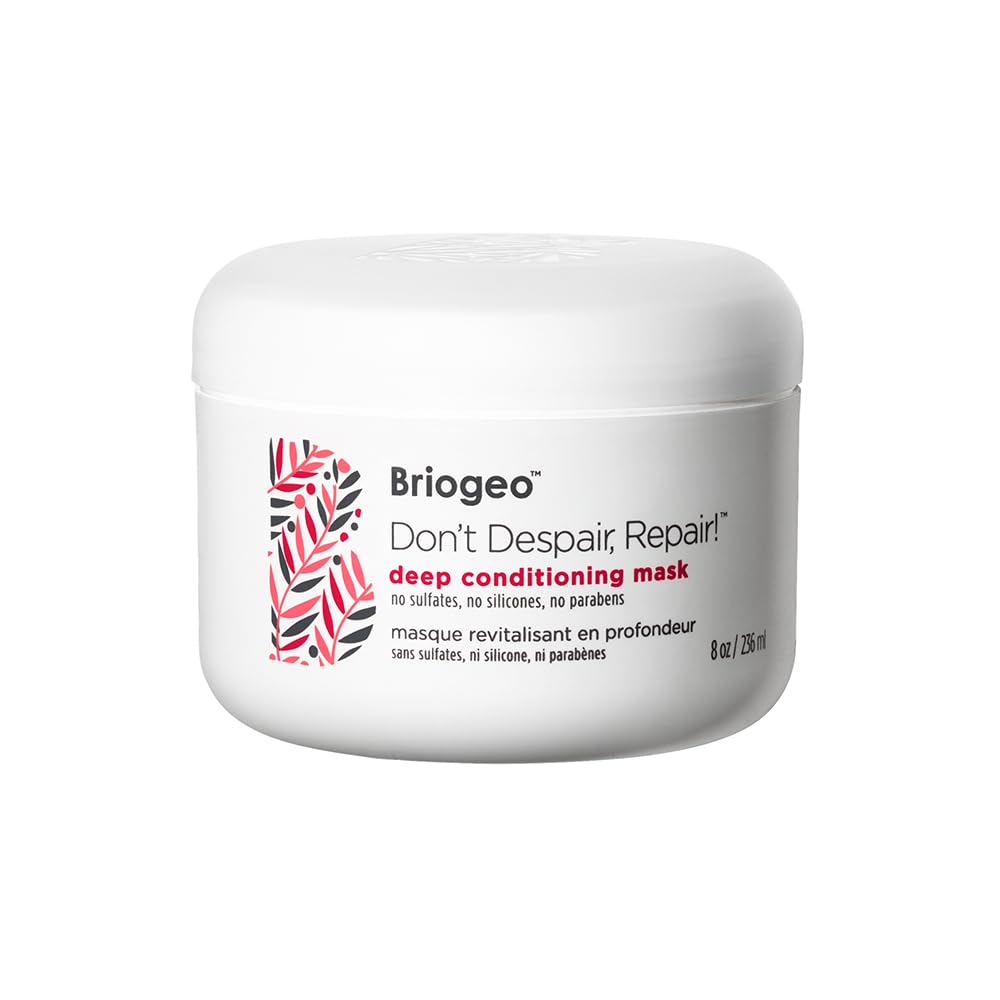
Briogeo’s Don’t Despair, Repair! Deep Conditioning Hair Mask sits in a crowded category of weekly treatments aimed at dry, chemically processed, or heat-stressed hair. It’s a rinse-out mask rather than a daily conditioner, and the brand positions it around repair and moisture retention. The formula leans on a mix of plant oils, biotin, and what Briogeo calls its “NOURISHING” blend of algae extract and vitamins. None of that is unusual on its own, but the combination is fairly typical of mid-tier prestige hair care: richer than a standard conditioner, lighter than a heavy protein treatment.
In practice, the mask is used after shampooing, left on for roughly ten minutes, and rinsed. That timing matters. It’s long enough to feel like a treatment but short enough to fit into a normal shower routine, which is one of its more practical qualities. People with very dry or coarse hair sometimes leave it on longer, though the brand doesn’t recommend going far beyond the suggested window. It has a thick, almost balm-like texture that spreads more easily on damp hair than on hair that’s been towel-dried too much.
What the mask actually does well is soften. After one use, hair tends to feel smoother and easier to comb, particularly on mid-lengths and ends. That effect is most noticeable on hair that’s been colored or exposed to frequent heat styling. The formula includes conditioning agents that coat the cuticle, so the immediate result is slip and reduced friction rather than structural repair. That distinction is worth keeping in mind: no rinse-out mask rebuilds damaged hair, and this one doesn’t claim to in so many words, but the marketing around “repair” can create unrealistic expectations.
Key functional details worth knowing:
- Format: Rinse-out mask, intended for weekly or biweekly use rather than every wash.
- Texture: Thick and concentrated, so a little goes a moderate distance; over-application can weigh hair down.
- Fragrance: Noticeable and fairly persistent, which is a consideration for anyone sensitive to scent.
- Protein content: Contains rice protein and amino acids, which can be helpful for some hair types but problematic for protein-sensitive hair.
- Packaging: Typically sold in a tub or tube; the tub format makes it easy to use too much.
The main trade-off is weight. On fine or low-porosity hair, this mask can leave a coated, slightly limp feeling, especially if it’s left on too long or applied near the roots. It’s better suited to hair that can handle richness. People with oily scalps may find it makes the roots greasy faster, so keeping it from the scalp is advisable. There’s also the protein angle: hair that reacts poorly to protein—sometimes showing stiffness or brittleness after use—may not get along with this formula, and it’s not always obvious until after a few applications.
Compared with a standard deep conditioner or a lighter leave-in treatment, this mask sits toward the heavier end. A basic moisturizing conditioner used with heat for a few minutes can deliver a similar softness for less money, though it usually won’t match the slip and smoothness of a dedicated mask. Against bond-building treatments, the comparison is different: those target broken disulfide bonds and are a separate category entirely, while this is primarily a conditioning and smoothing product. Anyone expecting bond-repair-level results from a conditioning mask will be disappointed, but that’s a category mismatch rather than a flaw in the product itself.
The price is the other sticking point. It’s priced as a prestige treatment, and while the tub lasts a reasonable amount of time with weekly use, the cost per application is higher than drugstore masks that perform comparably for many users. Whether that’s worth it depends on how much the texture and scent matter to you, since those are areas where it does feel more considered than budget alternatives.
Who it suits: people with dry, coarse, curly, or color-treated hair who want a richer weekly conditioning step and don’t mind fragrance or protein in their routine. It’s a reasonable fit for hair that’s been through lightening or regular heat styling and needs help with manageability.
Who it doesn’t suit: fine, low-porosity, or protein-sensitive hair; anyone with an oily scalp who prefers lightweight conditioning; and shoppers who want maximum conditioning per dollar. Those groups are likely to find it either too heavy or too expensive for the benefit. Used as intended—weekly, on the lengths and ends—it’s a solid conditioning mask with a clear place in a routine, provided the hair type matches.