
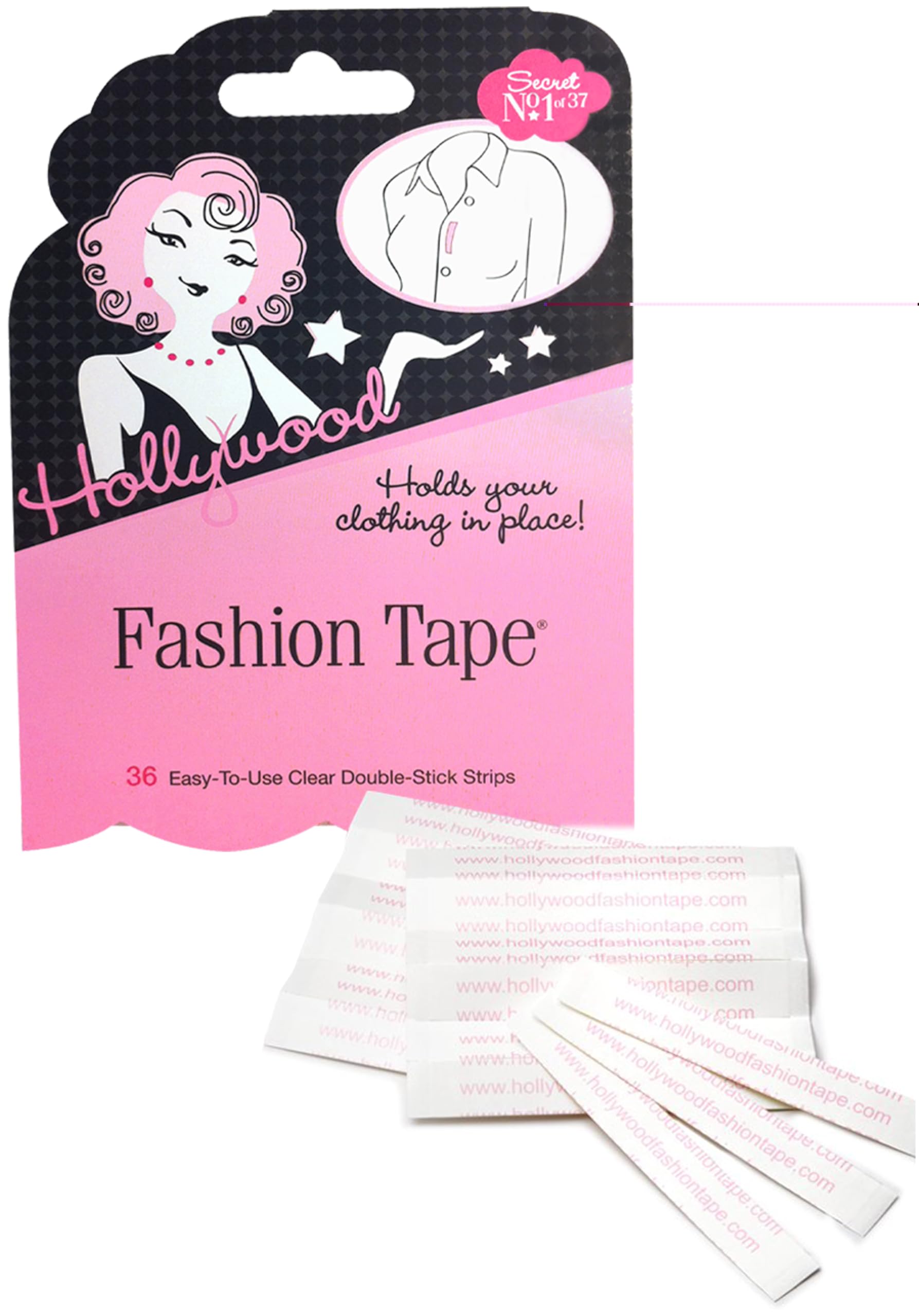
Double-sided fashion tape occupies an odd spot in the wardrobe toolkit: it is sold as a solution to a specific set of clothing problems, yet most people buy it once, use a handful of strips, and forget about it until the next wedding or holiday party. Hollywood Fashion Secrets’ Body Tape is one of the more widely stocked versions of this product, sold in a 36-strip pack. It is worth understanding what it actually does and where it tends to fall short before relying on it for an important event.
The core function is straightforward. Each strip is coated with adhesive on both sides, so you peel one backing, press it to fabric or skin, then peel the second backing and press the other surface into place. The intended jobs are familiar: keeping a plunging neckline from gaping, holding a wrap dress closed at the bust, securing a bra strap that has slipped off the shoulder, or taming a hem that wants to flip. In practice, the tape is most useful for lightweight fabrics and short-duration fixes rather than structural garment support.
How it gets used in the real world matters more than the packaging suggests. Most people apply it at the last minute while dressed, which is where the format helps: the strips are pre-cut, so there is no fumbling with scissors or a dispenser. A common approach is to place a strip along the inner edge of a neckline and press the fabric to skin, or to run a strip under a bra strap and anchor it to the shoulder. For bra strap hiding specifically, the tape works best when the strap is adjusted first and the tape is used only to keep it in position, not to pull it somewhere it does not naturally sit.
Several practical details are worth knowing. The strips are single-use, and the adhesive is designed for temporary wear, typically a few hours rather than a full day. Skin needs to be clean and dry, and lotions, sunscreen, or body oil applied beforehand will noticeably reduce how well the tape holds. Fabric type matters too: silky and synthetic materials tend to release more readily than cotton or blends, and stretchy knits can pull the tape loose as the garment moves. The tape is also not a substitute for proper tailoring. If a dress gapes because it does not fit, tape can mask the problem for an evening, but it will not fix it.
There are limitations that the product category as a whole shares. Adhesive strength is a trade-off: tape strong enough to hold a heavy fabric can be uncomfortable or irritating to remove from skin, especially for people with sensitive skin or allergies to acrylic adhesives. The 36-strip count sounds generous, but a single outfit fix can consume two to four strips, so a pack may last only a handful of events. Strips that have been opened and exposed to air or heat also lose tack, which means storing the pack flat in a cool place rather than loose in a handbag or a hot car. And on very sheer or delicate fabrics, peeling the tape away can stress the material if done carelessly.
Compared with alternatives, body tape sits between two other options. Fashion tape is cheaper and easier to apply than sewing or tailoring, but it is less reliable than a properly fitted garment or a convertible bra designed for low-back and off-shoulder styles. Silicone nipple covers and adhesive bras solve coverage problems that tape cannot, while safety pins handle structural fixes that tape is too weak for. In many situations the best result comes from combining tools: a well-fitted bra plus a few strips of tape at the neckline, rather than tape alone.
Who is this for? It suits people who need occasional, short-term fixes for special-occasion clothing, who are comfortable applying and removing adhesive from skin, and who understand that the tape is a stopgap rather than a garment-construction solution. It is also reasonable for travelers who want a compact, disposable fix in a small bag. Who is it not for? Anyone expecting all-day hold in hot, humid conditions, people with sensitive or reactive skin, those working with heavy or structured fabrics, and anyone hoping to avoid tailoring altogether. Brides and performers with high-stakes, long-duration wear often need stronger professional-grade adhesives or garment alterations instead.
Performance expectations should stay modest. For a few hours at an indoor event, on lightweight fabric, applied to clean dry skin, the tape generally does what it claims. Outdoors in heat, on oily skin, or under a garment that shifts a lot, expect to reapply or to notice the tape loosening. The 36-strip pack is a reasonable quantity for occasional use, but it is not a wardrobe staple that will carry you through a season of events without replenishing. Treated as a small, disposable helper rather than a fix-all, it earns its place in a drawer.