
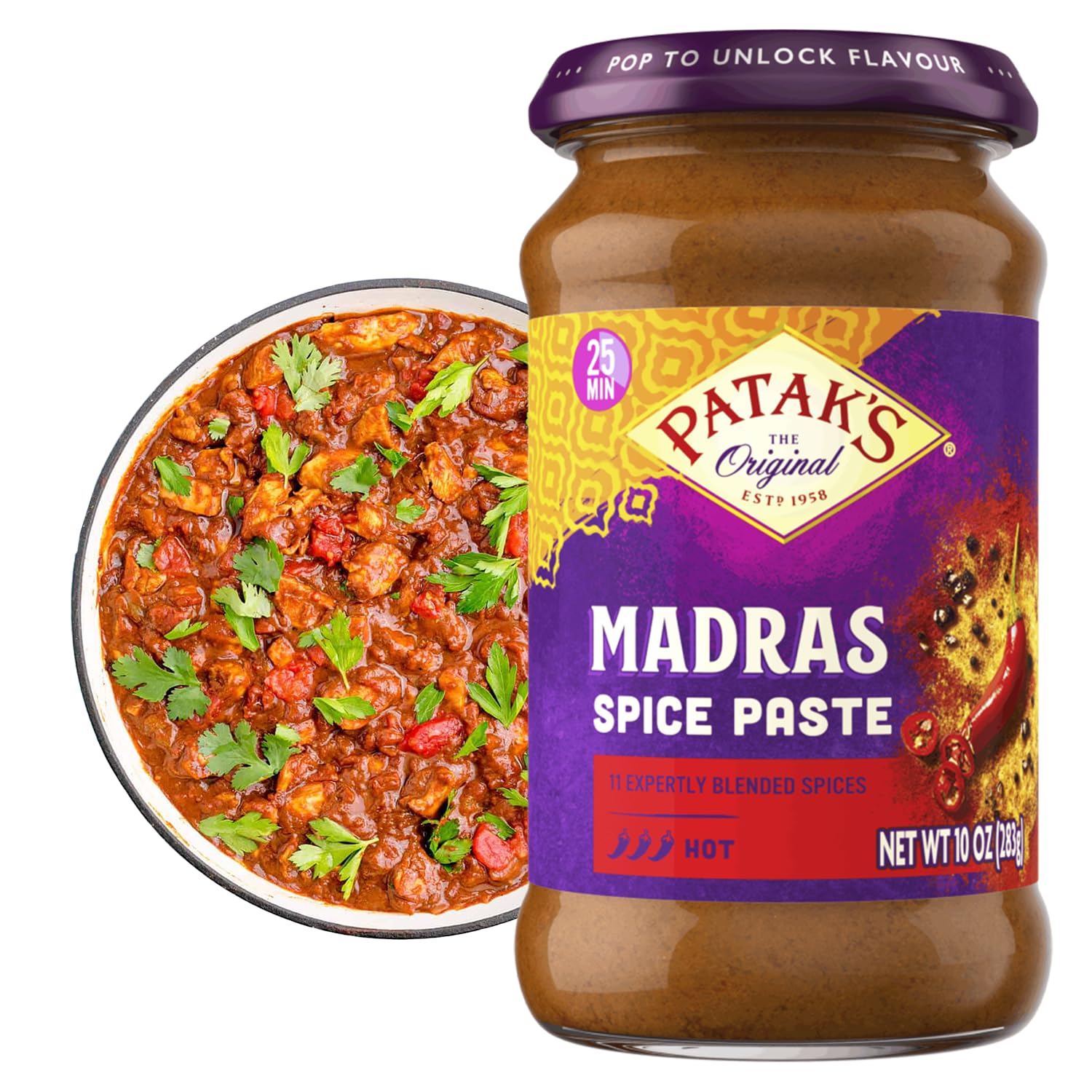
Patak’s Madras Spice Paste sits in the crowded aisle of jarred Indian cooking sauces, but it occupies a slightly different niche than the simmer-and-serve jars most shoppers reach for. This is a concentrated spice paste, not a finished sauce, and understanding that distinction is the difference between a good result and a disappointing one. The 10-ounce jar holds a thick, dark red blend built around eleven spices, and the label positions it as a bold base for home cooking rather than a pour-over shortcut.
The paste is designed to be used as a starting point: fry a spoonful or two in oil to bloom the spices, add protein or vegetables, then finish with tomatoes, yogurt, or coconut milk to build the body of the curry. Used this way, it delivers a recognizably Madras profile — hot, tangy, and heavy on chili with supporting notes of coriander, cumin, and fenugreek. The heat level is genuine. Madras is one of the hotter regional styles, and this paste reflects that; it is not a mild korma-style base dressed up with a hot label.
What the product offers functionally is consistency and speed. Toasting and grinding eleven whole spices at home takes time and a well-stocked pantry, and the paste removes that step while keeping the flavor closer to scratch cooking than a premade sauce would. It is gluten-free and vegan, contains no artificial colors, and the jar keeps in the refrigerator for weeks after opening, which makes it practical for households that cook curry occasionally rather than weekly.
Where it falls short is in control and freshness. Because the blend is fixed, the cook cannot adjust the spice balance — if the fenugreek reads too bitter or the chili too sharp for a particular dish, there is no correcting it short of adding other ingredients. The paste also carries a pronounced salt and oil content typical of jarred products, so recipes built around it need less added salt than one might expect. Reviewers of similar pastes often note that the flavor is flatter than freshly ground spices, and that holds here: it is good, but it tastes like a preserved product, not like a masala ground that morning.
In practice, a heaped tablespoon is enough to season a curry for two to three people, so the 10-ounce jar stretches across several meals. It works well with chicken, lamb, chickpeas, and firm vegetables like cauliflower and potato, and it can also be used more sparingly as a rub or a flavor base for a quick dal. The texture is dense and paste-like, and it loosens readily in hot oil, which is the correct first step — skipping the bloom and dumping it straight into a wet pan tends to produce a duller result.
Compared with a finished simmer sauce, this paste requires more work and more ingredients on hand, but it rewards that effort with a more layered flavor and greater flexibility. Compared with grinding one’s own spices, it is faster and more consistent but noticeably less vivid. It sits in the middle of that spectrum, and buyers should choose it with that trade-off in mind.
Suitable for: cooks who want a reliable, genuinely hot Madras base without building a spice cabinet, people cooking curry a few times a month, and anyone looking for a gluten-free, vegan shortcut that still requires some actual cooking.
Not suitable for: anyone expecting a pour-and-simmer sauce, households sensitive to heat, cooks who want to control salt and spice balance precisely, and those who prioritize fresh-ground flavor above convenience. It is also not a substitute for a mild curry — the heat is the point.
Overall, Patak’s Madras paste does what a concentrated paste should: it saves time without pretending to be a finished dish. The result depends heavily on how it is used, and cooks who treat it as a base rather than a sauce will get the most from the jar.