
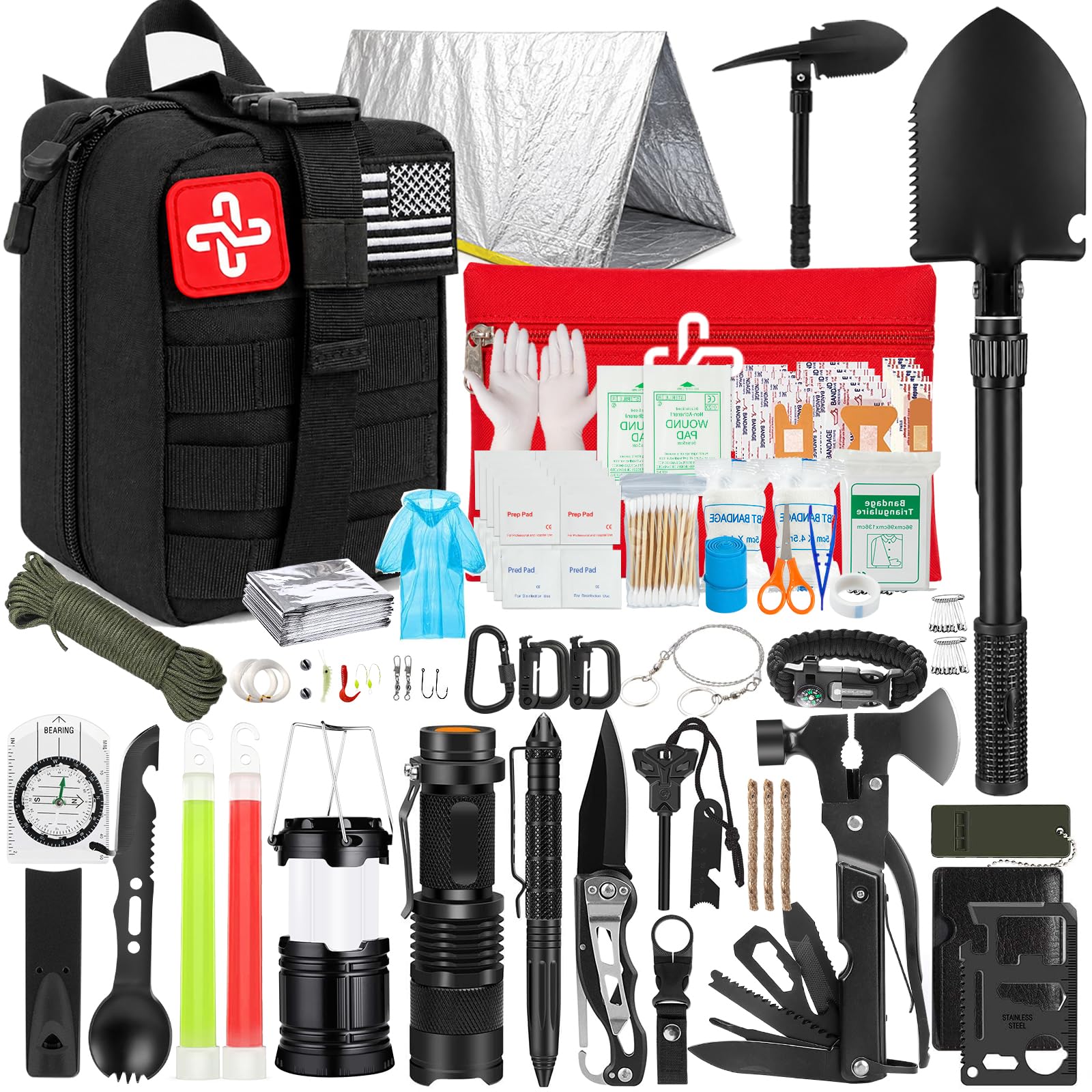
The 250-piece survival kit with a Molle-compatible bag and emergency tent is one of those products that promises a lot: readiness for earthquakes, hiking trips, hunting excursions, and even gift-giving. But how does it hold up in real-world use? This review breaks down what you actually get, where it works, and where it falls short.
First, let’s talk about what’s inside. The kit includes 250 pieces, which sounds impressive until you realize that many are small, consumable items like bandages, safety pins, and fishing line. You’ll find a mix of first aid supplies (adhesive bandages, gauze pads, antiseptic wipes), survival tools (a compass, whistle, multitool, fire starter), and emergency gear (a thermal blanket, rain poncho, and the included tent). The tent is a two-person emergency tube tent—essentially a reflective polyethylene tube that provides shelter from wind and rain. It’s lightweight and packs small, but it’s not a long-term solution; think of it as a step above a space blanket.
The bag itself is a Molle-compatible pouch, meaning it can be attached to a larger backpack or belt using the strap system. The material is durable nylon, and the zippers feel reasonably sturdy for the price point. However, the bag is not waterproof, so you’ll want to pack items in ziplock bags if you expect wet conditions. The Molle straps are functional but not as heavy-duty as those on tactical gear; they should hold up for casual use but may wear with frequent attachment and removal.
In real-world usage, this kit shines as a compact solution for car emergencies, day hikes, or as a starter kit for someone new to prepping. The first aid supplies are basic but sufficient for minor cuts and scrapes. The multitool is small and not suitable for heavy tasks, but it can handle simple repairs. The fire starter (a ferro rod) works well once you get the hang of it, though it’s not as easy as a lighter. The compass is functional but basic—don’t rely on it for serious navigation; it’s more of a backup.
One notable limitation is the quality of some components. The included knife is flimsy and may not hold an edge well; it’s better to replace it with a more robust blade if you plan to use the kit regularly. The emergency tent, while useful, is single-use in many cases—once it’s torn or punctured, it loses effectiveness. Also, the kit lacks water purification tablets or a filter, which are essential for survival situations. You’ll need to add those separately.
Compared to a dedicated first aid kit or a survival kit from a specialized brand, this product is a jack-of-all-trades but master of none. A standalone first aid kit will have more comprehensive medical supplies, while a survival-focused kit might include better-quality tools. However, for the price, the 250-piece kit offers a convenient all-in-one package that covers the basics. It’s a good starting point for beginners or as a supplemental kit for experienced outdoorsmen.
Who is this for? It’s ideal for someone who wants a ready-made kit for their car, boat, or home emergency stash without spending hours assembling one. It’s also a reasonable gift for outdoor enthusiasts who appreciate practical items. However, it’s not for serious survivalists who demand high-end, durable gear, nor for those expecting a comprehensive medical kit. If you’re planning a backcountry trip where your life depends on your gear, invest in specialized equipment. For casual adventures and emergency preparedness, this kit provides a solid foundation.
In summary, the 250-piece survival kit is a budget-friendly option that delivers on quantity but has some quality trade-offs. It’s a practical choice for everyday carry or as a backup, but users should supplement it with additional water and navigation tools. Just keep your expectations realistic—it’s a starter kit, not a professional-grade system.