
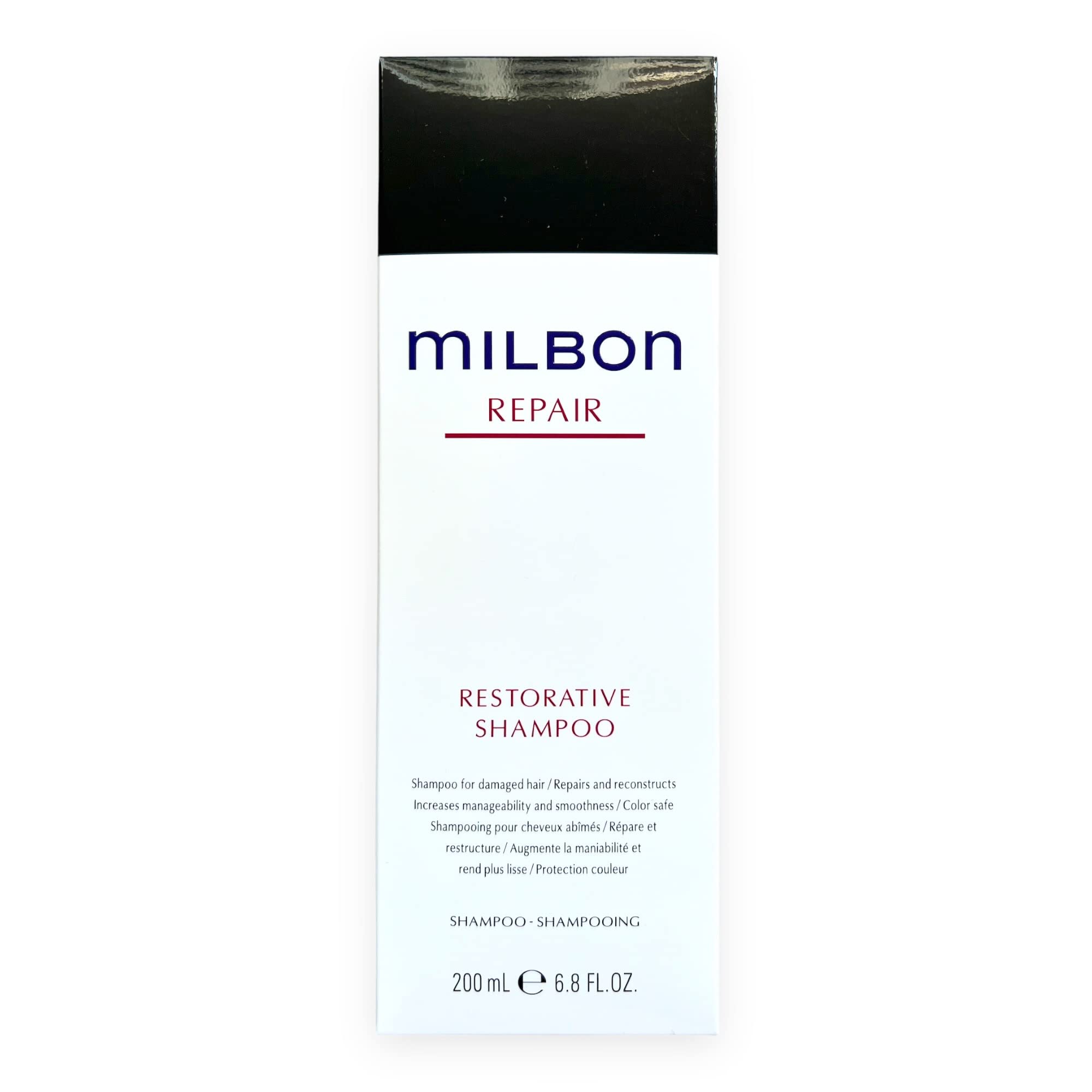
Milbon’s Repair Restorative Shampoo comes from the Japanese brand’s haircare line aimed at damaged hair. The 6.8 oz bottle is a common size for salon-brand shampoos, sitting between travel and bulk sizes. It’s sold through salons and specialty retailers, which means you’re more likely to encounter it through a stylist’s recommendation than on a drugstore shelf. The formula is designed for hair that’s been chemically treated, heat-styled, or otherwise stressed, and it’s part of a broader system that includes a matching conditioner and treatment.
In practice, this shampoo is used like any other: wet hair, lather, rinse. But its positioning as a restorative product means it’s often incorporated into a weekly routine for people who color their hair or use hot tools regularly. The 6.8 oz size is small enough to store easily but large enough to last a month or two with regular use, depending on hair length and how often you wash. It’s not a clarifying shampoo, so it won’t strip buildup from heavy styling products; instead, it’s meant to gently cleanse while depositing conditioning agents.
Functionally, the shampoo contains a blend of ingredients that include hydrolyzed keratin and other proteins, which are common in repair-focused formulas. These proteins temporarily fill in gaps in the hair cuticle, making hair feel smoother and look shinier. It also includes moisturizing components like glycerin and various plant-derived extracts. The formula is sulfate-free, which means it produces less lather than traditional shampoos and is generally milder on color-treated hair. However, sulfate-free doesn’t automatically mean gentle for everyone; some people find that the surfactants used can still be drying if used too frequently.
One of the main trade-offs with this shampoo is its price relative to its size. At 6.8 oz, it’s on the smaller side for the cost, and if you have long or thick hair, you might find yourself going through it quickly. Additionally, because it’s a conditioning shampoo, it can weigh down fine hair if not rinsed thoroughly or if used too often. Those with oily scalps might find that it doesn’t provide enough cleansing, leading to a buildup that requires a separate clarifying wash every so often. It’s also worth noting that while it’s marketed for damaged hair, it’s not a miracle worker; it won’t permanently repair split ends or reverse severe damage from bleaching. It’s a maintenance product, not a treatment.
Compared to a similar category, such as a drugstore repair shampoo like L’Oréal’s EverStrong or a more accessible option from Pantene, the Milbon shampoo sits at a higher price point. The difference often comes down to formulation: salon brands tend to use more expensive ingredients and may have a more refined feel, but the gap in performance isn’t always proportional to the price. Some users might find that a drugstore alternative works just as well for their hair type, especially if the damage isn’t severe. On the other hand, those who have had good results with other Milbon products might find this a consistent addition to their routine.
In terms of real-world performance, expectations should be realistic. This shampoo won’t transform hair overnight, but with consistent use alongside a conditioner, it can help improve manageability and reduce the appearance of dryness. It’s particularly suited for people with medium to thick hair that’s been colored or heat-styled, as the conditioning agents can help smooth the cuticle. However, it’s not ideal for those with very fine or oily hair, who might find it too heavy. It’s also not a solution for scalp issues like dandruff or psoriasis; in fact, the added moisturizers could exacerbate those conditions if used without a medicated shampoo.
Who is it for? Someone who already invests in salon haircare and wants a gentle, reparative shampoo that fits into a broader regimen. It’s also a reasonable option for those who color their hair and want to extend the life of their color, as sulfate-free formulas are less likely to fade dye. Who is it not for? Budget-conscious shoppers, people with fine hair that gets weighed down easily, and those who prefer a squeaky-clean feeling after washing. If you’re looking for a deep-cleaning shampoo or something to address scalp concerns, this isn’t the right pick.
Overall, the Milbon Repair Restorative Shampoo is a solid, if not exceptional, choice in the repair shampoo category. It does what it claims—gently cleanses while providing some conditioning benefits—but it doesn’t stand out dramatically from other salon-brand options. The small size and higher price per ounce are drawbacks, and the potential for buildup on some hair types is worth considering. For the right user, it’s a dependable part of a hair care routine, but it’s not a one-size-fits-all solution.