
The Together in Tune Guitar sits in an unusual spot in the toy aisle. It looks like a simple wooden instrument for a baby, but it carries a wireless connection feature borrowed from the electronic toy world. Baby Einstein markets it as part of the Magic Touch Collection, aimed at children from 6 months and up. In practice, that age range covers two very different kinds of play, and how well the toy works depends heavily on which stage your child is in.
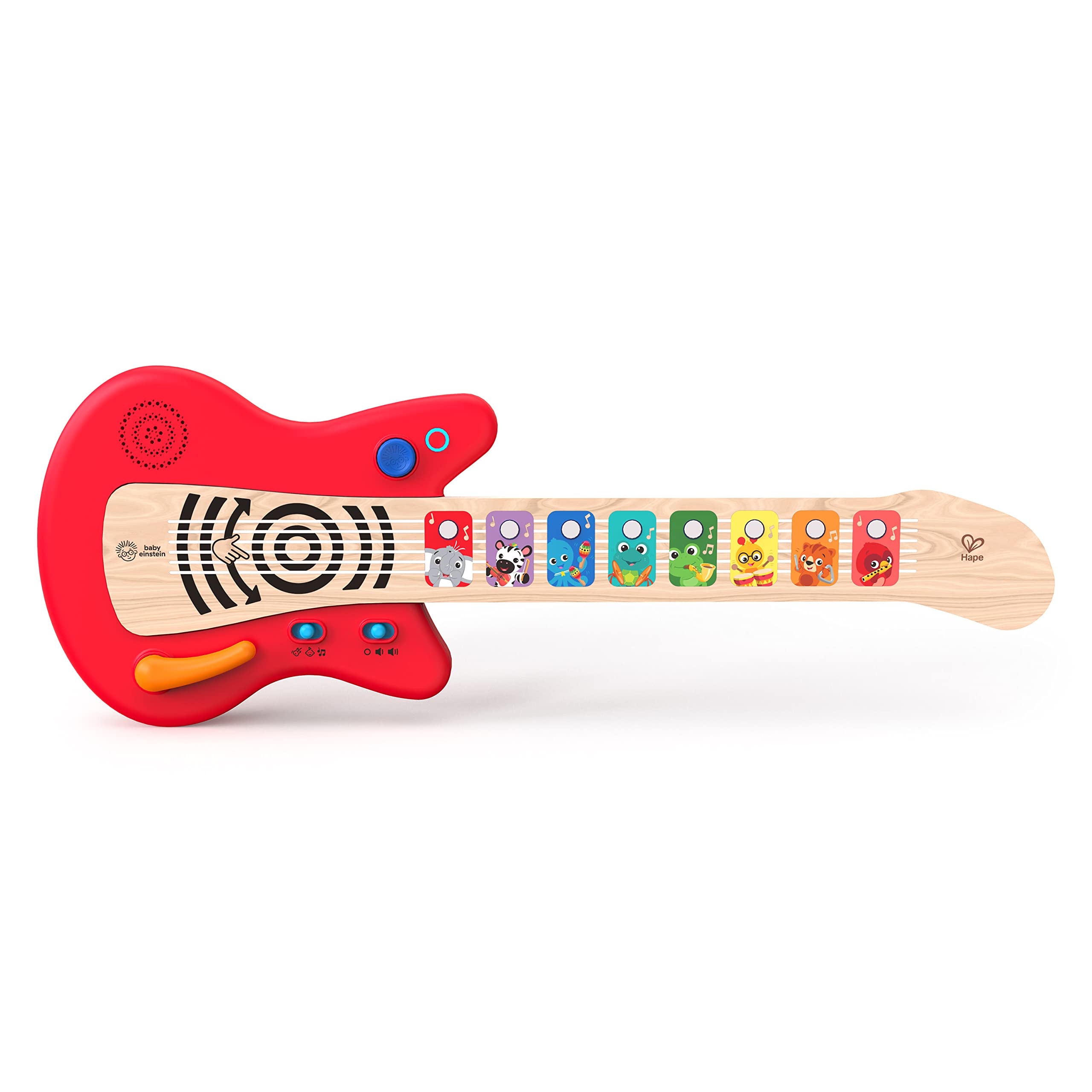
The physical object is a small wooden guitar with a rounded body, a short neck, and a set of strings that are not actually strings. The playing surface uses touch-sensitive pads rather than tensioned wire, so there is nothing to pluck, break, or tune. For a household with a baby who grabs and mouths everything, that design decision removes a lot of anxiety. The wood gives it a warmer, more substantial feel than the plastic instruments that dominate this category, and it is sized for small hands to hold or rest on the floor.
Functionally, the guitar produces a handful of modes. There is a free-play setting where each touch triggers a note or chord, and structured modes that play short melodies or backing tracks so a child can tap along. The Magic Touch surface responds to light contact, which matters for a 6-month-old who does not yet have precise control. Volume is adjustable, and the toy includes a volume-off or low setting that parents will likely use more than any other feature.
The wireless element is the part that needs the most explanation. The guitar can connect wirelessly to a companion speaker or to other Together in Tune instruments, so two guitars can play together and route sound through a shared output. The idea is that siblings or a parent and child can jam without cables running across the floor. It works, but the pairing process is not instant, and it assumes you own a second compatible piece. As a standalone toy, the wireless feature adds little; it is a bonus that only pays off in specific household setups.
In real use, the guitar tends to serve two purposes. For a baby around 6 to 12 months, it is mostly a cause-and-effect object: touch here, hear a sound, touch there, hear a different sound. That loop holds attention for a while, though not indefinitely. For a toddler closer to 2 or 3, the melody modes and the ability to tap along to a backing track become more interesting, and the wireless pairing with a second instrument starts to make sense as a shared activity. The toy bridges those stages reasonably well, which is rarer than it sounds.
There are trade-offs worth naming. The touch surface is sensitive enough that accidental brushes trigger sounds, which can be frustrating during quiet moments or when the toy is being carried. The sound quality is adequate for a toddler toy but thin compared with a real small instrument or a decent electronic keyboard; it is not something an adult will enjoy hearing repeatedly. Battery life is finite, and because the toy depends on electronics, it will eventually stop working in a way that a plain wooden instrument never would. The wooden shell is durable, but the electronic heart is not repairable by a parent.
Compared with a basic wooden toy guitar with real (if slack) strings, this model offers more variety and less mess, but it also introduces batteries, volume, and a pairing feature that a simpler toy avoids. Compared with a child-sized electronic keyboard, it is more portable and more physically engaging, though it offers fewer notes and less musical range. Parents choosing between the two should think about whether they want an instrument-like object or a sound-making gadget; this sits closer to the latter despite the wooden body.
Who it suits: families with a baby approaching one year who wants a sturdy, touch-based sound toy, and households with two young children who might use the wireless pairing together. It also works for parents who want something more tactile than a tablet app but are not ready for a real instrument.
Who it does not suit: parents hoping for a first real instrument, households sensitive to repetitive electronic melodies, and anyone who wants a toy that works without batteries or pairing steps. Families with only one child may find the wireless feature goes unused.
Overall, the Together in Tune Guitar is a well-built, thoughtfully sized toy with a genuine but narrow wireless gimmick. It earns its place for the 6-month-to-toddler window, provided expectations stay modest: it is a cause-and-effect sound toy in wooden clothing, not a musical instrument.