
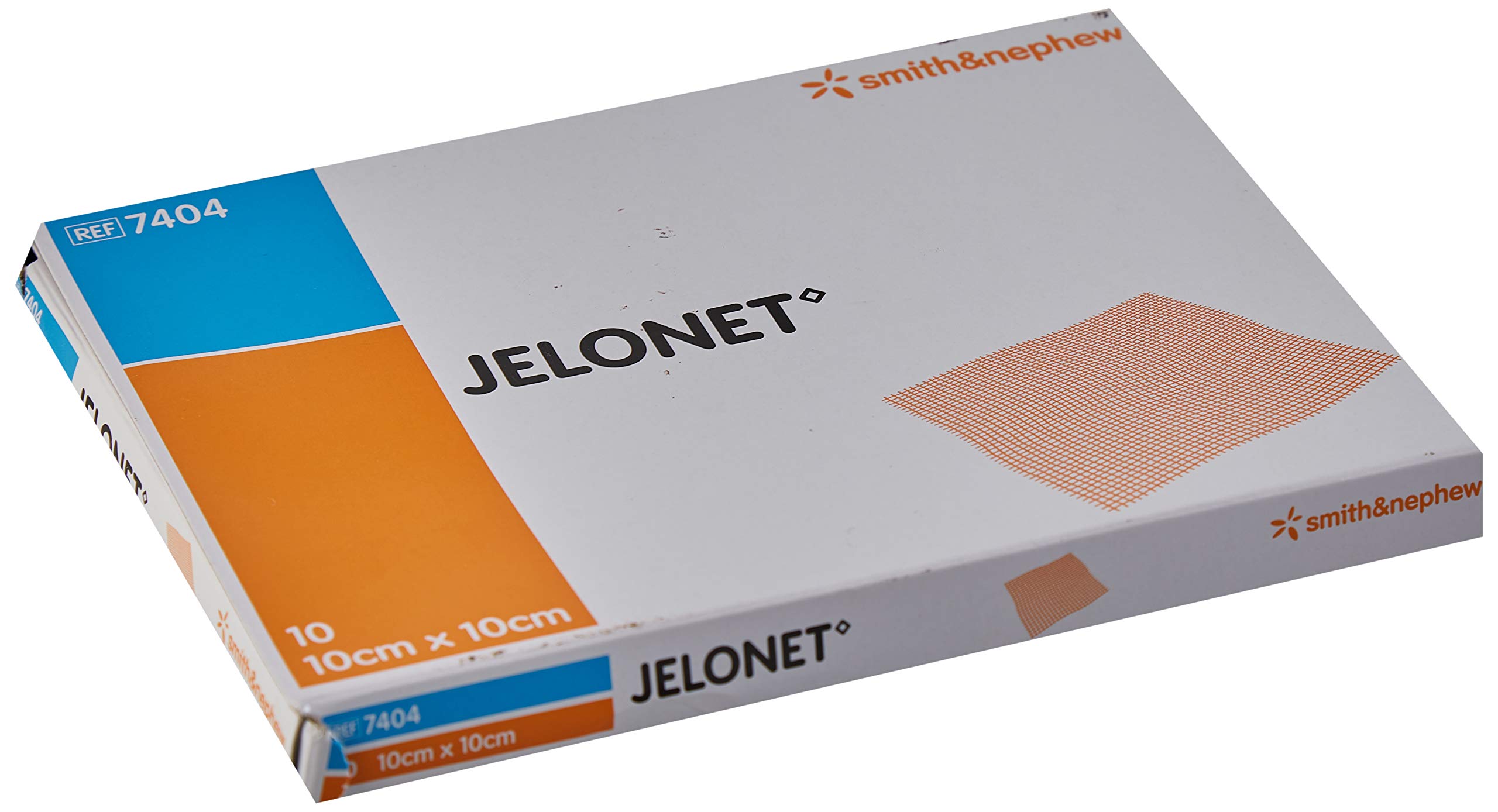
Jelonet is one of those medical staples that has been around for decades, and for good reason. It’s a simple product: a sterile, non-adherent dressing made of white paraffin gauze. Each dressing is a 10cm x 10cm square of open-weave cotton gauze impregnated with soft paraffin. The pack contains 10 individually wrapped dressings. It’s used in clinics, hospitals, and home care for a variety of minor wounds, from cuts and grazes to minor burns and skin tears. In this review, we’ll look at how it performs in real-world scenarios, its key features, and where it might fall short.
The primary function of Jelonet is to provide a non-adherent interface between the wound and a secondary dressing. The paraffin creates a slippery barrier that prevents the gauze from sticking to the wound bed, which is particularly useful for wounds with fragile tissue or when exudate is minimal to moderate. This reduces pain during dressing changes and helps protect granulating tissue. It’s not a standalone dressing; it requires a secondary absorbent layer and tape or a bandage to secure it. The open weave allows exudate to pass through into the secondary dressing, but the paraffin can become displaced if too much fluid is present, so it’s best for wounds that aren’t heavily exuding.
In real-world use, Jelonet is often chosen for superficial wounds, donor sites, and minor burns. For example, after a skin biopsy or a small excision, a piece of Jelonet can be placed over the site before applying a gauze pad and tape. It’s also common in pediatric care for minor abrasions because it doesn’t adhere and is relatively comfortable to remove. The 10cm x 10cm size is versatile; it can be cut to fit smaller wounds or used whole for larger areas. The individual sterile packaging makes it convenient for home first-aid kits or for clinicians who need to keep a few on hand.
One of the key advantages of Jelonet is its simplicity. There’s no adhesive, no antimicrobial agent, and no complicated application process. It’s just gauze and paraffin. That also means it’s suitable for people with sensitive skin or allergies to adhesives, as long as they’re not allergic to paraffin. The paraffin is generally well-tolerated, but some people may find it greasy or messy to handle. It can leave a residue on the skin that needs to be cleaned gently. Also, because it’s not adhesive, it requires a secondary dressing, which adds steps and materials.
A limitation to consider is that Jelonet is not appropriate for infected wounds or those with heavy exudate. The paraffin can trap bacteria and moisture if not changed regularly, and the dressing doesn’t have any antimicrobial properties. In comparison to other non-adherent dressings like silicone-based products (e.g., Mepitel), Jelonet is less expensive but also less conformable and may not stay in place as well on awkward areas. Silicone dressings are also easier to remove and can be left in place longer. However, Jelonet is widely available and often used in resource-limited settings because of its low cost.
Another trade-off is that the paraffin can cause the dressing to slide if not secured properly, so it’s important to use a secondary dressing that holds it in place without tension. Some clinicians prefer to use a small amount of additional paraffin or a hydrogel if the wound is very dry, as the Jelonet alone may not provide enough moisture. Also, the 10cm x 10cm size might be too large for small digits or facial wounds, requiring cutting, which can be fiddly and may compromise sterility if not done carefully.
Who is this for? Jelonet is suitable for healthcare professionals and caregivers who need a reliable, low-cost non-adherent dressing for minor wounds. It’s also a reasonable choice for home first-aid kits if you’re comfortable applying secondary dressings. It is not suitable for people who need a standalone adhesive dressing, those with heavily exuding or infected wounds, or those who prefer the convenience of modern silicone dressings. It’s also not ideal for wounds on highly mobile areas where a more conformable dressing might be needed.
In terms of performance, Jelonet does what it claims: it prevents sticking and allows exudate to pass through. However, it’s not a miracle product; it requires proper wound assessment and regular changing. The paraffin can dry out over time, so it’s important to check the packaging for expiration and store it properly. Overall, it’s a dependable, no-frills option that has earned its place in wound care, but it’s not without its limitations.