
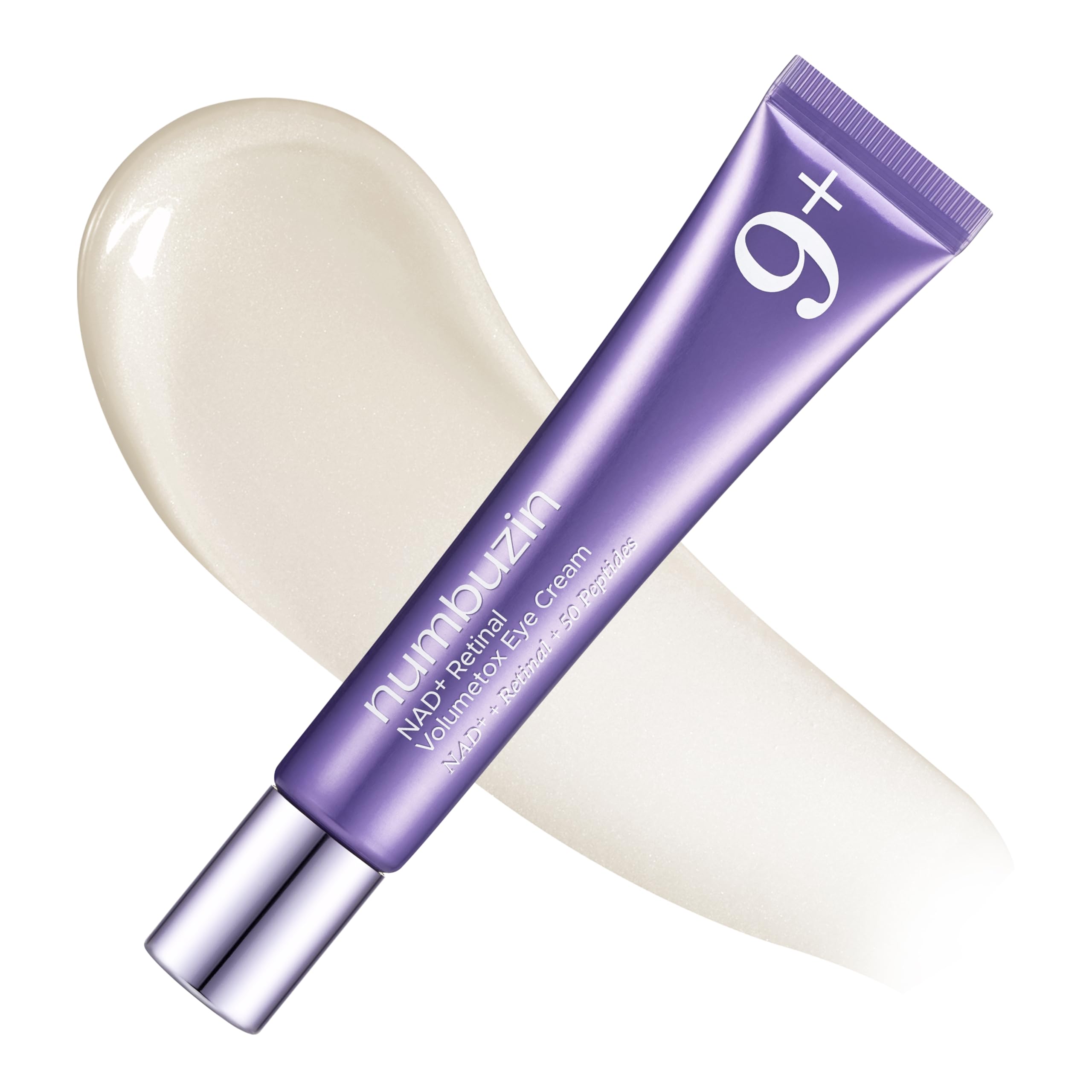
The Numbuzin No.9 NAD+ Retinal Eye Cream sits in a crowded but specific corner of Korean skincare: the multi-purpose eye cream that also wants to be used on the face. Its pitch centers on retinal, a vitamin A derivative that converts to retinoic acid in the skin more efficiently than retinol, paired with peptides, niacinamide, and NAD+ (nicotinamide adenine dinucleotide, a coenzyme that shows up in a lot of anti-aging marketing). The 0.67 fl. oz tube is small even by eye cream standards, which matters for how you end up using it.
In practice, this is a cream people apply along the orbital bone, on crow’s feet, and often on the “11” lines between the brows or the nasolabial folds. Some also use it on the whole face as a lightweight retinal step, which is where the small size becomes a real constraint. A pea-sized amount per use is the sensible approach with any retinoid, and at that rate the tube lasts a couple of months if you keep it to the eye area. Spread it across the full face and it disappears much faster.
The texture is where the product earns some goodwill. It’s a fairly light cream that spreads easily and doesn’t leave the greasy film many eye creams do, so makeup sits over it without pilling if you give it a few minutes. That makes it workable for morning use, though retinal is generally better suited to evenings because it can increase photosensitivity. The brand markets it for both, which is a bit optimistic.
On the formulation side, the combination is reasonable rather than remarkable. Retinal is genuinely one of the more effective over-the-counter retinoids, and pairing it with niacinamide is a common, well-supported strategy for tone and barrier support. Peptides are included, though the specific types and concentrations aren’t disclosed, so it’s hard to say how much they contribute. The NAD+ angle is the least proven part of the story; the ingredient has plausible mechanisms but limited topical evidence compared to retinoids. Treat it as a supporting player, not the reason to buy.
What the product does not include is a stated retinal percentage. Numbuzin doesn’t publish the concentration, which is frustrating for anyone trying to gauge strength or compare it against something like a 0.05% or 0.1% retinal cream from a brand that lists its actives. Without that number, you’re calibrating by feel. Most people with prior retinoid experience will find it tolerable a few nights a week; complete beginners should expect some tingling or flaking in the first two weeks and should start slowly, ideally with a buffer layer of moisturizer underneath.
- Key actives: retinal, niacinamide, peptides, NAD+
- Format: 0.67 fl. oz tube, light cream texture
- Suggested use: eye area and expression lines, evening preferred
- Notable gap: no disclosed retinal concentration
The “strawberry skin” and “firmer skin” claims deserve tempered expectations. Retinoids do improve texture and fine lines over time, but the timeline is measured in months, not weeks, and eye-area skin is thin and slow to change. Crow’s feet may look slightly softer after eight to twelve weeks of consistent use. Deep lines and significant laxity will not be meaningfully addressed by any over-the-counter eye cream, this one included. Anyone expecting visible firming in a month will be disappointed.
Compared with a plain hydrating eye cream, this is a more active, more demanding product. Compared with a dedicated prescription tretinoin, it’s gentler and easier to tolerate but slower and less potent. It also overlaps awkwardly with facial retinal serums: if you already use a retinoid on your face, layering this on top in the same routine risks irritation without adding much. In that case, a simple peptide or ceramide eye cream may be the smarter pairing.
Who is it for? People who want a single retinoid product for the eye area and expression lines, who have some tolerance to vitamin A, and who prefer a light cream over a rich balm. It suits combination and oily skin types particularly well. Who should skip it? Retinoid beginners who want a clearly dosed starter product, anyone with very dry or sensitized eye skin, pregnant or breastfeeding users (retinoids are generally avoided), and those looking for a large tube they can slather across the face. The undisclosed percentage and small volume are the main trade-offs to weigh before committing.