
Transferring a person with limited mobility is one of the most physically demanding and risky tasks in caregiving. The Vive Gait Belt with Handles aims to make that job safer for both the caregiver and the individual being moved. This review examines the belt’s design, real-world performance, and where it fits in the broader landscape of mobility aids.
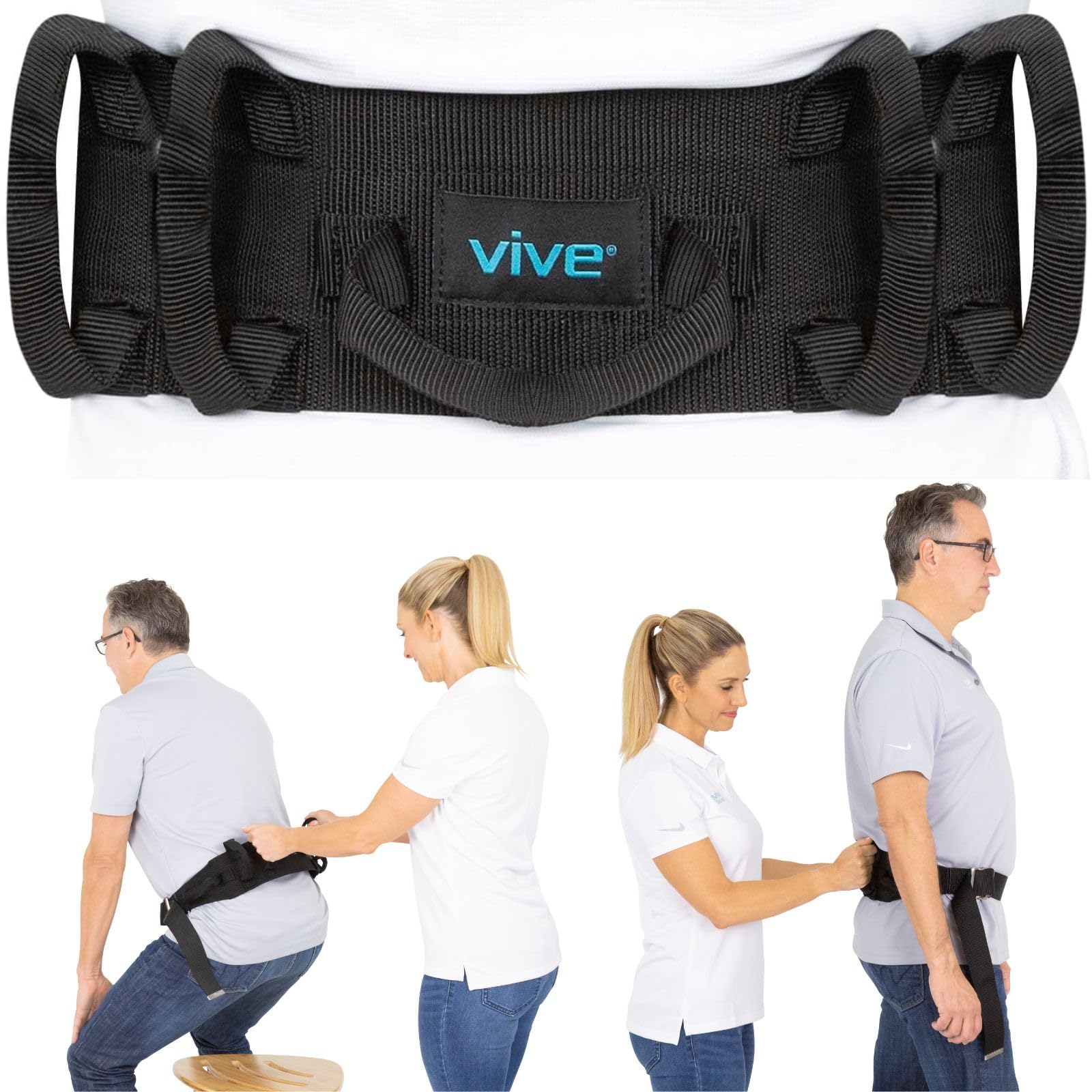
At its core, the Vive Gait Belt is a sturdy nylon strap that fastens around a person’s waist, providing caregivers with secure handholds to assist with standing, walking, and transferring between surfaces. The belt is rated to support up to 350 pounds, which covers a wide range of users. The handles are a key feature: they are padded and positioned to give caregivers multiple grip options, reducing the need to clutch at clothing or the person’s body, which can be unsafe and uncomfortable.
In real-world use, gait belts like this are typically employed in hospitals, nursing homes, and home care settings. A caregiver might use it to help someone rise from a chair, steady them during walking, or guide them from a bed to a wheelchair. The Vive belt’s handles are particularly useful in these scenarios because they allow for a more natural grip and better leverage. The padding on the handles is a thoughtful addition; it can make prolonged use more comfortable for the caregiver, especially during transfers that require sustained tension.
Functionally, the belt is straightforward. It consists of a wide nylon webbing strap with a quick-release buckle and adjustable length. The handles are integrated into the belt at intervals, typically two on each side, allowing caregivers to choose the most ergonomic grip. The material is durable and easy to clean—important for hygiene in medical settings. The belt also features a loop for hanging or storage, though this is a minor convenience.
One limitation worth noting is that the belt’s effectiveness depends heavily on proper use. If not fastened snugly or positioned correctly, it can slip or cause discomfort. The learning curve is not steep, but caregivers should receive training to avoid injury. Additionally, while the 350-pound weight capacity is generous, the belt’s width (typically around 2 inches) may not distribute pressure as evenly as wider belts for very heavy individuals, potentially causing some discomfort during extended use. This is a trade-off between portability and support; wider belts offer more surface area but are bulkier.
Compared to alternative transfer aids like slide sheets or mechanical lifts, the Vive Gait Belt is less expensive and more portable, but it requires the caregiver to bear weight and provide physical effort. Slide sheets reduce friction for bed transfers but are not designed for walking assistance. Mechanical lifts are safer for heavy or uncooperative individuals but are costly and take up space. The gait belt occupies a middle ground: it’s a hands-on tool that promotes mobility and some weight-bearing, which can be beneficial for rehabilitation, but it demands physical capability from the caregiver.
Who is this for? The Vive Gait Belt is suitable for professional caregivers, family members, and healthcare workers who need a reliable, portable aid for assisting with transfers and walking. It’s ideal for individuals who have some weight-bearing ability and can follow simple instructions. It is not suitable for individuals who are completely non-weight-bearing or who have severe behavioral issues that make physical assistance unsafe—in those cases, a mechanical lift is more appropriate. Also, caregivers with back problems or limited strength should consider whether they can safely use a gait belt without risking their own health.
In terms of construction, the belt appears well-made. The stitching is reinforced at stress points, and the buckle is sturdy. However, the nylon material, while strong, can slide against certain clothing fabrics, so it’s important to ensure a snug fit. The handles are a standout feature, but they are not rigid; they are flexible loops that collapse when not in use. This makes the belt easy to store but means the caregiver must actively grip them rather than having a fixed handle.
Overall, the Vive Gait Belt is a practical, no-frills tool that does what it’s designed to do. It’s not a substitute for proper training or for mechanical lifting equipment in high-risk situations, but for everyday assistance with mobile individuals, it offers a reasonable balance of safety, portability, and cost. Caregivers should assess their own physical capabilities and the specific needs of the person they’re assisting before relying on any gait belt. The Vive model is a solid option among similar products, though those needing extra-wide support or rigid handles may want to look at specialized alternatives.