
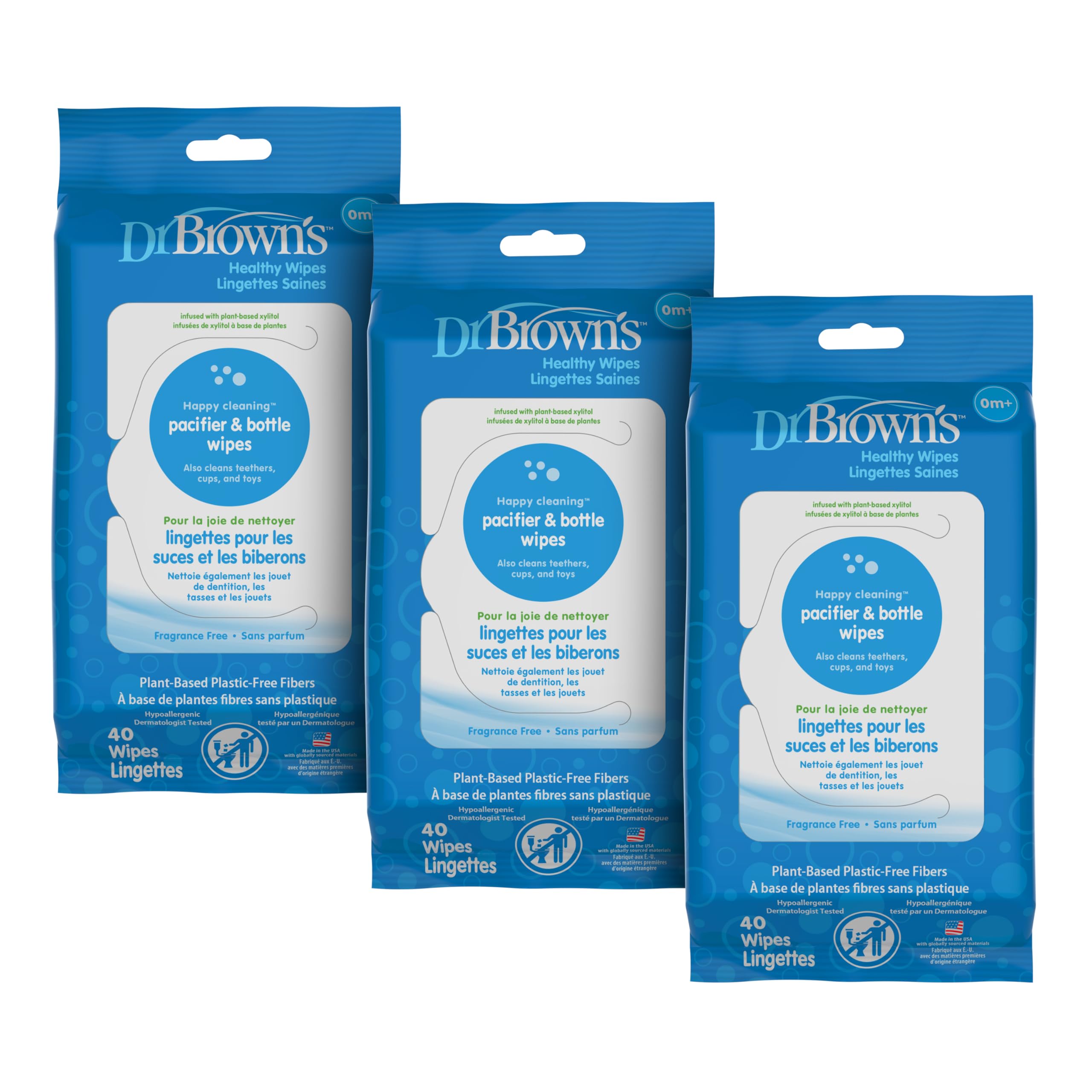
Dr. Brown’s sells a lot of feeding gear, and these Healthy Wipes are a small accessory meant to sit alongside bottles, pacifiers, and pump parts. The pitch is straightforward: a wipe you can use on things that go in a baby’s mouth, sold in a 40-count pack with three packs per box. Whether that earns a permanent spot in a diaper bag depends on what you expect it to do.
The realistic use case is narrow but real. These are for cleaning a dropped pacifier at the playground, wiping down a bottle exterior between feeds, or refreshing pump parts when a full sink wash isn’t practical. They are not a substitute for sterilizing or proper washing with soap and hot water, and the packaging doesn’t claim otherwise. Parents who treat them as a stopgap will get more out of them than parents looking for a primary cleaning method.
The formula is described as hypoallergenic and free of common irritants, which matters when the wipe touches items that contact an infant’s mouth. The wipes themselves are pre-moistened and come in a resealable pack, so they stay damp between uses as long as the flap is pressed down firmly. In practice, the top wipe can dry out slightly if the pack sits open or gets shoved into a bag with the seal loose. That’s a minor annoyance rather than a failure, but it’s worth knowing before buying a three-pack and leaving two in the car.
On performance, the wipes handle light residue well: milk film, dried formula splatter on a bottle’s exterior, or the general grime that accumulates on a pacifier clip. They are less effective on sticky or greasy messes, and they won’t scrub out a bottle interior the way a brush and detergent will. The texture is on the thin side, so a firm wipe on a textured surface can feel like it’s close to tearing. For quick surface cleaning, that’s acceptable. For anything requiring real scrubbing, it isn’t the right tool.
One trade-off that deserves attention is cost per wipe. Compared with a stack of plain baby washcloths and a small bottle of cleanser, these are a convenience purchase with a premium attached. A reusable cloth dampened with water does much of the same job for far less over time, though it requires planning and a laundry cycle. The wipes win on portability and disposability, which is the entire point of the category. Buyers who mostly clean at home may find the value hard to justify; buyers who are constantly out with a baby will likely find them useful.
Compared with generic baby wipes, these are positioned specifically for feeding items, and that framing is reasonable but not dramatically different in practice. Standard fragrance-free baby wipes can handle many of the same tasks, though some parents prefer a product explicitly labeled for bottles and pacifiers. If you already carry sensitive-skin baby wipes, the overlap is significant enough that a separate purchase may not be necessary.
Packaging is worth a note. The listing says packaging may vary, and that’s accurate in the sense that the pack design has changed over time. The count and format stay consistent, but buyers comparing photos to what arrives shouldn’t be surprised by a different label. It’s a small thing, but it comes up in reviews often enough to mention.
Who is this for? Parents and caregivers who are frequently away from a sink, who want a dedicated wipe for feeding gear, and who accept that it’s a supplement rather than a replacement for washing. It also suits people who dislike the scent or residue of general-purpose wipes on items a baby mouths. Who is it not for? Households that primarily clean at home, families on tight budgets who can use cloths and water, and anyone expecting these to sanitize or remove tough buildup. They don’t sterilize, and they aren’t designed to.
The honest summary is that Dr. Brown’s Healthy Wipes are a functional convenience item with a clear but limited role. They work for light cleaning on the go, the hypoallergenic framing is reassuring for mouth-contact items, and the three-pack format makes sense for keeping one in the diaper bag, one at home, and one in the car. The thin material, the per-wipe cost, and the overlap with ordinary baby wipes are the reasons not to overbuy. Treated as a backup rather than a staple, they do what they say.