
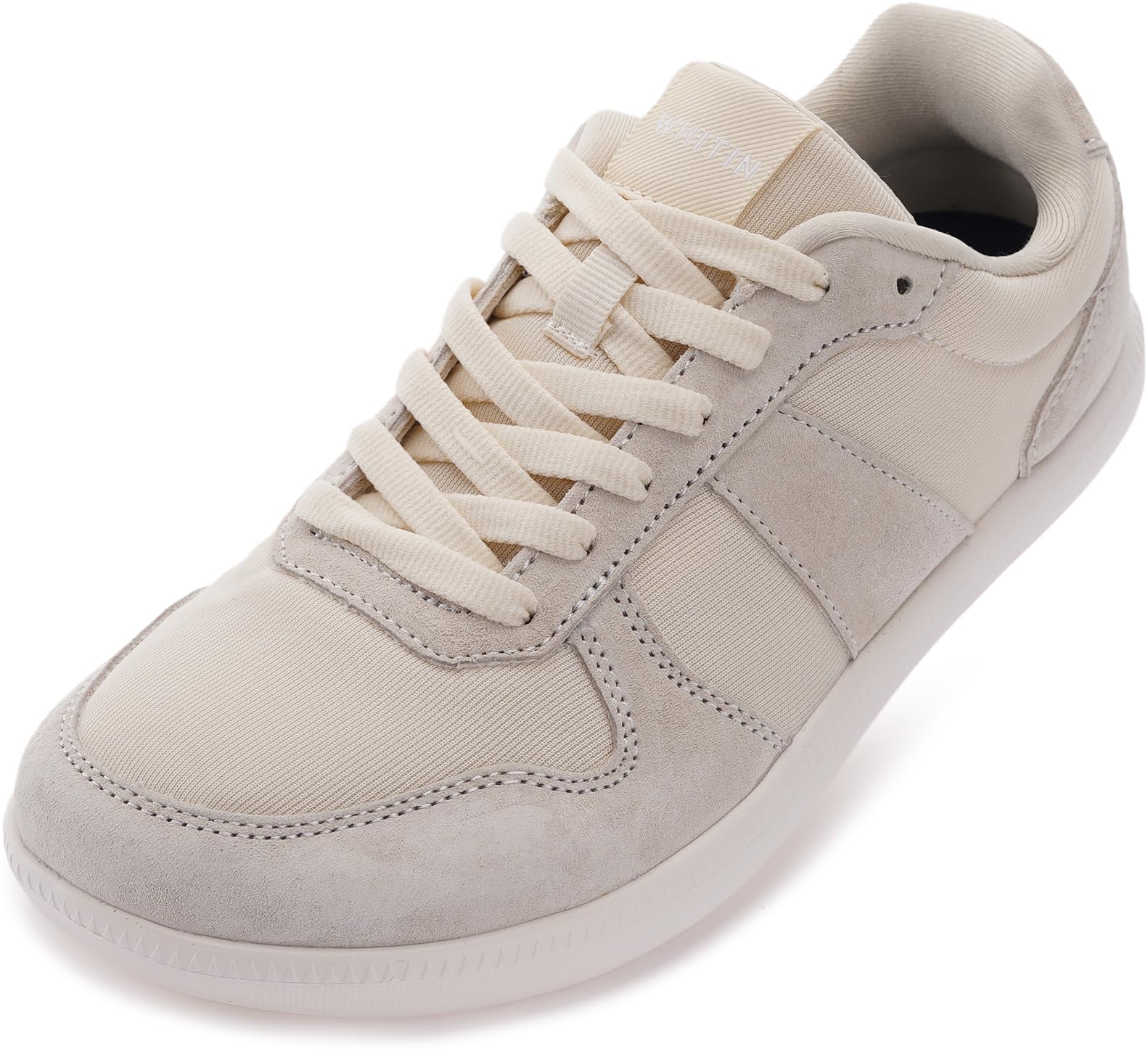
The WHITIN Women’s Wide Toe Box Zero Drop Casual Shoes occupy a specific niche: they are minimalist shoes dressed up as everyday sneakers. The beige colorway and simple canvas-like upper make them look unremarkable at a glance, which is arguably the point. They are aimed at people who want the toe splay and flat footing of a barefoot shoe without the toe-shoe aesthetic or the price of dedicated barefoot brands. Whether that combination works for you depends heavily on how much you actually want from a shoe.
In real-world use, these tend to show up in fairly ordinary situations. They get worn for errands, casual office days, travel where packing light matters, and long stretches of standing or walking on hard surfaces. Some buyers use them as a transitional shoe, stepping down from cushioned sneakers toward more minimal footwear. The zero-drop platform means the heel and forefoot sit at the same height, which changes how weight is distributed through the foot and calf. That is a meaningful adjustment for anyone used to a raised heel, and it is worth easing into rather than wearing for a full day immediately.
The wide toe box is the headline feature, and it is genuinely wide rather than just slightly roomier than average. The forefoot allows toes to spread, which many people find comfortable over a long day, particularly those with bunions, wide feet, or a history of toe crowding in standard sneakers. The upper is soft and flexible, so there is little break-in period. The outsole is thin, which provides ground feel and a flatter, more grounded stance. For a casual shoe, the construction is basic but functional: a fabric upper, a thin rubber outsole, and a simple lacing system. There is no arch support to speak of, and the insole is minimal, which is consistent with the minimalist design rather than a flaw in execution.
That minimalism is also where the trade-offs begin. The thin sole transmits a lot of what is underfoot, so gravel, uneven pavement, and long stretches of concrete can become tiring. If you are used to cushioning, these will feel harsh by comparison, especially in the first week. The lack of structure means the shoe does not hold the foot firmly in place during quick lateral movements, so they are not a good choice for anything resembling sport or agility work. Durability is a reasonable concern at this price point; the materials are lightweight and the outsole is thin, so heavy daily use on abrasive surfaces will likely wear them faster than a sturdier sneaker. The beige fabric also shows dirt readily and is not especially easy to spot-clean.
Compared with a conventional cushioned walking shoe, the WHITIN pair offers far more toe room and a flatter stance but much less shock absorption and support. Compared with dedicated barefoot shoes from specialist brands, they are cheaper and more casual-looking, but the materials and finish are a step below, and the fit can be less precise. They sit in a middle ground: more minimal than a typical sneaker, less refined than a purpose-built barefoot shoe.
These are a good fit for people who already prefer flat, flexible footwear, those with wide forefeet who struggle to find roomy sneakers, and anyone curious about zero-drop shoes without spending much. They also suit travel and casual wear where a light, packable shoe is useful. They are not suitable for people who need arch support or cushioning for joint pain, runners or gym-goers expecting stability, or anyone who spends full days on rough, hard terrain. Buyers should also expect a break-in period for the calves and feet when switching from conventional shoes.
Overall, the WHITIN wide toe box zero-drop shoes do what they claim at a modest price, with the caveats that come with minimal construction. They are a sensible entry point into minimalist footwear rather than a refined everyday shoe, and they reward buyers who know what they are getting into.