
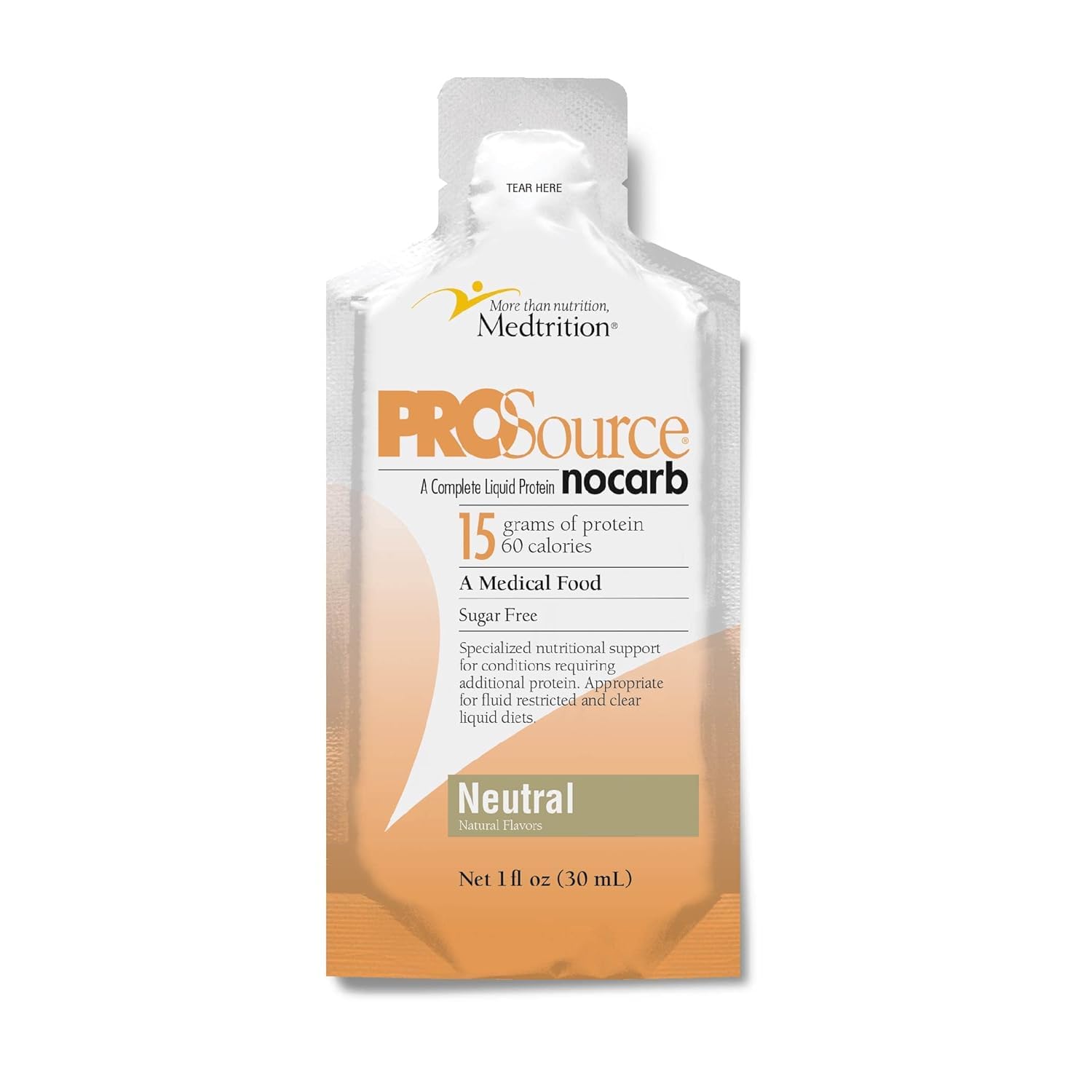
Protein supplements tend to fall into two camps: flavored powders aimed at athletes and ready-to-drink shakes sold in grocery coolers. Medtrition’s NoCarb Liquid Protein sits in a third, less visible category — concentrated liquid protein sold in small packets, intended mainly for people on medically restricted diets or those who struggle to chew or swallow solid food. The neutral flavor and 1 fl oz packet size are the defining features here, and they shape both what the product does well and where it falls short.
Each packet contains a small volume of liquid protein concentrate, and the format is the point. A 1 oz packet can be squeezed into a cup of broth, a glass of juice, a soft food like applesauce or yogurt, or taken directly. The “NoCarb” labeling refers to the absence of added carbohydrate, which matters for people managing diabetes, following ketogenic protocols, or working within a clinician-specified macronutrient limit. Because the flavor is neutral rather than sweetened or fruit-flavored, it is less likely to clash with whatever it is mixed into — though neutral is not the same as tasteless, and that distinction comes up repeatedly in user feedback on this type of product.
In practice, these packets show up in hospital and long-term care settings, in bariatric surgery recovery, and among older adults dealing with poor appetite or dysphagia. A caregiver might stir one into a bowl of soup or a protein-free shake to raise the protein content without adding volume. Someone recovering from surgery may use them to hit a protein target when full meals are difficult. The small format is genuinely convenient for that: no scooping, no blender, no half-finished tub going stale. The trade-off is cost per gram of protein, which tends to run higher than bulk powder, and the packaging waste that comes with single-serve sachets.
What the product does not do is disguise itself. Collagen-based and hydrolyzed liquid proteins often carry a faint gelatin or broth-like note, and mixing a full packet into a small amount of liquid can make that note more pronounced. Diluting into a larger volume, or combining with something that has its own flavor — coffee, tomato soup, cider — generally works better than trying to mask it in plain water. Anyone expecting a truly undetectable addition may be disappointed. It is also worth noting that liquid protein concentrates are not meal replacements; they supply protein and little else, so they work alongside a diet rather than in place of one.
Compared with a standard whey or plant protein powder, the packets offer portion control and portability but less flexibility and a higher unit cost. Compared with ready-to-drink protein shakes, they take up less space and can be added to hot or cold foods, but they require a mixing step and don’t provide the calories, vitamins, or convenience of a complete beverage. For someone who simply wants a post-workout shake, a conventional powder is the more economical and better-tasting choice. The packets make sense when the constraints are medical or logistical rather than athletic.
Who it suits:
- People on carbohydrate-restricted diets who need to add protein without added sugar or starch
- Patients recovering from surgery or illness with elevated protein needs and limited appetite
- Caregivers fortifying soft foods, soups, or beverages for someone who cannot eat enough protein otherwise
- Anyone who wants single-serve portions without measuring or cleanup
Who should look elsewhere:
- People who want a flavored, drinkable shake straight from the package
- Budget-conscious buyers who can use a bulk powder — the per-serving cost here is notably higher
- Anyone with dietary restrictions requiring a specific protein source; buyers should confirm the protein type and allergen information on the label before committing to a 25-pack
- Those expecting a completely flavorless additive — the neutral profile reduces interference but does not eliminate it
The 25-count pack is a reasonable trial size for a care setting or a month of regular use, though it is large enough that anyone unsure about the taste is taking a small risk. Realistic expectations matter here: this is a functional clinical product, not a gourmet supplement. It performs its job — adding protein to a restricted diet in a controlled portion — with reasonable competence, provided the buyer understands the format’s limits and the taste profile’s realities.