
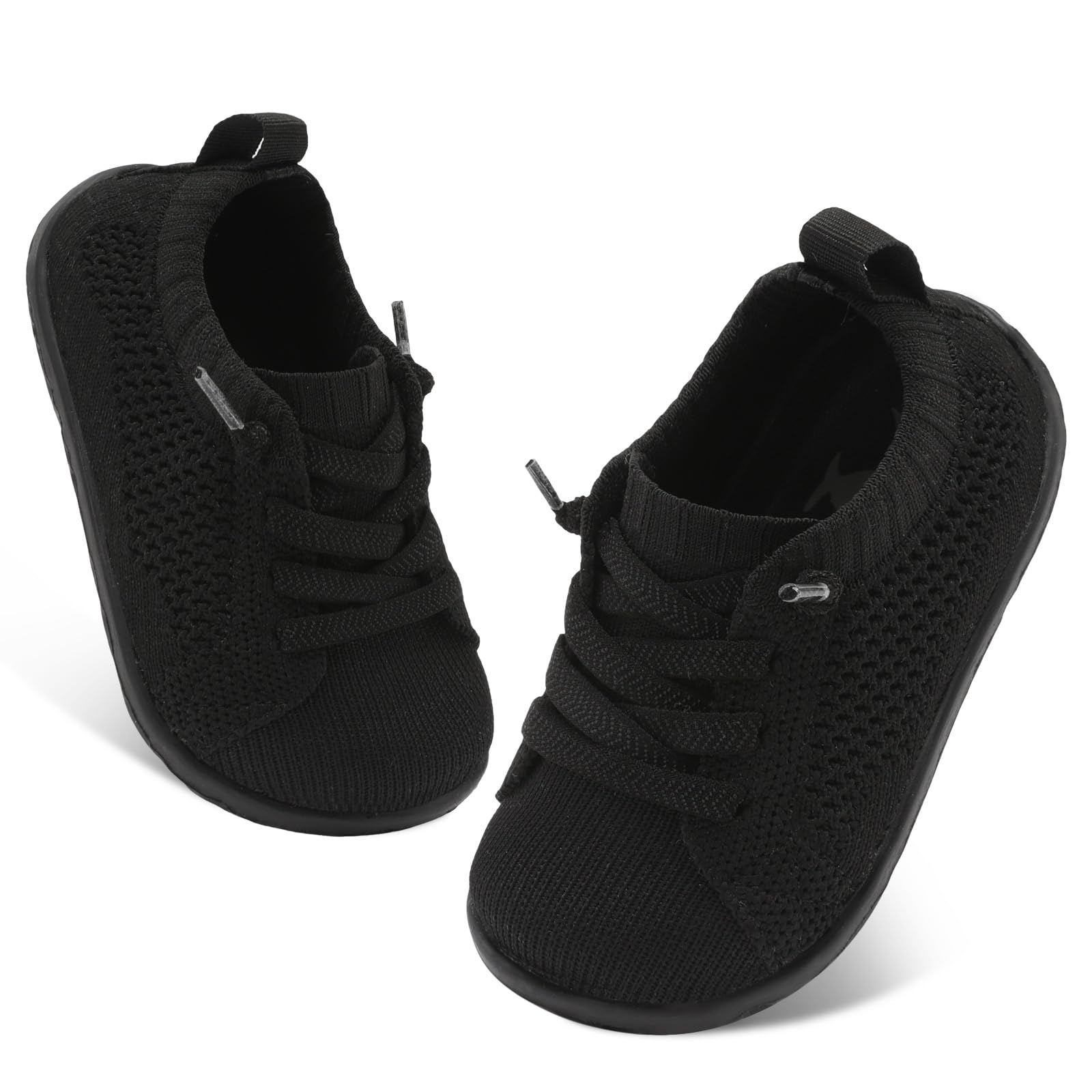
Baby shoes occupy an awkward category. Infants don’t need much protection, but once they start pulling up on furniture and taking those first wobbly steps, parents face a decision: barefoot, socks, or something in between. The FEETCITY Baby Walking Shoes sit in that in-between space, a soft slip-on sock shoe with a thin sole aimed at the crawling-to-cruising transition. They’re not a structured first walker, and they’re not a sock. Understanding what they actually do is the key to deciding whether they fit your situation.
The design is straightforward. The upper is a knit fabric that stretches over the foot, and the sole is a thin, flexible rubber layer with light texturing. There’s no lacing system, no velcro strap, and no heel counter to speak of. The shoe pulls on like a sock and stays put through a combination of elastic give in the knit and a slightly raised back edge. The claimed weight is minimal, and that tracks with the construction: there’s very little material here, which is the point.
In practice, these get used in a few predictable ways. The most common is indoor wear on hardwood or tile, where bare feet get cold and socks alone are too slippery. They also come out for stroller walks, quick errands, and daycare settings where shoes are required but a rigid sole would be overkill for a child who isn’t walking confidently yet. Parents often use them as a transitional shoe in the weeks between cruising and independent walking, when a baby is on and off their feet constantly.
The functional case for a shoe like this rests on foot development. Podiatrists and pediatric physical therapists generally favor thin, flexible soles for early walkers because they let the foot feel the ground and move naturally, which supports balance and proprioception. The FEETCITY shoe’s sole is thin enough to bend easily in the hand and flex under a toddler’s weight, and the knit upper doesn’t restrict toe splay the way a stiff leather shoe might. The breathable fabric also matters more than it sounds: babies’ feet sweat, and a non-breathable shoe on a warm day gets unpleasant fast. The knit here ventilates reasonably well, though it’s not dramatically different from a good cotton sock in that regard.
The slip-on design is a genuine convenience. Getting shoes onto a squirming one-year-old is a two-handed job at the best of times, and anything that eliminates buckles or laces earns its place. That said, the trade-off is fit security. Because there’s no adjustable closure, the shoe either fits the foot shape or it doesn’t. Narrow feet may find the knit bunches or shifts, and wider or higher-volume feet can stretch the upper enough that the shoe works loose during active play. The elastic opening holds reasonably well for walking and light running, but these are not shoes for climbing, rough terrain, or a child who has discovered the joy of kicking shoes off in the stroller.
Durability is the other honest caveat. The thin sole and soft knit are built for indoor and light outdoor use, not for pavement-heavy play. A child who walks everywhere on concrete will wear through the sole faster than they would with a rubber-soled sneaker, and the knit can snag on rough surfaces or develop pilling with heavy use. Expect these to last a season of regular wear, maybe two if mostly indoors, rather than surviving to be handed down. Washing is possible, but the shoes hold shape better with hand washing and air drying than with a machine cycle.
Compared with a traditional first-walker shoe, such as a leather sandal or a structured sneaker, the FEETCITY is softer, lighter, and less protective. It won’t shield the foot from a dropped toy or a stubbed toe the way a firmer shoe with a toe bumper would. Compared with plain socks, it offers grip and a bit of sole protection, which is the main upgrade. It’s closest in spirit to the barefoot-style minimalist shoes sold for adults, scaled down: the philosophy is ground feel over cushioning. Parents who want maximum protection for outdoor play should look at a more substantial shoe; parents who want to keep feet as close to barefoot as possible while still meeting a shoes-on requirement will find this style appropriate.
Who is it for? Primarily babies and young toddlers in the crawling-to-early-walking stage, roughly 9 to 18 months depending on foot size, who need something for indoor floors, daycare, or short stroller trips. It suits warm climates and heated homes well. Who is it not for? Confident, fast toddlers who spend hours outdoors on pavement, children with very narrow or unusually wide feet who need an adjustable fit, and anyone expecting a shoe that will survive rough daily outdoor use or be passed down. It’s also not a substitute for a properly fitted first walking shoe if a pediatric professional has recommended more support.
The FEETCITY slip-on does one job well: it keeps small feet covered and grippy without getting in the way of natural movement. It’s a reasonable, modestly priced option for the transitional phase, provided you go in expecting a soft, season-length shoe rather than a durable everyday sneaker. Fit is the main variable, so checking the size chart against a measured foot, and sizing up only if the child is between sizes, matters more here than with adjustable shoes.