
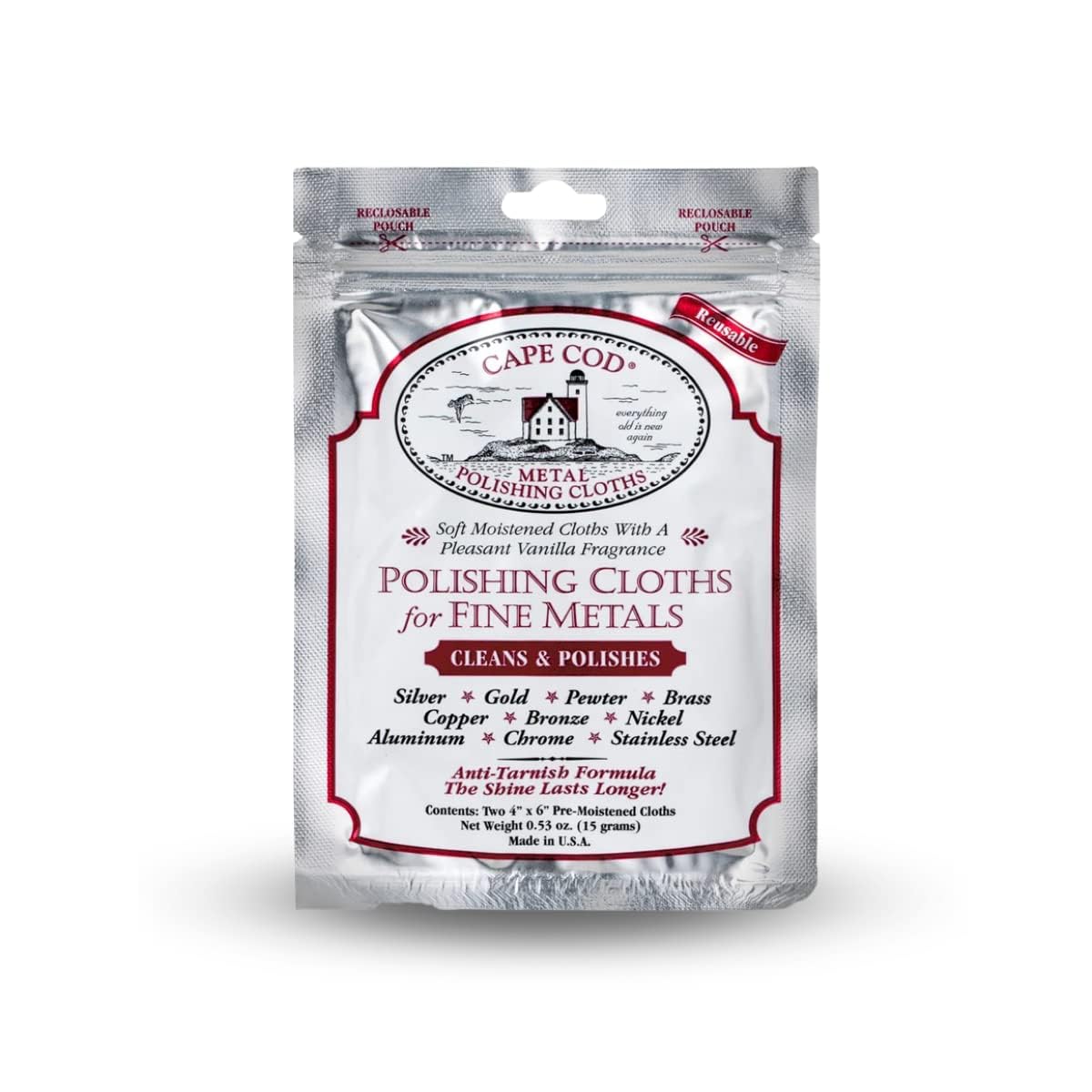
Cape Cod Polishing Cloths occupy a specific, useful niche in the world of metal care: small, pre-treated cloths meant for quick touch-ups rather than full restoration projects. The foil pack of two 4×6-inch cloths is the entry-level format, and it is worth understanding what that size and format actually deliver before deciding whether it fits how you clean jewelry and silver.
The cloths come impregnated with a polishing compound, so there is no liquid bottle, no paste to work into crevices, and no separate buffing cloth required for basic use. The process is straightforward: wipe the metal with the treated cloth, let the surface dry briefly, then buff with a soft cloth to remove residue and bring up shine. That two-step routine is the core of how these are used in practice, and it is the main reason people keep a pack in a drawer rather than hauling out jars and rags for every tarnished ring.
In real-world use, these cloths tend to show up in three contexts. The first is routine maintenance on silver jewelry that has dulled from wear—chains, bands, and settings that pick up tarnish in the usual spots. The second is flatware and small silver pieces where a full polish feels like overkill. The third is travel or on-the-go situations, where the foil pack’s small footprint matters more than capacity. The cloths are also frequently used on copper and brass, though results vary more on those metals than on silver.
Functionally, the treated cloth does the tarnish removal, and the compound is mildly abrasive, which is worth noting. On plain silver and most jewelry metals, that abrasiveness is not a problem and helps lift oxidation. On pieces with delicate plating, antiqued finishes, or intentional patina, it can be. This is one of the genuine trade-offs: the same action that makes the cloth effective on a tarnished spoon can dull a deliberately darkened recess on an antique piece. Anyone with plated or patina-sensitive items should test on an inconspicuous area first, and the cloths are not the right tool for those surfaces in general.
Another limitation is size and longevity. A 4×6-inch cloth has a limited working surface, and once it is saturated with tarnish and residue, its effectiveness drops. The pack of two is genuinely a starter or travel quantity; regular users of silver will find themselves replacing cloths fairly often, which makes the per-use cost higher than a jar of polish and a reusable rag. The cloths also dry out over time once the foil is opened, so a pack that sits in a drawer for a year may not perform like a fresh one. Storing them sealed helps, but it does not stop degradation entirely.
Compared with liquid or paste silver polishes, the Cape Cod cloths trade control and economy for convenience. A paste polish applied with a cloth gives more precision around stones and settings and lasts far longer per container, but it requires more steps and more cleanup. Impregnated cloths like these sit in the middle: faster than paste, less messy than liquid dips, but with a shorter useful life and less ability to work around fragile areas. Compared with ultrasonic cleaners, the cloths are gentler on finishes but far less effective at reaching into crevices and chain links, where tarnish tends to hide. For heavily tarnished pieces, a dip or ultrasonic session followed by a cloth buff is often the more realistic sequence.
Performance expectations should be calibrated. On lightly tarnished silver, the cloths can restore a bright shine with a minute or two of work. On heavily oxidized pieces, expect multiple passes, more pressure, and diminishing returns as the cloth loads up. The compound leaves a residue that must be buffed off, and skipping that step leaves a dull film that looks worse than the original tarnish. Users who follow the dry-then-buff routine get noticeably better results than those who wipe and stop.
Who is this for? It suits people who want a low-mess, portable option for occasional touch-ups on silver jewelry, small flatware, and copper or brass accents. It is a reasonable choice for travel kits and for households with a modest amount of silver that dulls gradually. Who is it not for? It is a poor fit for anyone with plated jewelry, antique pieces with intentional patina, or large collections needing regular full polishing—those users will burn through cloths quickly and may damage delicate finishes. Heavy tarnish and deep crevices are better handled by other methods first.
As a two-cloth foil pack, this is best understood as a convenience product rather than a complete silver-care solution. It does its job on straightforward, lightly tarnished metals, and it does so with minimal fuss. The caveats—abrasiveness, limited lifespan, and small working size—are real but predictable, and they matter most to people polishing delicate or heavily tarnished pieces. For simple maintenance on durable silver, the format makes sense.