
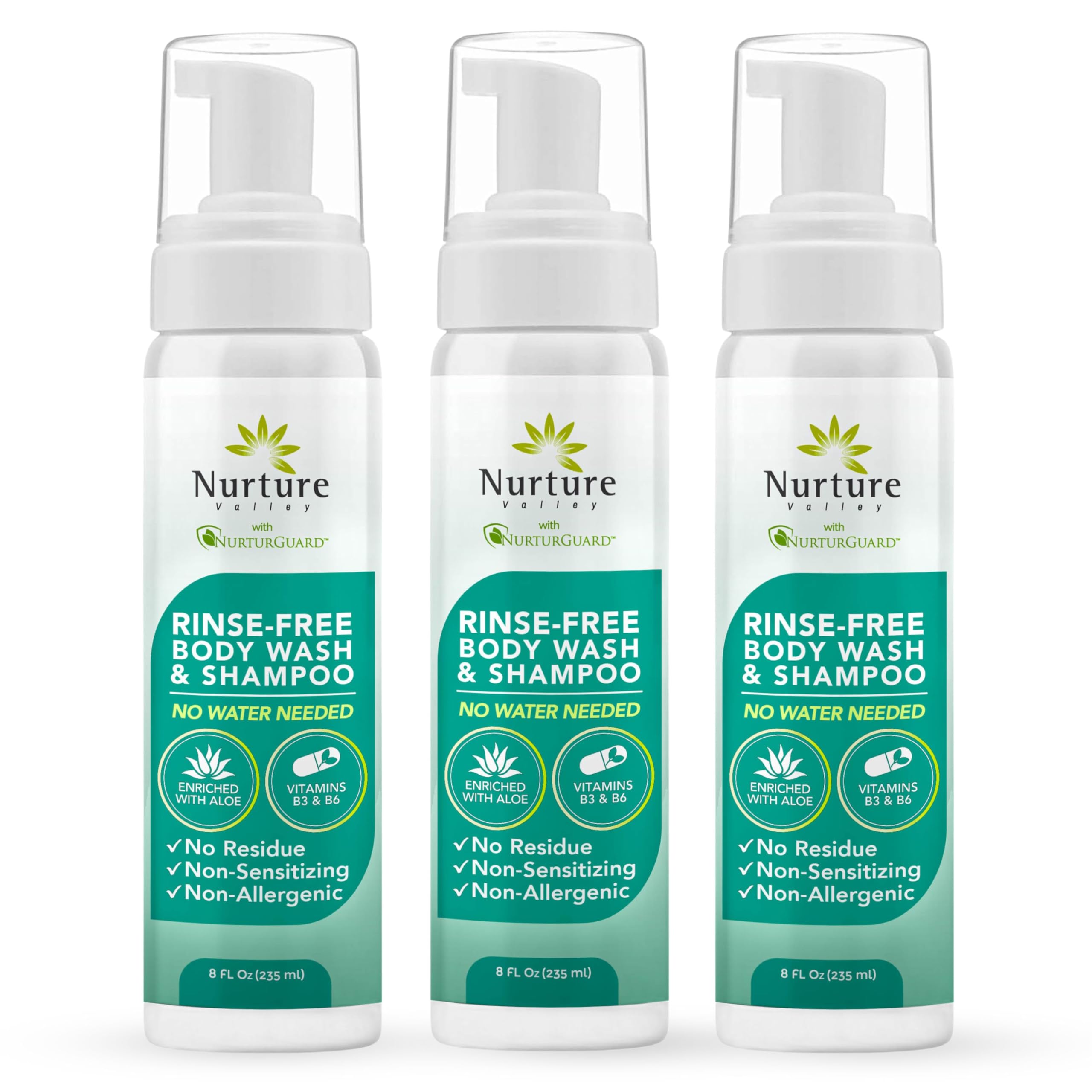
Rinse-free cleansers occupy a specific niche: they exist for the times when a shower is impractical, not for the times when one is simply inconvenient. The Nurture Rinse Free Body Wash and Shampoo Aloe Cleansing Foam, sold here as a three-pack of 8.5-ounce cans, is aimed squarely at that niche. It is a foaming product designed to clean skin and hair without water, and the three-pack format suggests it is meant to be distributed across locations rather than used in one place.
The most common real-world use cases are fairly predictable once you start looking. Caregivers use rinse-free washes for bedbound patients or people with limited mobility, where a full bath is exhausting or risky. Campers and hikers carry them for multi-day trips where water is scarce. Hospitals and home health aides keep cans on hand for quick cleanups between full washes. Some households keep one in a bag for post-surgery recovery or for elderly relatives who find showers difficult. In each case, the appeal is the same: cleaning happens on the spot, with a cloth or towel, and no rinsing step follows.
Functionally, the product is a foam rather than a gel or liquid. You dispense it onto a washcloth, mitt, or even a dry towel, work it over the skin or scalp, and then wipe or pat away the residue. The aloe component is listed as part of the cleansing formula, and aloe is a common inclusion in rinse-free products because it is associated with a less drying feel. The 8.5-ounce can size is modest, which matters for a product that is often stored in a bag or at a bedside. The three-pack arrangement is the main value proposition here; buying singles of rinse-free wash tends to be more expensive per unit, and having spares means one can live in a travel kit while another stays at home.
Performance expectations should be set realistically. A rinse-free foam cleans surface oils, sweat, and light odor reasonably well, and the foaming action helps it spread across skin without a lot of product. It is not a substitute for a full shower after heavy sweating or exposure to grime, and it will not remove stubborn residue like sunscreen, heavy lotion, or medical adhesives as thoroughly as soap and water. Hair is the trickier part. Using a rinse-free shampoo on hair works best for short hair or for spot cleaning; longer or thicker hair tends to need more product and more careful towel work, and the result is closer to refreshed than genuinely clean. Users should expect a faint residue if too much foam is applied, which is a common issue with any no-rinse formula.
There are trade-offs worth naming. The biggest is the wipe step itself: the product does not clean by itself, and the quality of the cloth and the thoroughness of the wiping do as much work as the foam. Anyone expecting a spray-and-done experience will be disappointed. Second, the foam format means you cannot easily control dose by pouring; you get what the can dispenses, and over-application leads to that tacky residue. Third, while aloe may make the formula feel gentler, rinse-free products in general are not ideal for people with sensitive skin or allergies unless they have patch-tested first, and fragrance or preservatives in any such product can be a trigger. Finally, the three-pack is only a good deal if you will actually use three cans; a single can lasts a while for occasional use, and the extras could sit unused for a long time.
Compared with the alternatives, rinse-free foam sits between two other categories. On one side are rinse-free bathing wipes, which are convenient and disposable but generate waste and can feel thin or dry. On the other are traditional no-rinse liquid cleansers that you dilute in a basin or apply with a sponge; those tend to be more economical per wash and give more control over concentration, but they require more setup and a water source for dilution. The foam format is a middle ground: more substantial than a wipe, less fuss than a diluted liquid. For caregivers doing frequent bed baths, the liquid concentrate often wins on cost. For travel and occasional use, the foam can is easier.
Who is this for? It suits caregivers, home health workers, campers, and people recovering from surgery or managing limited mobility, especially those who want a compact, ready-to-use option and are willing to do a careful wipe-down. It also works for gym bags or emergency kits where a full wash is not possible. Who is it not for? Anyone expecting shower-level clean, people with sensitive skin who have not patch-tested, and households that will not use three cans. It is also not a good fit for long or thick hair, where a rinse-free shampoo is a compromise at best. Treated as a practical tool for specific situations rather than a daily replacement for bathing, the Nurture foam does the job it is designed for, with the usual caveats that come with any waterless cleanser.