
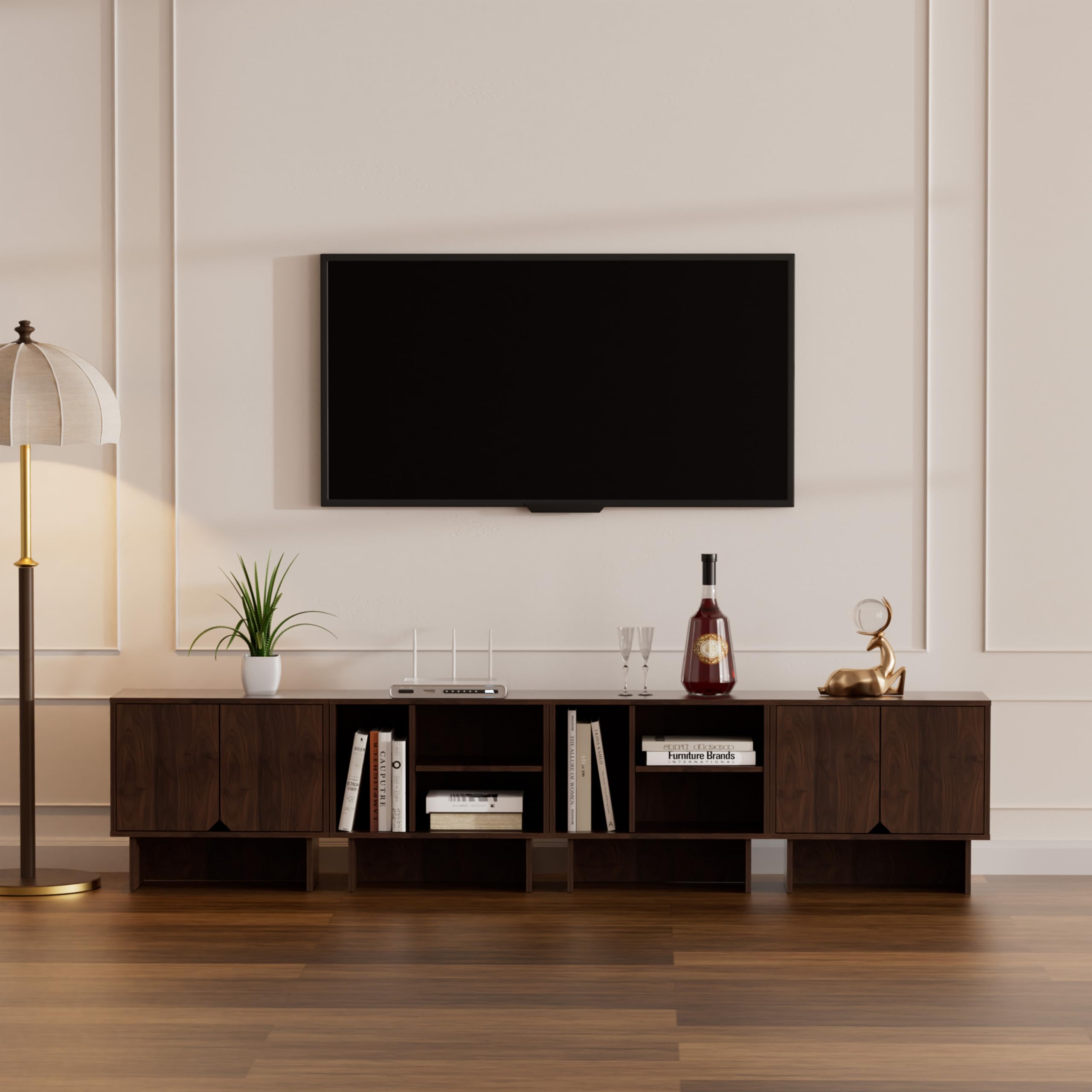
Large televisions create a furniture problem that most stands do not solve well. A 100-inch TV is roughly seven feet wide, and the typical media console is designed for screens half that size. This modular system from the walnut collection takes a different approach: instead of one long cabinet, it is built from individual units that can be arranged as a TV stand, sideboard, bookcase, end tables, nightstands, buffet cabinets, or a coffee table. The concept is flexible, though the execution comes with trade-offs worth understanding before buying.
The core appeal is configurability. Four separate pieces can be lined up under a large screen, split across a room, or used in different rooms entirely. Each unit includes an adjustable shelf, which helps with items of varying heights—receiver boxes, books, or folded linens. The walnut finish gives it a warmer, more traditional look than the white-and-oak finishes common in modular furniture, which may appeal to buyers furnishing a living room or dining area with wood tones.
In practice, this works best as a low, wide arrangement beneath a wall-mounted or stand-mounted TV. The individual units are not especially tall, so a 100-inch screen will dominate the visual field, which is appropriate. For storage, the adjustable shelves are useful but not deep; buyers should measure components like AV receivers and game consoles rather than assuming a standard fit. The open or semi-open design also means cable management is largely on the user—there is no built-in channeling or ventilated back panel described, so devices that run hot may need spacing.
One limitation is structural. Modular pieces joined side by side do not behave like a single rigid console. If the units are simply pushed together, seams can shift slightly over time, and heavy items concentrated on one unit can create unevenness. Buyers who want a seamless, furniture-grade media wall may find a purpose-built extra-wide TV stand more stable, even if it is less versatile. Similarly, using the pieces as a coffee table or nightstand is plausible but not ideal—the height and surface area are better suited to storage than to daily tabletop use.
Compared with a conventional TV console, this system trades rigidity and integrated cable management for adaptability. Compared with cube organizers or bookcase systems, it offers a more finished walnut look and adjustable shelving but fewer accessory options like doors and drawers. It sits somewhere between flat-pack modular storage and standalone furniture, and buyers should expect that middle ground in the build quality.
Real-world use cases are fairly clear. A household that moves frequently, or one that wants to reconfigure a living room into a dining buffer or bedroom storage over time, gets more value here than a household furnishing one room permanently. Renters who dislike built-ins may appreciate the ability to break the set down. On the other hand, a family with young children may want the stability of a single anchored unit, since multiple loose pieces invite climbing and shifting.
Suitable for: buyers with a very large TV who want low, wide storage and the option to repurpose units later; people furnishing multiple rooms on a budget; anyone who prefers walnut tones over painted finishes.
Not suitable for: those expecting a rigid, seamless media wall; buyers who need deep AV storage or integrated cable management; households wanting a true coffee table or nightstand as a primary function rather than an occasional one.
Overall, this is a practical, adaptable storage system with a specific niche. It handles the 100-inch TV problem reasonably well if the units are arranged carefully, and its multi-use claim is mostly honest—though some of the listed roles are stretches. Expect functional, mid-range furniture rather than heirloom construction, and measure both your screen and your components before committing.