
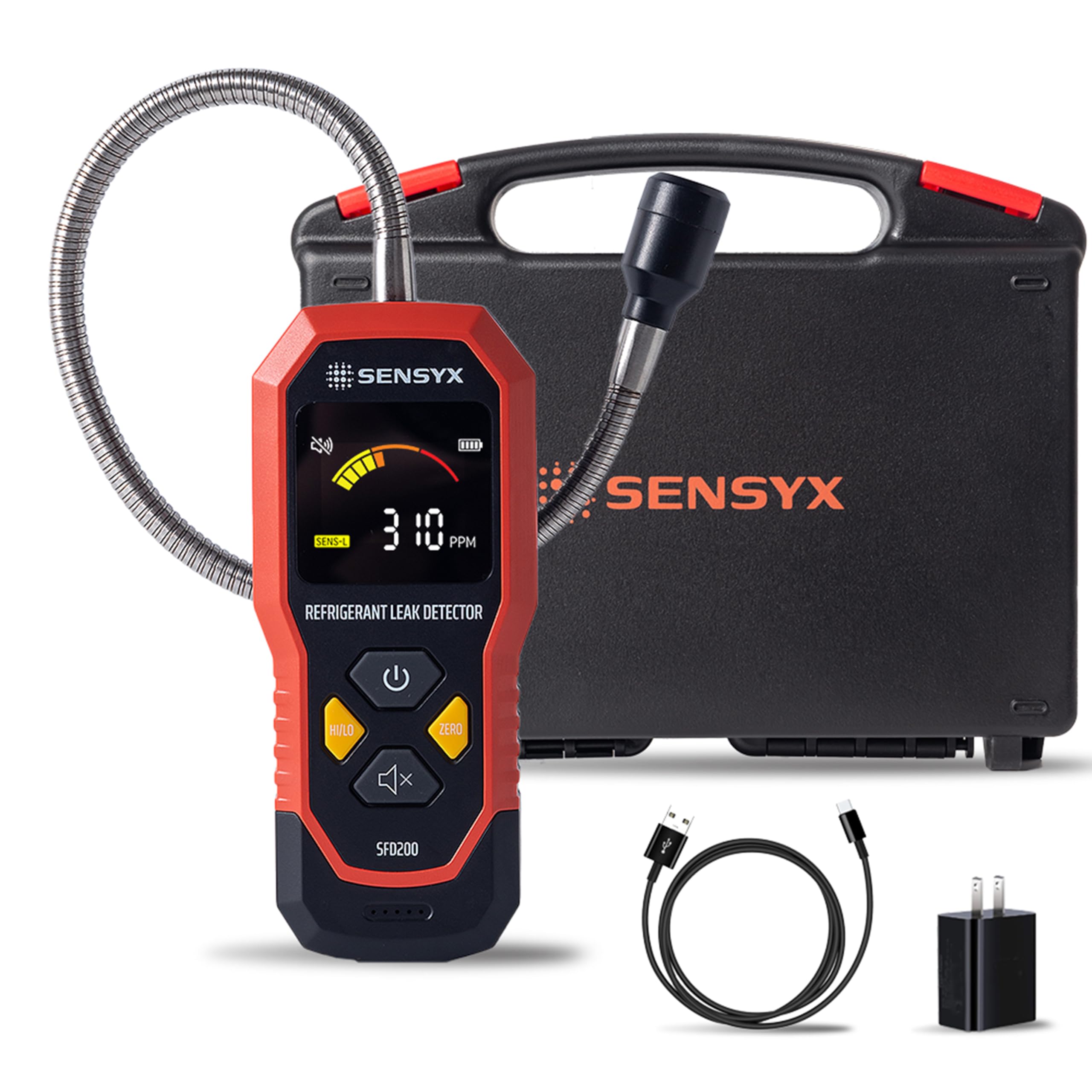
Finding a refrigerant leak in a residential or light commercial HVAC system often feels like a game of hide-and-seek, but with higher stakes and hotter temperatures. The SENSYX HVAC Refrigerant Leak Detector aims to shorten that game with a rechargeable, handheld design that promises sensitivity without the bulk of some professional units. After spending a few weeks using it on routine service calls and a couple of tricky retrofits, here’s a grounded look at what it does well and where it stumbles.
The detector’s core job is straightforward: it sniffs out halogen gases—think R-22, R-410A, and other common HFCs—and alerts you with a combination of audible beeping and a visual LED array. The sensitivity is adjustable across several levels, which is a feature you’ll actually use. On the lowest setting, it’s useful for zeroing in on a leak once you’ve narrowed down the area; on the highest, it can catch faint traces from a distance, though you’ll want to confirm with a more precise method before condemning a coil. The sensor is located at the tip of a flexible probe, which is a small but meaningful design choice. It lets you reach into tight spots—like behind a condenser fan motor or under a furnace’s access panel—without contorting your wrist or moving the unit itself.
One of the standout aspects is the rechargeable battery. It charges via USB-C, and in practice, a full charge lasted through a full day of intermittent use—roughly eight to ten hours, depending on how often the alarm triggered. That’s a real convenience for technicians who are tired of swapping AAs in the middle of a rooftop job. The unit also has a low-battery indicator that’s actually visible, which is more than can be said for some pricier models I’ve used. The build feels solid enough for daily abuse, with a rubberized grip that keeps it from slipping out of a sweaty hand, and the probe is flexible without feeling flimsy.
However, no tool is without trade-offs. The sensor is the sensitive part, and like all heated-diode or infrared sensors, it has a finite lifespan. SENSYX doesn’t specify an exact replacement interval, but based on the wear I’ve seen in similar units, you should expect to replace the sensor after a couple of seasons of heavy use—and that part isn’t user-replaceable on this model, which is a notable drawback. You’ll need to send it in for service, which could mean downtime during peak cooling season. Also, the alarm tone is a bit shrill. It’s effective at getting your attention, but after a long day, it gets grating. A mute button or a vibrate option would be a welcome addition.
In terms of performance, the SENSYX is a solid middle-tier option. It won’t out-sniff a high-end infrared detector like the ones used by commercial refrigeration techs, which can pinpoint leaks in parts per million with more precision. But for the typical HVAC service tech who’s dealing with split systems and package units, it’s more than adequate. I found it most reliable when I moved the probe slowly—about one inch per second—and kept the tip close to the suspected joint. Rushing the process led to missed leaks, even on the highest sensitivity setting. That’s a skill issue as much as a tool issue, but worth noting for anyone expecting a magic wand.
Comparing it to a simpler, battery-operated electronic sniffer—like the ones from Elitech or Fieldpiece—the SENSYX holds its own on sensitivity and speed of response. The rechargeable battery is the clear advantage, but the non-replaceable sensor is a trade-off that those cheaper units don’t force on you. If you’re a weekend warrior who does one or two leak hunts a year, a basic $50 sniffer might be enough. But for a technician who does this week in and week out, the convenience of USB-C charging and the robust build justify the higher price point.
Who is this for? It’s ideal for HVAC technicians who want a reliable, everyday leak detector without investing in a $500+ lab-grade unit. It’s also a good fit for property managers or maintenance staff who deal with refrigeration equipment occasionally and need something that’s easy to use and doesn’t require a learning curve. On the flip side, if you’re doing leak detection on large industrial ammonia systems or need to meet strict EPA compliance reporting, you’ll want a more specialized tool. And for the DIY homeowner, this is overkill—you’re better off calling a pro than buying a $150 sniffer for a one-time repair.
In the end, the SENSYX HVAC Refrigerant Leak Detector is a competent, well-thought-out tool that does its job without fanfare. It has a few quirks—the non-replaceable sensor and the annoying alarm—but it’s a practical choice for the working technician. Just remember to treat it as a helper, not a replacement for careful visual inspection and soap-bubble checks. Used with patience, it will save you time on most leak hunts. Used carelessly, it’ll just beep at you.