
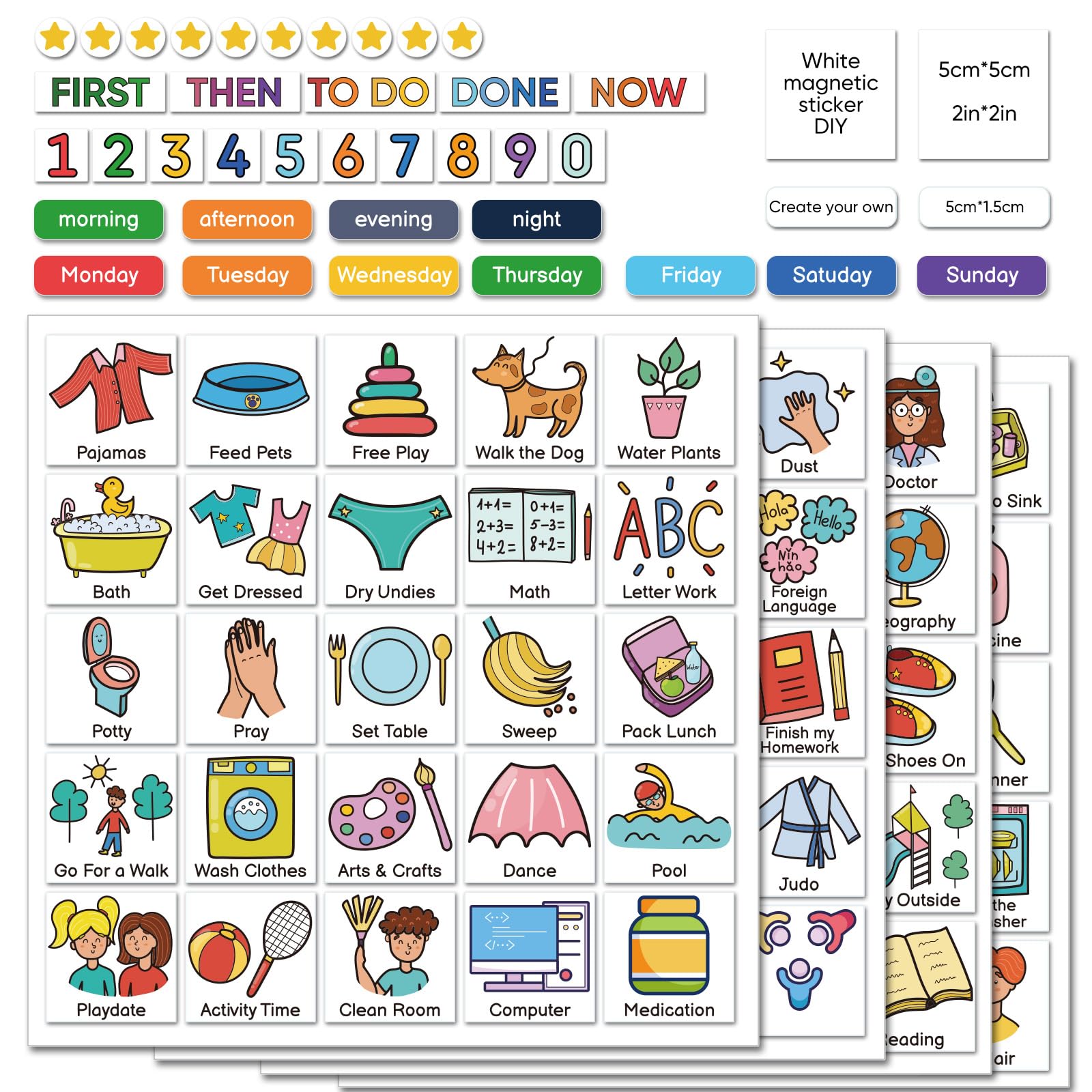
Visual schedules have become a common tool in households and classrooms, especially for children who thrive on predictability. The Magnetic Visual Schedule for Kids aims to bring that structure to any magnetic surface, from refrigerators to whiteboards. After spending several weeks using this board in a busy family setting and observing its use in a preschool classroom, I have a clear picture of what works and what doesn’t.
The core concept is straightforward: a set of 60 magnetic tiles, each depicting a common activity like brushing teeth, school, playtime, or bedtime, that can be arranged on a 12×12 inch magnetic board to map out a day’s routine. The tiles are color-coded by category (e.g., green for chores, blue for learning, yellow for fun), which adds a layer of organization that helps younger kids identify the type of activity at a glance. The board itself is sturdy and the magnets are strong enough to hold the tiles securely, even when the board is bumped or moved. This is a significant improvement over paper charts that tear or fall apart.
In real-world use, the schedule shines in the morning rush. Instead of a parent repeating “brush your teeth, get dressed, eat breakfast” ten times, the child can glance at the board and follow the sequence independently. The physical act of moving a tile to a “done” pocket (the set includes a separate “all done” pocket that attaches to the board) gives a tangible sense of accomplishment. For a child who struggles with transitions, the ability to see that “playground” is next after “lunch” can reduce anxiety and resistance. The blank tiles and dry-erase marker included in the set allow for customization, which is a thoughtful addition for activities not covered by the pre-printed options.
However, the product is not without its trade-offs. The 60 tiles are a lot to manage, and the initial setup can feel overwhelming. Sorting through the tiles to find the right ones for a particular day takes time, and the included storage box is functional but not particularly well-designed—tiles can get jumbled, and the lack of compartments means you’ll be digging around to find the “swimming” tile. Also, the board is only 12×12 inches, which limits the number of tiles you can display at once. For a child with a complex schedule (e.g., therapy sessions, multiple extracurriculars), you may need to swap tiles mid-day, which breaks the flow. Another limitation is that the tiles are not as durable as they could be; after a few weeks of use, the lamination on the edges began to peel slightly, especially on tiles that were handled frequently. This is not a deal-breaker, but it’s a sign that the product may not withstand heavy, long-term use in a rough-and-tumble environment.
Compared to a traditional paper chart or a digital app like Choiceworks, this magnetic board offers a middle ground. Paper charts are cheaper but less interactive and easy to lose or tear. Digital apps are portable and offer timers and audio cues, but they require a screen, which can be a distraction and are less tangible for younger children. The magnetic board’s strength lies in its physicality—it’s a durable, hands-on tool that doesn’t require batteries or Wi-Fi. But it lacks the dynamic features of an app, such as automatic timers or the ability to easily reorder activities without moving physical tiles.
So who is this schedule for? It is best suited for children aged 3 to 7 who are visual learners and respond well to routines. It’s also a great tool for parents who want to reduce power struggles and foster independence. The board is particularly useful in a kitchen or playroom where the child spends a lot of time. However, it may not be the right fit for children who are highly sensitive to visual clutter—the board can look busy with 10 tiles arranged at once. It’s also less ideal for families who travel frequently, as the board is not easily portable (although tiles can be used on any magnetic surface, the board itself is a bit bulky). For older kids who can read, a simple written checklist might be more efficient and less visually distracting.
In terms of performance, the board does what it promises: it helps establish a predictable routine and encourages independence. But it’s not a magic solution. It requires a parent or teacher to set it up consistently and to guide the child in using it for the first few weeks. The customization options are a plus, but the tile management and durability issues keep it from being a top-tier product. If you’re looking for a physical visual schedule and are willing to invest a bit of time in organization, this is a solid choice. Just be prepared to handle the tile sorting and to potentially replace it after a year or so of heavy use.