
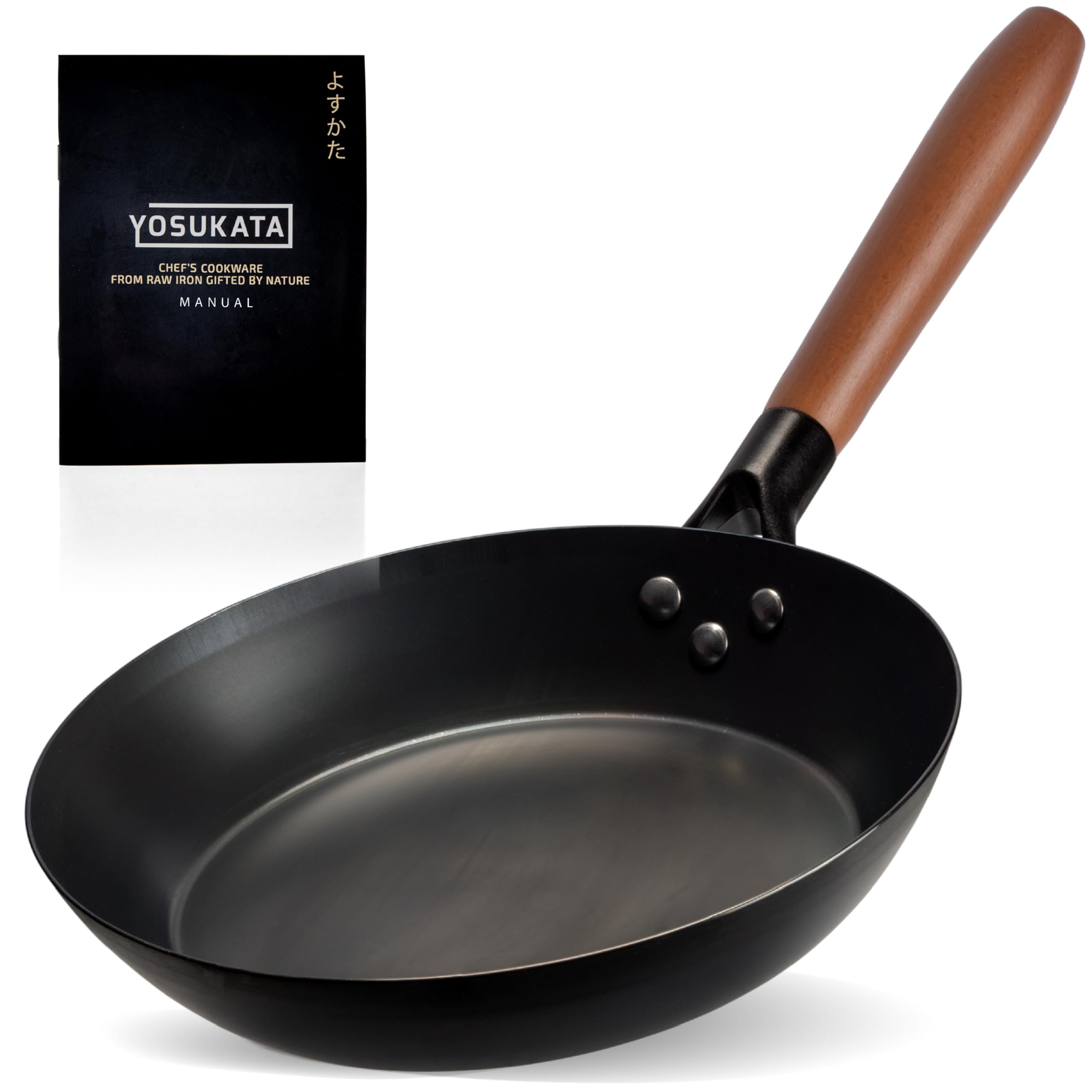
Carbon steel frying pans occupy a curious middle ground in the kitchen. They’re not as heavy or heat-retentive as cast iron, but they’re more responsive and generally easier to maneuver. The YOSUKATA 10.25-inch pre-seasoned model is a good example of this category, and after several weeks of using it for everything from eggs to stir-fries, I have a clear picture of what it does well and where it stumbles.
The pan arrives pre-seasoned, which is a nice touch for those who don’t want to deal with the initial seasoning process. The coating is dark and reasonably smooth, though it’s not flawless—there are a few minor streaks and uneven spots, which are cosmetic rather than functional. The handle is a long, riveted steel loop that stays cool on the stovetop for a surprisingly long time, though it will eventually get hot if you leave it over a flame for extended periods. A silicone sleeve is included, which helps, but it’s not a substitute for a towel or mitt.
At 10.25 inches, this is a versatile size. It’s large enough for a two-egg omelet or a single chicken breast, but not so big that it feels unwieldy. The pan weighs just under three pounds, which is noticeably lighter than a comparable cast iron skillet. That makes it easier to toss vegetables or flip a pancake, but it also means it doesn’t hold heat as aggressively. You’ll need to adjust your cooking style—preheating on medium-low for a few minutes works better than cranking the heat to high, which can cause hot spots and sticking.
One of the standout features is the handle design. It’s a single piece of steel that’s welded to the pan, with a slight upward curve that keeps your knuckles clear of the burner. The lack of rivets means there are no crevices for food to get trapped, which simplifies cleaning. You can’t put this pan in the dishwasher—the seasoning will degrade, and the steel can rust—but a quick hand wash with warm water and a stiff brush is usually enough. After drying, a thin coat of oil keeps the surface in good shape.
In terms of real-world performance, the YOSUKATA handles high-heat searing well. I got a nice crust on a strip steak without the pan warping, which is always a risk with thinner carbon steel. The pre-seasoning held up better than I expected, though it did fade in the center after a few uses. That’s normal—carbon steel seasoning is a living thing that builds and strips over time. If you’re not comfortable with occasional re-seasoning, this might not be the pan for you.
Where the pan struggles is with acidic foods. Tomato sauce, lemon juice, or vinegar-based dishes will strip the seasoning and leave a metallic taste. This is true of all carbon steel, but it’s worth noting if you cook a lot of braises or reductions. You’ll need a separate stainless or enameled pan for those tasks. Also, the pan is not induction-compatible—it’s designed for gas, electric, and ceramic cooktops. If you have an induction stove, you’ll need to look elsewhere.
Compared to a traditional cast iron skillet, the YOSUKATA is lighter and heats up faster, but it doesn’t retain heat as well. For tasks like deep frying or baking cornbread, cast iron is arguably better. Conversely, for quick sautés or delicate fish, the carbon steel is more forgiving. It’s closer to a wok in behavior—responsive and nimble, but not a thermal battery.
This pan is best suited for home cooks who already have a nonstick or stainless pan and want something that can take high heat without worrying about coating damage. It’s also a good choice for anyone who likes the idea of cast iron but finds the weight off-putting. On the other hand, if you’re looking for a low-maintenance pan that you can abuse, this isn’t it. Carbon steel requires attention: you need to dry it thoroughly, oil it after each use, and avoid cooking acidic ingredients for long periods.
The YOSUKATA 10.25-inch is a solid entry in the carbon steel market. It’s not a revolutionary pan, but it performs reliably for a reasonable price—usually around $40 to $50. The pre-seasoning saves time, and the handle design is thoughtful. Just be prepared for the learning curve. Once you get the hang of temperature control and maintenance, it becomes a dependable tool. If you’re not willing to invest that effort, you’re better off with a modern nonstick pan that requires zero maintenance. But for those who enjoy a bit of ritual in their cooking, this pan offers a satisfying, functional experience.