
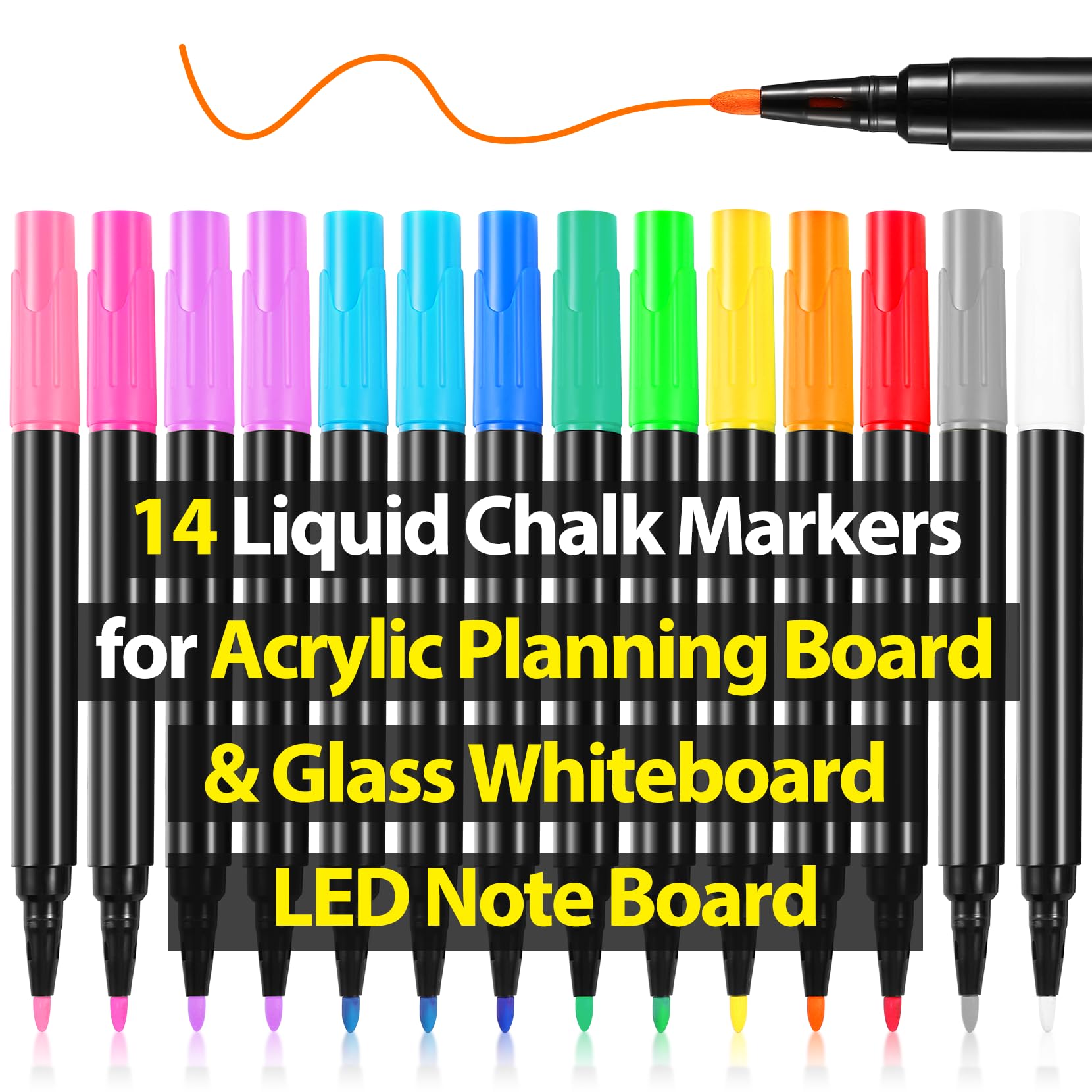
There’s a certain satisfaction in writing on glass or a whiteboard with a marker that actually feels like a pen, not a squeaky dry-erase stick. These liquid chalk markers, sold in a 14-pack with 12 colors and two spare black markers, aim to deliver that experience for anyone who uses LED writing boards, acrylic calendars, or even their home windows for seasonal decor. I’ve spent a few weeks using them on a glass calendar, a small acrylic sign, and a mirror, and they perform about as well as you’d expect from a mid-tier liquid chalk set—which is to say, quite well in most situations, with a few caveats.
The fine 1mm tip is the standout feature here. It’s genuinely fine, allowing for neat lettering and reasonably detailed doodles. If you’ve tried other liquid chalk markers with chisel or broad tips, you’ll notice the difference immediately—this set is designed for precision work, not filling in large areas. On my acrylic calendar, the lines came out crisp and didn’t bleed or feather, which is often a problem with cheaper markers on non-porous surfaces. The ink is opaque and vibrant, especially the white and neon shades, which show up well on dark or clear surfaces. The colors themselves are the usual rainbow spread—red, orange, yellow, green, blue, purple, pink, and a few pastels—nothing revolutionary, but the selection covers most needs.
One thing I appreciated is that the markers are advertised as easy to erase, and that mostly holds true. On glass and acrylic, a dry cloth or paper towel wiped away the ink without leaving ghosting, as long as I didn’t let it sit for more than a few days. Leaving a message on a mirror for a week did require a bit more scrubbing, and a damp cloth with a little glass cleaner was necessary. That’s not unusual for liquid chalk, but it’s worth noting if you plan to use these for long-term planning on a board you don’t update often. The markers also have a slight odor—not overpowering, but noticeable if you’re writing for a long stretch in a small room. It’s the typical alcohol-based scent, and it dissipates quickly.
In terms of build quality, the markers feel solid enough for the price. The tips hold their shape well and haven’t frayed or pushed in after repeated use, which is a common issue with fine-point markers. The ink flow is consistent, though I did notice that a couple of colors (the lighter pastels, specifically) needed a bit of shaking before they produced full opacity. That’s a minor annoyance, but not a dealbreaker. The set includes two black markers, which is practical since black tends to run out fastest, but it also means you’re getting 12 colors in a 14-pack—so if you were hoping for a wider color variety, this might feel a bit repetitive.
Compared to traditional dry-erase markers, these liquid chalk markers are a different beast. Dry-erase markers are more forgiving on standard whiteboards and erase effortlessly with any dry cloth, but they lack the vibrant, pigmented look that liquid chalk provides. On the other hand, if you’re used to chalk pastels or chalk pens, these are cleaner and more precise, but they don’t have that matte, chalky texture—they’re more like a gel pen. For LED drawing boards (the kind with a glowing backlight), these markers work particularly well because the bright colors pop against the light, and the fine tip lets you write smaller than you could with a standard whiteboard marker. However, if your primary surface is a traditional whiteboard, you might be better off sticking with standard dry-erase markers, as liquid chalk can be harder to remove from porous or older whiteboards.
Who is this set for? It’s ideal for someone who wants to create neat, colorful labels on a glass calendar, write festive messages on windows during the holidays, or add decorative touches to acrylic signs without investing in professional-grade markers. It’s also a good option for teachers or office workers who need a precise writing tool for transparent surfaces. But if you’re an artist looking for a wide range of colors or a marker that can handle heavy blending, this isn’t that. The color selection is basic, and the fine tips limit you to line work—you won’t be shading or filling large areas easily. Additionally, if you’re using a non-porous surface that’s not glass or acrylic, like a glossy whiteboard, test it first; the ink might not erase as cleanly.
Overall, these markers do what they claim, with a few small trade-offs in terms of color variety and long-term erase-ability. They’re a practical purchase for specific use cases, and the fine point is a genuine asset for anyone who values legibility over broad strokes. Just don’t expect them to replace your everyday dry-erase markers for general whiteboard use—they’re a specialized tool, and they work best when used that way.