
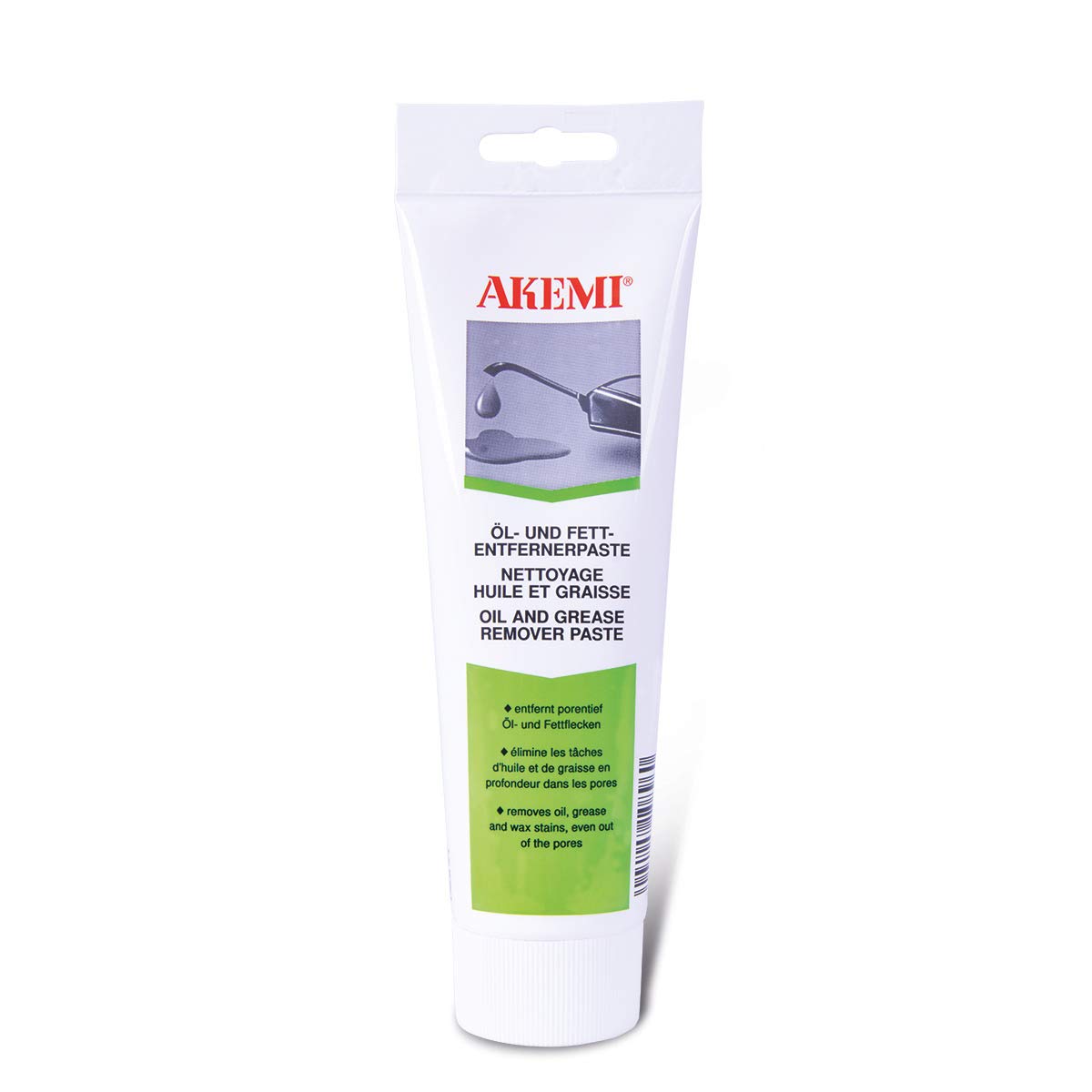
Akemi Oil & Grease Remove Paste is a niche cleaning product aimed at a specific problem: oil and grease that has soaked into porous or textured surfaces where ordinary sprays and wipes do not reach. It is sold as a paste rather than a liquid, which changes both how it is applied and where it makes sense to use it. This review looks at what the product actually does, where it fits in a normal cleaning routine, and where it falls short.
The paste format is the defining feature. Instead of spraying and wiping, you apply a small amount directly to the stain, work it in, and let it sit before removing it. That dwell time matters for grease, which often needs to be broken down before it can be lifted. The paste also stays where you put it, so it does not run down vertical surfaces or spread into areas you did not intend to treat. For fabrics, that controlled placement is useful around seams and edges; for stone and tile, it means the product can sit on a stain without pooling.
In practice, the product is most often used on two broad categories of surface: textiles such as upholstery, carpets, table linens, and workwear, and hard porous materials such as natural stone, grout, and unglazed tile. The application routine is roughly the same in both cases. You scoop or squeeze out a modest amount, work it into the stain with a cloth or soft brush, allow it to dwell, then wipe or rinse away. On fabric, that usually means blotting rather than scrubbing aggressively, since overworking a stain can push it deeper or damage fibers. On stone, a gentle agitation with a soft brush tends to be enough.
Expectations should be calibrated. This is a stain-specific product, not a general-purpose cleaner. It is designed to attack oil and grease, and that is where it performs most predictably. Fresh grease marks, cooking oil splatter, and oily residue on hard surfaces generally respond well with a single application. Older, set-in stains, especially those that have been through a wash cycle or heat-dried, are harder and may need repeat treatments or may not come out fully. The paste is not a miracle worker for deeply oxidized or dye-based stains, and it should not be treated as one.
- Paste consistency: stays in place on vertical and angled surfaces, reducing runoff and waste.
- Targeted application: small amounts can be applied precisely to a stain rather than over a whole surface.
- Dwell-time action: the format allows the product to sit and work before removal.
- Dual-surface use: marketed for both fabrics and hard porous materials, though results vary by surface.
The main trade-off is convenience. Compared with a spray-and-wipe degreaser, a paste requires more steps: apply, wait, agitate, remove. That is fine for a deliberate stain treatment but tedious for large areas or routine cleaning. The paste can also leave residue if not fully removed, particularly on dark fabrics or textured stone, so rinsing or blotting thoroughly is part of the job. On delicate or color-sensitive fabrics, patch testing is advisable, as with any concentrated cleaning agent. The product is not a substitute for a full laundry detergent or a general surface cleaner; it handles the stain, and something else has to handle the rest.
Compared with liquid degreasers, the paste trades speed for control. A liquid spray covers area quickly and is easier for maintenance cleaning, but it runs, drips, and can wick into surrounding material. The paste is slower but more surgical, which suits localized stains on surfaces you do not want to soak. Compared with enzyme-based stain removers, the paste is more oriented toward grease and oil than toward organic or protein stains, so the two are not interchangeable. A dedicated carpet spotter may be easier to use on large soft furnishings, while the paste is better for small, stubborn marks.
Who is it for? It suits people dealing with occasional grease stains on upholstery, carpets, workwear, or stone surfaces who are willing to put in a little dwell time for a more controlled treatment. It also fits households with natural stone or tile where liquid cleaners are risky. Who is it not for? Anyone looking for a fast all-purpose cleaner, a large-area degreaser, or a single product to replace their regular cleaning lineup will likely find it too slow and too narrow. It is a stain tool, not a cleaning system, and it works best when treated that way.