
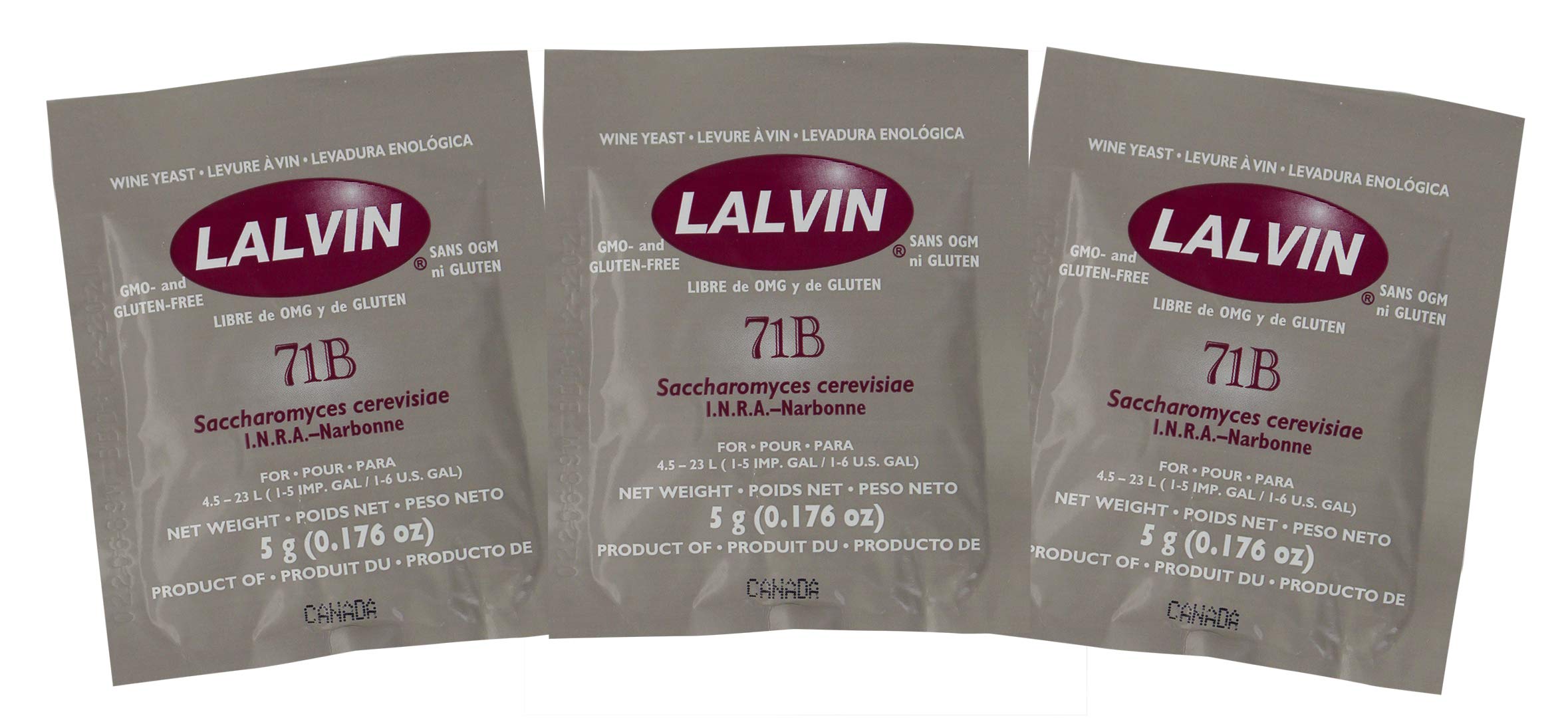
Lalvin 71B-1122 is a dried wine yeast that has been a staple in home winemaking for decades. It is particularly known for its ability to soften high-acid musts and produce fruity, aromatic wines. This review examines its performance, strengths, and limitations based on its established characteristics and common usage in the home winemaking community.
In practice, 71B-1122 is often used for country wines—think blackberry, raspberry, or elderberry—where its tendency to metabolize malic acid can reduce sharp acidity and round out the palate. It is also a popular choice for rosé and fruity red wines, where its ester production contributes to a pronounced fruit-forward profile. The yeast is supplied in dried form, typically in 5-gram packets, and is rehydrated before pitching. It has a moderate alcohol tolerance (around 14% ABV) and a competitive factor that helps it dominate the fermentation, reducing the risk of stuck fermentations or spoilage.
One of the key functional features of 71B-1122 is its high malic acid consumption—often cited as up to 40% during fermentation. This can be a significant advantage for winemakers dealing with grapes or fruits that are excessively tart, such as underripe apples or certain cool-climate grapes. However, this same trait can be a drawback if the winemaker desires a crisp, acidic finish; over-softening can lead to a flabby wine. Additionally, because 71B-1122 produces noticeable fruity esters, it may not be the best fit for styles where neutrality is desired, such as a clean, crisp white wine meant to express terroir.
Another consideration is its relatively low alcohol tolerance compared to some other strains. At around 14%, it may struggle in high-sugar musts, such as late-harvest or ice wines, where residual sugar is intended. In such cases, a yeast with higher tolerance, like Lalvin EC-1118, might be more appropriate. However, for most standard-strength wines, 71B-1122 performs reliably.
In terms of fermentation kinetics, 71B-1122 typically ferments steadily at temperatures between 15°C and 30°C (59°F–86°F). It is not a fast fermenter, but it is consistent. Home winemakers often report a clean fermentation with minimal off-flavors when proper nutrient additions are made. Like many wine yeasts, it benefits from staggered nutrient additions, especially in high-sugar musts, to avoid hydrogen sulfide production.
When compared to other popular wine yeasts, such as Lalvin K1-V1116 or EC-1118, 71B-1122 stands out for its specific sensory impact. K1-V1116 is known for preserving varietal character and is often used for whites and rosés, while EC-1118 is a vigorous, neutral strain that ferments almost anything but can strip away nuance. 71B-1122 occupies a middle ground: it adds a distinct fruity complexity and softens acidity, but it is less neutral than EC-1118 and less variety-specific than K1-V1116. For winemakers looking to craft a wine with immediate approachability and a soft mouthfeel, 71B-1122 is a strong candidate. For those aiming for a more structured, age-worthy wine, other strains might be better.
It is important to note that 71B-1122 is not a one-size-fits-all yeast. Its malic acid reduction can be undesirable in certain styles, such as crisp Sauvignon Blanc or acidic ciders where a tart finish is expected. Also, because it produces noticeable esters, it may overshadow delicate floral aromas in some white wines. Therefore, it is best suited for fruit-forward wines, country wines, and situations where acidity needs taming.
Who is this for? Home winemakers who are working with high-acid fruits or who want to produce a soft, fruity wine with minimal aging. It is also a good choice for beginners because of its forgiving nature and reliable fermentation. Who is it not for? Those aiming for a very neutral, crisp wine or a high-alcohol wine above 14% ABV. Also, winemakers who prefer to preserve the natural acidity of their must might find 71B-1122 too aggressive in its acid reduction.
In summary, Lalvin 71B-1122 is a specialized tool in the winemaker’s arsenal. It excels at softening acidity and enhancing fruit character, but it requires careful consideration of the desired style. Its limitations are clear, and it is not intended for every wine. For the right application, it delivers consistent results and has earned its place as a trusted strain among home winemakers.