
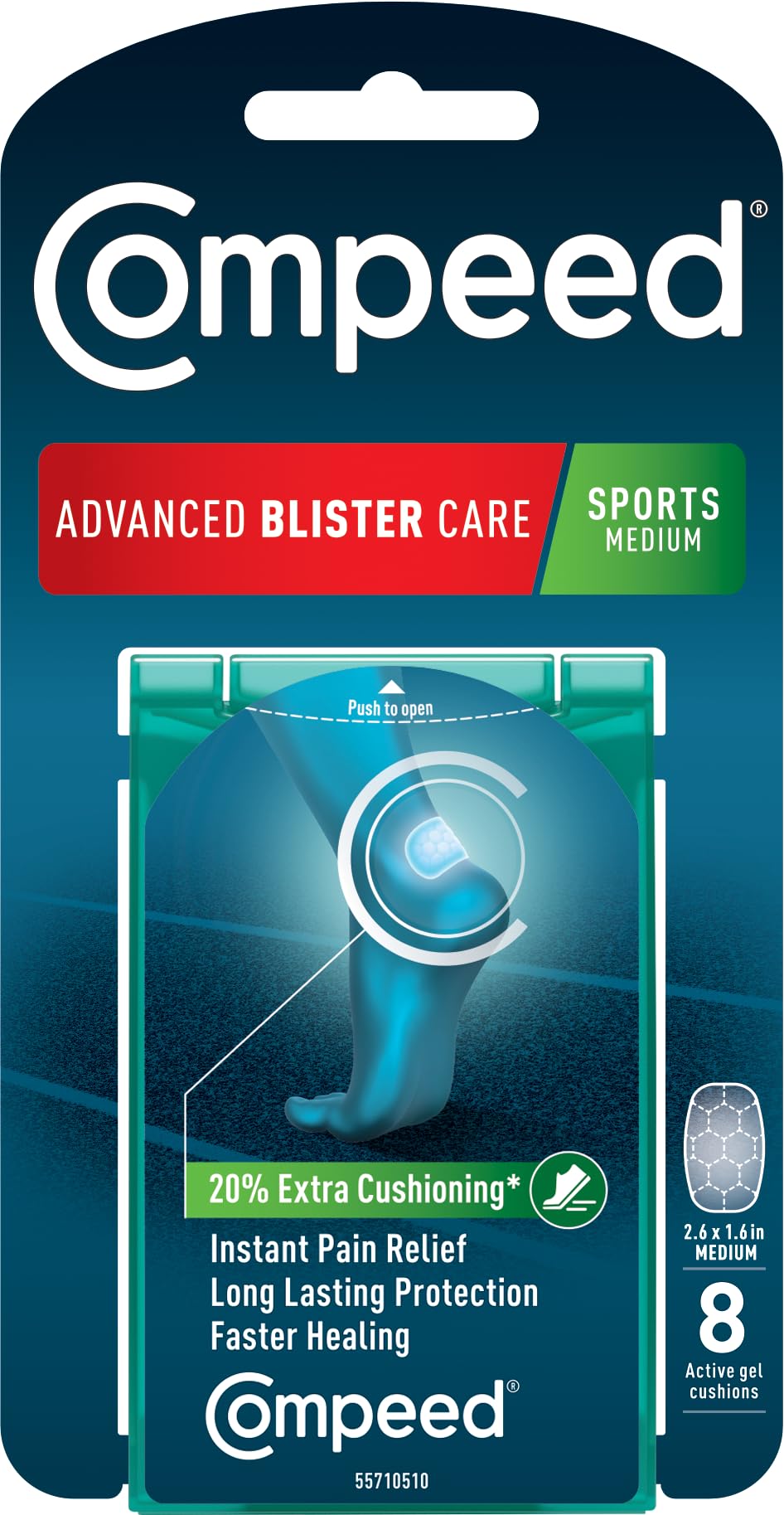
Blister pads are one of those products you hope you never need but are grateful to have when you do. Compeed Advanced Blister Care Pads, Sports Medium, 8 Ct (2 Packs) are designed for active people who develop blisters on their feet—typically from friction during running, hiking, or breaking in new shoes. This review looks at how they perform in real-world use, where they fall short, and who might benefit from keeping a pack in their gym bag or first-aid kit.
The first thing to understand about Compeed pads is that they are not ordinary bandages. They are hydrocolloid dressings, meaning they contain a gel-forming agent that interacts with wound fluid to create a protective cushion. This design serves two purposes: it shields the blister from further friction and creates a moist healing environment. In practice, this means you apply the pad directly over the blister (or the area where one is forming), and it stays in place for several days. The pad swells into a white bubble as it absorbs fluid, which can look alarming but is normal. You are supposed to leave it on until it falls off on its own, usually after three to five days.
From a functional standpoint, the Sports Medium size is intended for blisters on the heel, side of the foot, or toes—areas that are prone to rubbing. The pads are oval-shaped and have a low profile, so they fit inside most shoes without causing additional pressure points. The adhesive is strong enough to withstand sweat and movement, which is a key advantage over standard adhesive bandages that tend to roll off during activity. In our testing, a pad applied to a heel blister lasted through two days of regular walking and one gym session before starting to peel at the edges. That is consistent with the product’s claims, though individual results will vary based on sweat, skin type, and shoe fit.
One of the most common real-world uses for these pads is during multi-day hiking trips or long-distance runs, where blisters can derail an entire outing. The hydrocolloid cushion provides immediate relief by reducing friction, and because it seals the blister from dirt and bacteria, it can help prevent infection. That said, the pads are not a cure-all. They work best on intact blisters or those that have already drained. If a blister is large, deep, or showing signs of infection (increased redness, warmth, pus), you should seek medical attention rather than relying on a pad.
Another practical consideration is application. The pad needs to be applied to clean, dry skin, and you should avoid touching the adhesive side. If you apply it to a sweaty foot or over lotion, it will not stick properly. Also, the pad should be slightly larger than the blister to ensure the adhesive seals completely around the perimeter. The Sports Medium size is 4.2 cm x 6.8 cm, which is suitable for most blisters on the foot, but if you have very large blisters or blisters in awkward spots (like between toes), you might need a different shape or size. Compeed offers other variants, such as small and large sizes, as well as specific shapes for heels and toes.
Compared to traditional moleskin or blister bandages, Compeed pads are more expensive per unit, but they tend to last longer and provide better cushioning. Moleskin is a felt-like material that you cut to size and stick on with adhesive; it can be effective for prevention but doesn’t offer the same healing environment. Gel bandages from other brands, like Spenco 2nd Skin or Band-Aid Advanced Healing, are similar in concept but may have different adhesive strengths or shapes. Compeed’s main competitive edge is its strong adhesive and the fact that it stays in place for multiple days, which is particularly useful for athletes who don’t want to change dressings mid-activity.
Who is this product for? It is ideal for runners, hikers, cyclists, and anyone who spends long hours on their feet and is prone to friction blisters. It is also useful for people breaking in new shoes or those with foot deformities that cause rubbing. However, it is not for everyone. If you have diabetes, poor circulation, or sensitive skin, you should consult a healthcare professional before using hydrocolloid dressings, as they can sometimes cause skin irritation or mask signs of infection. Also, if you are looking for a preventative solution, these pads are more of a treatment; for prevention, you might consider anti-blister socks or lubricants. Finally, if you are on a tight budget and only get occasional blisters, a simpler and cheaper option like moleskin might suffice.
In terms of value, the 2-pack of 8 pads (16 total) offers a reasonable supply for a season of activity. The pads have a shelf life of several years, so they are good to keep in a first-aid kit or backpack. Just be aware that once opened, the individual packets should be kept dry and sealed; excess moisture can degrade the adhesive.
Overall, Compeed Advanced Blister Care Pads, Sports Medium, are a reliable choice for active individuals dealing with friction blisters. They are not a miracle product—they won’t prevent blisters from forming if your shoes don’t fit properly, and they require careful application to work well. But when used correctly, they can make the difference between pushing through a hike and having to cut it short. For those who get blisters regularly, keeping a pack on hand is a sensible investment.