
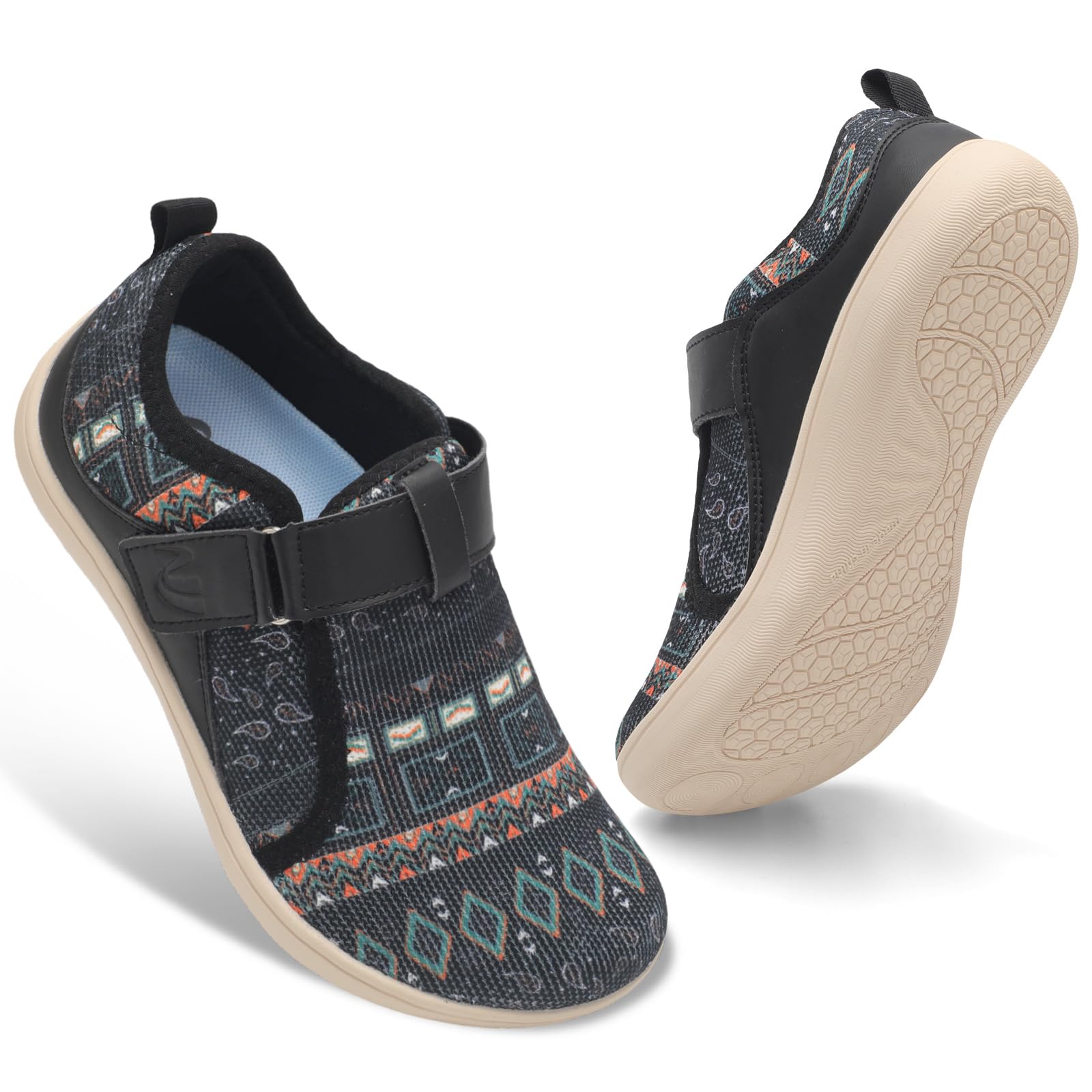
Spesoul’s wide-width walking shoe sits in a category that mainstream sneaker brands mostly ignore: footwear for people dealing with diabetes, neuropathy, edema, or post-surgical swelling. The 8.5 model pairs a roomy toe box with a zero-drop sole and an adjustable upper, which puts it closer to a therapeutic shoe than a performance trainer. It is not a shoe most people would buy for style or long-distance running, but for a specific set of foot-care needs it addresses problems that standard sneakers create.
The most obvious design decision is the width. The forefoot is cut generously, and the upper uses a soft, breathable knit-like material that gives rather than presses. For anyone whose feet swell during the day or who has neuropathy and cannot tolerate pressure points, that extra volume matters more than cushioning specs. The adjustable closure system is the other defining feature. Instead of a fixed lace setup, the shoe uses straps that can be loosened or repositioned, which helps accommodate a foot that changes size over the course of a day or a bandaged toe. Nurses and caregivers often look for this kind of flexibility because it lets one shoe serve a range of swelling conditions without constant re-tying.
The zero-drop sole means the heel and forefoot sit at the same height. That is a deliberate choice borrowed from barefoot-style footwear, and it changes how the shoe feels. There is no elevated heel to pitch the wearer forward, and the sole is relatively thin and flexible, so the foot does more of the work. For some wearers this encourages a more natural gait; for others, especially those transitioning from a cushioned running shoe, it can feel flat and under-supportive at first. The outsole is modest, appropriate for indoor floors, hospital corridors, and short outdoor walks, but it is not built for rough terrain or all-day standing on hard concrete.
In practice, these shoes tend to show up in three settings: at home for people managing daily foot swelling, in clinical or care environments where staff are on their feet but need footwear that accommodates compression socks or bandages, and as a recovery shoe after a procedure. The breathable upper helps in warm indoor environments, and the wide opening makes the shoe easier to put on for anyone with limited hand strength or reduced bend in the hips. That ease of entry is a practical detail that gets overlooked in most shoe reviews, but it is often the deciding factor for older wearers.
Where the Spesoul falls short is in structure and durability. The flexible, soft upper that makes it comfortable for sensitive feet also provides little lateral support, so it is a poor choice for anyone who needs stability, such as people with severe balance issues or a history of ankle sprains. The zero-drop platform offers minimal arch support, which will not suit every foot; wearers with plantar fasciitis or high arches may find it uncomfortable for extended periods. The materials and sole construction are functional rather than premium, and heavy daily outdoor use will likely wear them faster than a sturdier walking shoe. Sizing also requires attention: the adjustable straps help, but the wide fit runs generous, and some buyers may need to size down or fine-tune the straps to avoid a loose heel.
Compared with a conventional diabetic walking shoe, which typically has a firmer heel counter, removable insoles, and a more structured sole, the Spesoul leans toward flexibility and barefoot feel rather than support. That is a meaningful difference. A traditional therapeutic sneaker is often the safer pick for someone who needs cushioning and stability, while the Spesoul is better suited to wearers who want room, breathability, and adjustability and who do not need a rigid platform. It is also a different proposition from a standard wide-width athletic shoe, which may be wide at the forefoot but still uses laces and a fixed heel that can press on swollen tissue.
This shoe is a reasonable fit for people with mild to moderate swelling, sensitive or neuropathic feet, or a need for easy on-and-off footwear, and for caregivers shopping on someone else’s behalf. It is not suitable for runners, hikers, people who need firm arch or ankle support, or anyone expecting a cushioned, structured walking shoe. Treated as a specialized comfort shoe rather than an everyday athletic sneaker, it fills a gap that few brands address, provided the wearer’s needs line up with its flexible, minimal design.