
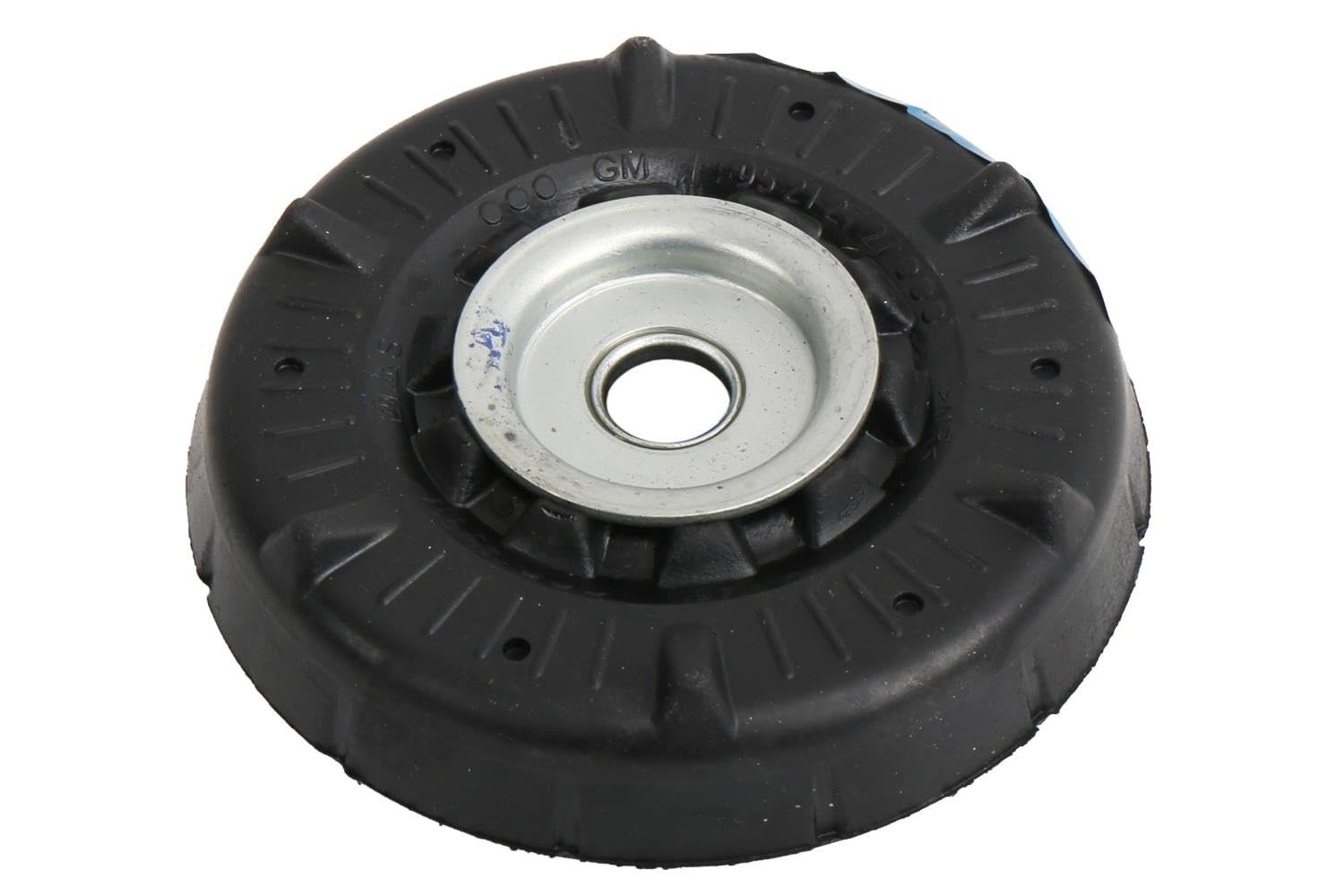
The GM Genuine Parts 95212727 front suspension strut mount is the kind of component most drivers never think about until something starts clunking over bumps. It is an OEM replacement part, sold through GM dealerships and authorized parts channels, intended for specific GM vehicles that use this mount at the top of the front strut assembly. Understanding what it does, where it fits, and what it costs relative to alternatives matters more than any spec sheet, so this review focuses on practical ownership rather than catalog claims.
The strut mount sits at the top of the front strut and connects the suspension to the vehicle’s body. It carries the strut’s load, allows the assembly to pivot as the wheels steer, and isolates road noise and vibration from the cabin through a rubber or elastomeric core. When that core degrades, drivers typically notice a knocking or popping sound over uneven pavement, vague steering feel, or uneven tire wear. Replacing the mount is a common repair on older vehicles, and it is usually done alongside struts, bearings, and related hardware since the labor overlaps heavily.
Functionally, the 95212727 is a direct-fit OEM part. That means the geometry, bolt pattern, and material specification match what the vehicle was built with, which matters for alignment and for how the strut bearing seats. Aftermarket mounts vary widely in rubber hardness and bearing quality; some are noticeably stiffer, others use lower-grade elastomers that can fail early. The OEM part’s advantage is consistency with factory tolerances rather than any performance gain. It is not a handling upgrade, and buyers should not expect one.
- Direct OEM fitment for the specific GM applications this part number covers, with no adapter plates or modification required.
- Factory-spec elastomer intended to match original noise and vibration characteristics.
- Integrated bearing seat designed to work with the corresponding OEM strut bearing.
- Corrosion-resistant coating on the metal housing, which is relevant in salt-belt regions.
In real-world use, this mount is almost always installed during a strut replacement or a front-end refresh on a higher-mileage vehicle. A shop will typically compress the spring, transfer the old bearing and spring seat if they are still serviceable, and torque the mount to spec. Because the part is OEM, installation is straightforward for anyone with the right spring compressor and torque values. The trade-off is cost: OEM mounts frequently run two to three times the price of a basic aftermarket unit, and for a vehicle that is nearing the end of its service life, that premium can be hard to justify.
That cost gap is the main limitation worth flagging. Aftermarket strut mounts from reputable brands can perform well for many miles, and some are even upgraded designs with reinforced rubber. The OEM part’s case rests on fit certainty and predictable durability rather than superior engineering. Buyers should also verify the part number against their VIN, because GM uses different mounts across platforms and model years, and a mount that looks similar may not seat correctly. Counterfeit OEM parts are a real concern in online marketplaces, so purchasing through a dealer or an authorized reseller is the safer route even at a higher price.
Compared with a complete quick-strut assembly, which bundles the strut, spring, mount, and bearing into one pre-assembled unit, this mount is a component-level repair. Quick struts are faster to install and avoid spring compression, but they cost more overall and often use aftermarket-grade internals. The 95212727 suits someone retaining their original struts or replacing them with OEM equivalents and who wants factory-matched isolation. It is less appealing for a DIYer without spring compression tools, since the savings on the part can be erased by the cost of safe installation equipment.
Who is this for? Primarily owners of the specific GM vehicles this part fits who want to restore original ride quality and are willing to pay for factory parts, as well as shops that prefer OEM components to reduce comebacks. It is also a sensible choice for vehicles still under extended warranty or in regions with harsh winters, where corrosion resistance matters. Who is it not for? Budget-focused owners of high-mileage vehicles, anyone seeking a performance or comfort upgrade, and drivers whose clunking noise may actually come from worn control arm bushings or sway bar links rather than the mount. Diagnosing the source before buying is essential, because a new mount will not fix a noise it did not cause.
Expectations should stay modest. A new OEM mount restores the suspension to its original behavior; it does not transform it. Longevity depends heavily on road conditions, load, and whether the strut and bearing are in good shape. Paired with worn struts, even a good mount will not deliver a quiet, controlled ride. For the right application, though, it is a dependable, unglamorous part that does exactly what the factory intended.