
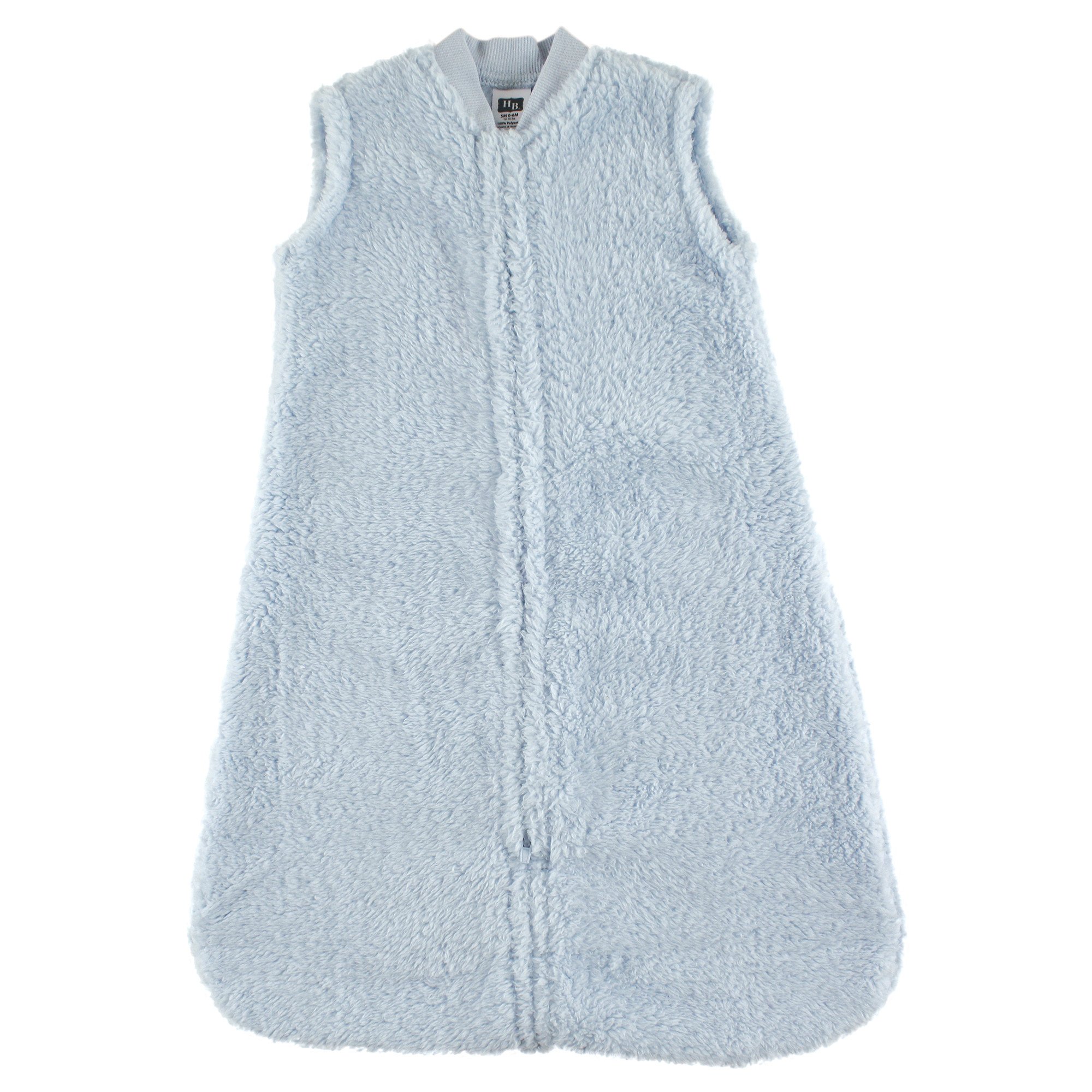
Sleep sacks occupy an odd middle ground between clothing and bedding, and the Hudson Baby Plush Sleeping Bag in Powder Blue Sherpa sits firmly on the cozier end of that spectrum. It is a sleeveless, sack-style sleep garment with a sherpa outer layer and a plush lining, designed to be worn over pajamas instead of a loose blanket. In the 12–18 month size, it is aimed at mobile babies who are pulling up, cruising, or walking but are still too young to manage blankets safely in a crib.
The core appeal is straightforward: it keeps a baby warm without the loose bedding that pediatric guidance generally advises against for infants and young toddlers. The powder blue color and sherpa texture give it a soft, nursery-friendly look, and the unisex styling means it does not read as strongly gendered. That said, the plush fabric is the defining feature, and it is also the source of most of the trade-offs worth considering before buying.
How it is actually used
In practice, this sack goes over a pair of footed pajamas or a onesie-and-sleeper combination for overnight sleep and naps. Parents typically zip the baby in, position the arms through the sleeveless openings, and lay the child down. Because there are no legs, the sack moves with the baby to some degree but does not allow independent leg movement the way a sleep suit with separate legs would. For a 12–18 month old who is learning to walk, that matters: the sack can bunch or drag when the child tries to stand in the crib, and it is not intended for walking around the house.
The zipper runs along the front and typically includes a chin guard, which is a practical detail for nighttime changes. The sleeveless design is deliberate, since it reduces overheating risk compared with long-sleeve sleep sacks and lets parents layer underneath according to room temperature. The sherpa exterior adds bulk, so it is best suited to cooler rooms rather than warm climates or heavily heated bedrooms.
Functional features, factually
- Sleeveless sleeping bag with a front zipper and chin protection
- Sherpa plush outer fabric with a soft plush lining
- Designed for the 12–18 month size range, with a roomy sack body
- Intended as a blanket substitute, not as outerwear or a walking garment
- Machine washable, though the plush texture needs reasonable care to avoid matting
The fabric weight is the key variable. Sherpa and plush linings trap warmth effectively, which is helpful in a drafty nursery but can be too much in a room kept above roughly 72°F. Parents often end up using a lighter cotton or muslin sleep sack for warmer months and reserving this one for winter. That seasonal limitation is worth flagging: this is not a year-round sack in most homes.
Where it falls short
The biggest practical limitation is mobility. A 12–18 month old is often standing, climbing, and trying to walk, and a legless plush sack restricts that. Some children tolerate it fine and sleep well; others fuss against the bulk or get tangled when they try to stand. The plush fabric also makes the sack warmer than many parents expect, so overheating is a real consideration if the nursery runs warm. And while sherpa is soft, it can pill or mat over repeated washes, so longevity depends on care.
Fit is another point to watch. Sleep sacks are sized by age range, but babies vary widely in length and torso. A child at the top of the 12–18 month range may find the sack short, while a smaller baby may have excess fabric around the feet. Checking the manufacturer’s length guidance against the child’s height is more reliable than going by age alone.
How it compares to alternatives
The most direct comparison is a cotton or muslin sleep sack, which is lighter, more breathable, and generally easier to wash and dry. Those are better for year-round use and warmer rooms. A second alternative is a sleep suit with separate legs, which allows more natural movement for toddlers who are walking and is often preferred once a child is consistently pulling up. The Hudson Baby sherpa sack sits between these: warmer than a muslin sack, more restrictive than a leg-split suit. It also differs from a traditional wearable blanket in that the plush lining is the main selling point rather than breathability or stretch.
Who it suits, and who it does not
This sack makes sense for parents of babies in the 12–18 month range who sleep in a cool room, who want a plush, cozy layer over pajamas, and whose child does not object to a legless design. It is a reasonable choice for winter nights and for households that keep the thermostat low.
It is less suitable for warm climates, heated bedrooms, or babies who are active standers and walkers, who may do better with a leg-split sleep suit. Parents who prefer breathable natural fibers over plush synthetics may also want to look elsewhere. And anyone expecting a year-round solution should plan on a second, lighter sack for the warmer months. Treated as a seasonal, cold-weather sleep layer, it does its job; treated as a single do-everything sack, it will likely disappoint.